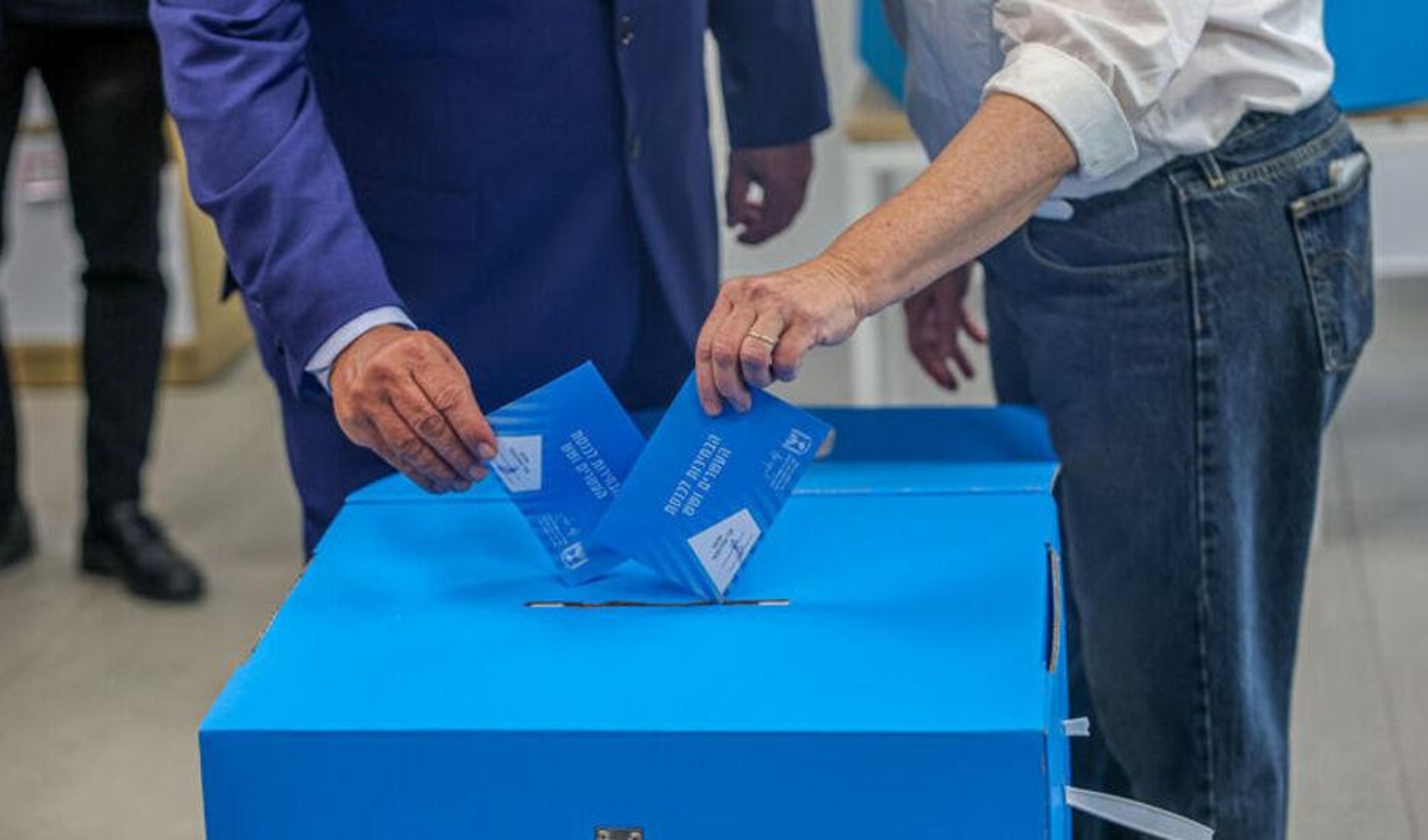
Vote counting in Israel's parliamentary elections has been completed, but the results have left a coalition in uncertainty. According to Israel's state television KAN, in the elections where more than 5.6 million votes were counted, neither the ruling bloc led by Prime Minister Benjamin Netanyahu nor the opposition bloc led by Gadi Eisenkot could reach the majority required to form a government.
According to the unofficial results, the ruling bloc led by Netanyahu secured 53 seats, while the opposition bloc headed by Eisenkot remained at 48 seats. In the 120-seat Israeli Parliament, the support of at least 61 deputies is required to form a coalition.
The picture presented by the election results has increased the importance of the parties representing Palestinian citizens of Israel in government negotiations. These parties reached a historic level of representation with a total of 19 deputies. The Joint List, formed by the Hadash, Taal, and Balad parties, won 11 seats, while the Ra'am Party led by Mansour Abbas won 8 seats.
Looking at the results on a party basis, the Likud, led by Netanyahu, ranked first with 27 seats. Gadi Eisenkot's Yashar Party became the second-largest party with 21 deputies.
On the opposition side, the "Together List" of former prime ministers Naftali Bennett and Yair Lapid obtained 12 seats, Avigdor Liberman's Yisrael Beiteinu Party obtained 7, and the Democrats Party led by Yair Golan obtained 8 seats.
In the ruling bloc, Shas, representing Ultra-Orthodox Jews, secured 6 seats, and United Torah Judaism secured 7. Among Netanyahu's far-right allies, Itamar Ben-Gvir's Otzma Yehudit (Jewish Power) Party reached 7 seats, and Bezalel Smotrich's Religious Zionism Party reached 6 seats.
This picture increases the uncertainty regarding how a new government will be formed in Israeli politics, indicating that coalition negotiations will be the main agenda of the post-election process.
News Source: 12punto