


The future of artificial intelligence seems to be local


Palantir CEO Alex Karp argues that companies should not hand over their data, processing power, and the information that forms their competitive advantage to other companies when using artificial intelligence. This corporate knowledge, which Karp calls "alpha," is actually one of the most valuable assets a company has. Interestingly, following this statement, OpenAI announced it would continue its Zero Data Retention policy for eligible API customers, and Anthropic is working on a change that will allow corporate customers to keep their data within their own cloud infrastructure. Palantir's response to these developments is brief: "Sovereignty is the future."
I believe the real shift is here. Until now, we have been talking about whose model is bigger, faster, or smarter in the artificial intelligence race. Now, a much more important question is coming before the corporate world: Where is my data? This question leads us directly to edge computing. In the cloud era, we moved processing to centralized data centers; edge computing brings processing back closer to where the data is produced. It seems inevitable to me that artificial intelligence models will also move toward companies, factories, automobiles, and the devices we use.
Local artificial intelligence will follow. While large models and heavy computations remain in the cloud, instant operations will be processed at the edge, and the most personal and valuable data will be processed directly on our phones, computers, automobiles, homes, or robots. Thus, the question of the race will also change. The question "Which model is the smartest?" will become as important as "Which model can I use without taking my data outside?" We went to the cloud first. Now we are returning to the edge. The final stop seems to be local.
Buffett: I don't know who will win the AI race, but Google won't disappear
Warren Buffett has long been known for staying away from risks he does not understand. The fact that Berkshire Hathaway was a net seller of stocks for 14 quarters and built up a massive cash reserve was an indicator of this. However, the picture changed in the second quarter of 2026. Berkshire's Alphabet position increased by 83 percent to 37.8 billion dollars. Considering Google's 10 billion dollar investment in artificial intelligence infrastructure, what Buffett is doing seems less like picking the winner of the AI race and more like picking one of the companies that will survive at the end of this race.
Moreover, Berkshire still holds 364.7 billion dollars in cash. So, this is not Buffett suddenly turning into an AI investor; it is a controlled bet. No one knows today whether OpenAI, Anthropic, Google, or another company will win the race. Buffett's investment tells me something simpler: I don't know who will win the AI race, but Google won't disappear.
The circle is tightening, Türkan
On March 17, on the Netizen program on Medyascope TV, we talked with Canan Alkın, founder of the Robot Employment Agency, about the entry of robots and artificial intelligence-based digital workers into the business world. In the time that has passed, the circle has tightened rapidly. Humanoid robots are now working on the production line at the Xiaomi factory. Models like Dyna-2 are learning physical skills such as preparing food, folding, and handling objects from over a million hours of human video; they can even control robots they have never encountered before. Competitions are being organized where humanoid robots fight with real punches and kicks. Meanwhile, xAI is working on the non-physical side of the same transformation, focusing on agents that possess their own cloud computing power, entering applications, learning repetitive workflows, and turning into digital workers that operate 24/7. In other words, the robot is no longer a prototype waving at us in a lab; it is turning into a system that works, learns, and performs tasks in the factory.
The real issue is the robot leaving the factory and entering the home. In San Francisco, Tau Robotics says it sends humanoid robots to homes for 30 dollars an hour; these robots can use vacuum cleaners, clean surfaces, and take out the trash. Türkan is the lady who cleans our house. That is why Türkan is in the title. As in Erdil Yaşaroğlu's cartoon, the circle is truly tightening: First, it approached the worker in the factory, then the employee in the office, and now it is coming for the cleaning job at home. When the robot enters through our door, the technological transformation will no longer be a future scenario. The circle is tightening, Türkan.
Would you like to get notifications about new developments and save news?
- NotificationsNew developments and breaking news
- SaveNews is stored in the app
Most Read

Two high-speed trains collide in Spain!
New formula for indefinite alimony regulation

Can Yayınları Editor-in-Chief Cem Akaş has passed away

Surprise results emerge from the ballot box in Israel
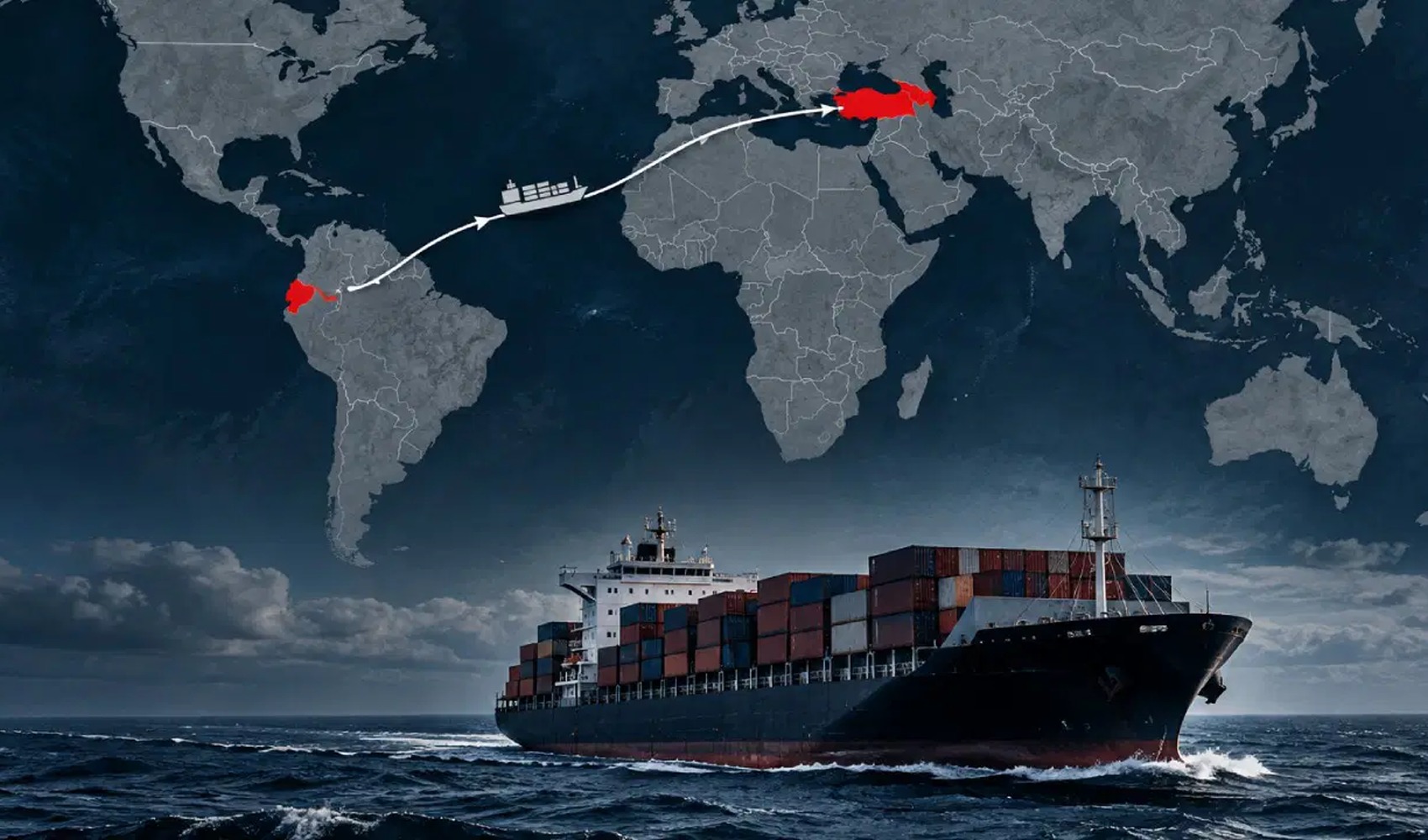
Allegations involving Turkey in the case of 748 kilos of cocaine seized in Ecuador
With the Republic, sovereignty was taken from the palace; it cannot be returned to the palace!
The digital era for IDs begins

NEW Party decision from Mustafa Sarıgül!

Footage of Tuğyan Ülkem Gülter dancing in the intensive care unit has emerged
Who is left from the four horsemen of the apocalypse?