


Tales from the Southeast



I have always wondered. If Ömer Seyfettin had not been a young Ottoman officer chasing insurgents in the powder-keg Balkan mountains, and had he not witnessed the Balkan tragedies of 1912-1913, could he have written the same stories? In his short life of 36 years, Ömer Seyfettin witnessed firsthand the imperialist-provoked, rampant Balkan chauvinism and the ruthlessness of the insurgents. As a Turkish officer, he experienced the shame of the Balkan defeat. He witnessed the tragic migration of millions of Turks from the Balkan geography—which they had considered their homeland for centuries—toward the capital and Anatolia, the clash between the Committee of Union and Progress and the Freedom and Accord Party, and the decay of an army entangled in politics. His 14 months of Greek captivity following the Balkan rout was also a period of time during which he engaged in internal reckoning in light of his observations and experiences. He was also an intimate witness to the intellectual currents of the early 20th-century Ottoman Empire, the bewilderment of the intelligentsia, and the negligence of the era. Alongside the political dynamism and awakening of the Balkan nations, he saw what our own blind bigotry and the mentality of the 'ummah' had reduced a vast empire to. In short, Ömer Seyfettin saw and lived through heaven, hell, and purgatory all at once in the bloody Balkan geography.
Nations produce the writers who will bear witness to the great transformations, ruptures, and declines in their history during those very same periods. The irony and melancholy that stand out even in the most ordinary stories of this great writer, who packed a century's worth of experience and observation into his short life, are undoubtedly related to what he lived through. His stories are a lament for the state and nation that slipped through his fingers and whose collapse he witnessed. Beyond being distinguished literary works, the stories are black-and-white photographs of the early 20th-century Balkan geography, the Istanbul of the Armistice period, and various social strata. Just as our experiences in the early 20th century created Bomba, Beyaz Lale, Kaç Yerinden, Hüküm Gecesi, Üç İstanbul, Sodom ve Gomore, Türk'ün Ateşle İmtihanı, and Yaban, so too did our experiences toward the end of the century lead to the emergence of works such as "GÜNEYDOĞUDAN ÖYKÜLER" (Tales from the Southeast) I, II, and III.
There are interesting similarities between the young Ottoman officer of the early 20th century, Ömer Seyfettin, and the young Turkish officer of the late 20th century, Hakan Evrensel. Just as the soldier-turned-writers of the early century bore witness to their era, the same tradition continues in the late century with Hakan Evrensel. While his observations regarding war, betrayal, heroism, sacrifice, virtue, and degeneracy are presented with the simplicity of a soldier in Evrensel's stories, his artistic sensitivity and mastery of the pen are at levels that could be called perfect for these initial examples.
There is no fantasy or exaggeration in the stories, which consist of what he lived, witnessed, and heard. The Turkish army is not only fighting a physical enemy, the PKK, in the Southeast. Just as we did not only fight the physical enemy, the Greek army, during the War of Independence. In the Southeast, the Mehmetçik (Turkish soldier) is also measuring strength against some of the so-called allied Western great powers behind the pawns. Let us be aware that the loser of the struggle, from which the Mehmetçik emerged with his head held high, is not just the PKK. The events experienced during the separatist uprising process—which every type of writer and intellectual in a state of Armistice psychosis, outside of PKK media outlets, labels a "DIRTY WAR"—form the background of the stories. While reading Tales from the Southeast, your heart will ache, your eyes will well up, and your chest will tighten from time to time. When you finish the stories, you will see on which side the filth, hypocrisy, betrayal, and baseness lie, and on which side the virtue, self-sacrifice, infinite love for the homeland, and passion for this geography reside. You will clearly see the filth overflowing from the hearts and brains and dripping from the pant legs of those who insist on the 'dirty war' rhetoric, and you will once again feel disgusted by the Efruzes of our day.
The anxiety of the soldier's home and those left behind in some stories will feel to you like the disaster rhetoric in Greek tragedies that forewarns of what is to come. So much so that you will sometimes have to look at the end of the story without waiting for it to finish. You will feel as if the martyrs have risen from their graves and are right beside us with a noble humility. They seem to say, "We fell to the earth in our spring for this homeland; do not give away at the negotiating table what was won on the front. We will not grant our blessing for our blood." The story of the commander who recited the National Anthem over the radio while constantly losing blood from seven bullets lodged in his body will grip you in a different way.
The author is never in a state of crude chauvinism in such stories. What is experienced within the horror of war will not leave your memory for a long time. In these stories, "blood drips from the author's pen." When you finish the stories, you will see that the blood dripping from the pen actually comes from the author's heart. If you pay a little more attention, you will notice that this blood is mixed with tears. You cannot separate the blood and tears of the author, his generation, his comrades-in-arms, those left behind, and our nation, even if you wanted to.
The third book of Tales from the Southeast is titled "Geride Kalanlar" (Those Left Behind). It will surely be striking for you to find the drama of those left behind, the debauchery and depravity reminiscent of Sodom and Gomorrah, and the epic of courage, sacrifice, patriotism, and honor, all together with intellectuals who have 'Mankurt' (brainwashed) minds and personalities, who have become degenerate and strangers to their own nation and geography, in 'Those Left Behind'.
While their peers were experiencing the flightiness of early youth and first loves, the Mehmets in the Southeast lived through adventures similar to those of the Mehmets of the early century in the Arab deserts, the Caucasus, the Balkans, and Gallipoli. They packed a lifetime of experiences into a short span of time. They showed that the quality that makes us an 'army-nation' and leads us to call our soldiers 'Mehmetçik' still continues, despite the Mankurts and Efruzes among us.
Hakan Evrensel, while telling their stories in 'Tales from the Southeast', also gives us clues about what is to come, like the choruses of a tragedy.
While breathing in an atmosphere that belongs to us, from Ömer Seyfettin to Chingiz Aitmatov, which has permeated the stories, you will also see that, in the words of Hakan Evrensel, "AS IT WAS IN THE LATE PERIODS OF THE OTTOMAN EMPIRE, THERE IS A DEEPER CHASM BETWEEN THE INTELLECTUALS OF THIS COUNTRY, WHO ARE ASHAMED TO CALL THEMSELVES TURKISH, AND THE PEOPLE THAN IN ANY OTHER COUNTRY," and you will ask yourself the questions: Why? For what reason? Until when?……
Would you like to get notifications about new developments and save news?
- NotificationsNew developments and breaking news
- SaveNews is stored in the app
Most Read

National Anthem surprise from Japanese Ambassador
Kılıçdaroğlu sends formal notice to YENİ Party
Diesel protest in Italy brings roads to a standstill
Is it time for the Turkish Parliament to revoke its 31-year-old 'Casus Belli' decision?

No to the 'opening' bar masked as change, yes to the Republic's bar
Ezel Akay and his brother's test results came back positive

Why is Paris burning? The crisis of the welfare state and the revolt of social justice
The politics of particles and the financing puzzle: 'Calamitous questions'

A new balance in the Eastern Mediterranean
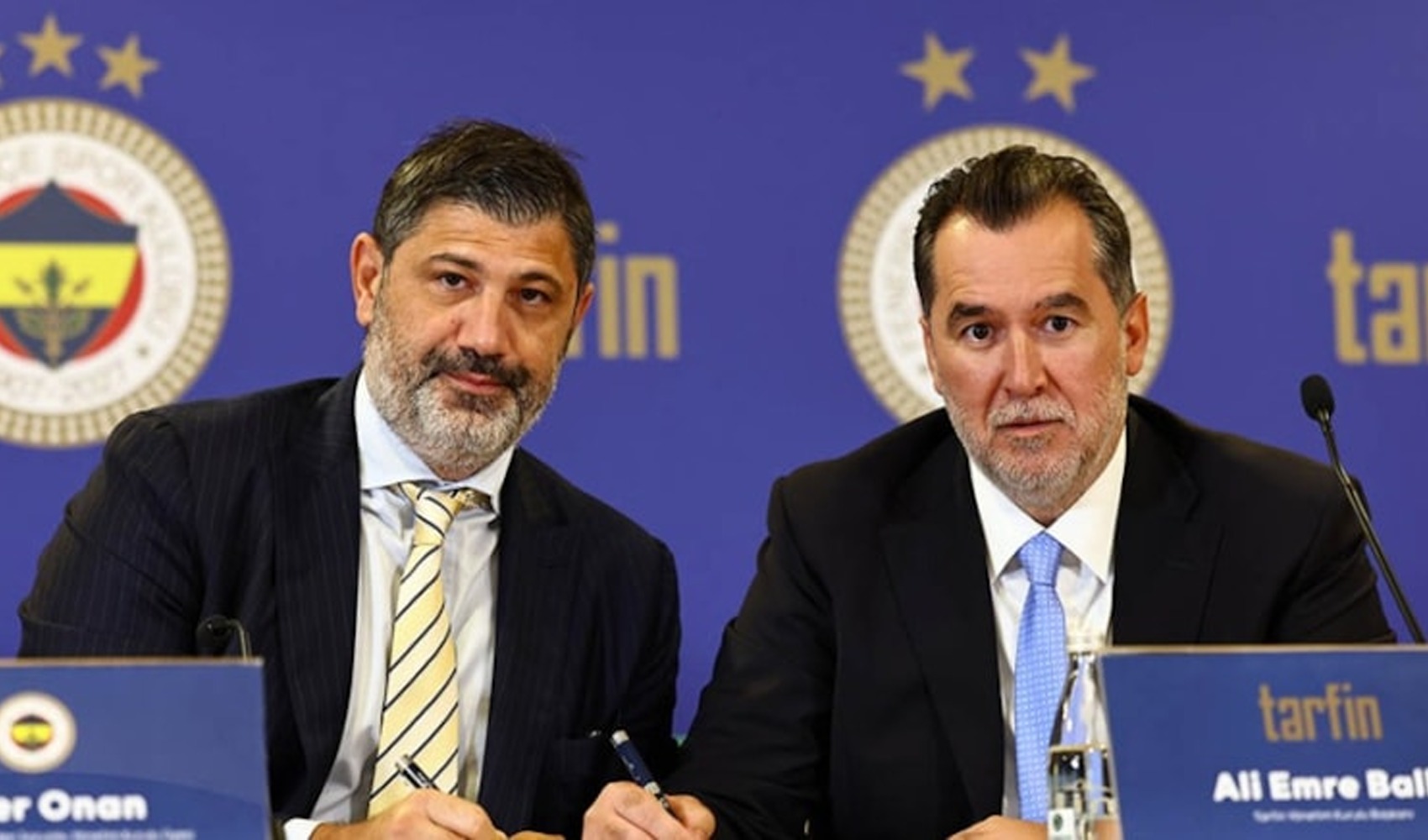
Fenerbahçe's sponsor in crisis