


The dissolution of the PKK: The threshold of a new era for Turkey



Turkey is a country that has lost tens of thousands of its children, displaced millions of its citizens, suffered billions of dollars in economic losses, and opened deep wounds in its social memory during a nearly half-century-long struggle against terrorism. However, today, a historic turning point has been reached with the PKK—which carried out its first armed actions in Eruh and Şemdinli in 1984 and terrorized both within the country and across its borders for years—laying down its arms and dissolving its organizational structure. This development opens the doors to a new era not only in the fight against terrorism but also in terms of establishing social peace, accelerating economic development, reshaping migration policies, and deepening the democratization process.
The Losses of the Past: Social Trauma and Memory
The heaviest price of PKK terrorism for Turkey has been paid in human lives. According to official data, more than 13,000 security personnel (soldiers, police, village guards) have been martyred, more than 7,000 civilians have lost their lives, approximately 100,000 people have been directly affected by terrorist incidents, and 21,000 people have had to continue their lives with physical disabilities and psychological trauma.
Terrorism has affected not only the victims but also their families, their children, and every cell of society. The conflicts that lasted for years, especially in Eastern and Southeastern Anatolia, have deeply shaken education, health, agriculture, investments, and the peace of the local population. This conflict-ridden process has led to social and psychological trauma in every corner of the country, paved the way for the strengthening of structures that are anti-peace and thrive on conflict, and damaged the unity of social sentiment. Therefore, the dissolution of the PKK could be an important opportunity not only for the end of an armed organization but also for Turkey to rebuild its internal peace, strengthen its social integrity, and build its future with hope.
Social Demography and Migration: 3.5 Million People Displaced
In the 1990s, more than 4,000 villages and hamlets were evacuated due to security reasons in the East and Southeast, and approximately 3.5 million people were forced to migrate to western provinces. This wave of migration led to unplanned urbanization, unemployment, and an increase in social problems in major cities; livestock and agricultural activities, which made significant contributions to the economy in the villages, largely came to an end.
A Turkey without terrorism: New horizons from internal security to the economy
With the PKK announcing an end to its armed activities, Turkey has reached the threshold of a major paradigm shift in its security policies. The era based on high-cost counter-terrorism operations, extraordinary security measures, and strict security-oriented approaches, could give way to risk-based, inclusive, and civilian-prioritized security policies. This transformation could lead to broad impacts not only in the field of security but also in the areas of economy and social welfare.
Building a future without terrorism: New security doctrine, integration policies, and regional development vision
With the laying down of arms and the dissolution of the PKK, Turkey is on the threshold of a new process that can be defined as the post-terrorism era. This period necessitates the strategic construction of not only counter-terrorism efforts but also lasting peace, social integration, and inclusive development. For Turkey to successfully manage this process, three fundamental pillars come to the fore: a new security doctrine, integration policies, and a regional development vision.
Economic cost: Lost resources and delayed development
The price paid in the fight against terrorism has not been limited to the loss of human life; it has also led to a massive economic cost. The terror threat that has persisted in Turkey for years has damaged the perception of trust among international investors and deepened regional development disparities.
From 1984 to the present, direct costs, including state security expenditures, operations, infrastructure repairs, and socio-economic support, have reached approximately 400 billion dollars. However, when indirect costs are included, this figure is estimated to be as high as 1 trillion dollars. If these resources could have been directed toward education, R&D, green and digital transformation, regional development, and innovation, Turkey would be at a much more advanced level today.
Terrorism has increased geographical development inequalities; Eastern and Southeastern Anatolia have been deprived of investments, and public investments have been aimed more at compensating for damages. The industrial and service sectors have failed to develop, productivity growth could not be achieved, human capital has diminished due to migration, and social and demographic pressures have increased.
With the end of the security problem, the investment perception toward the region will change positively, and national and international capital will begin to turn toward Eastern and Southeastern Anatolia. These regions, which have high tourism potential, could become new centers of attraction. With the reduction of security expenditures in the public budget, it will be possible to allocate more resources to education, health, and infrastructure; this will create a significant opportunity, especially for the education and employment of the young population.
Families of Martyrs and Veterans: Turkey's Honorable Memory and Silent Heroes
Families of martyrs and veterans are the silent heroes who have paid the heaviest price in Turkey. The dissolution of the PKK has evoked complex emotions in nearly 50,000 families of martyrs and veterans. On one hand, they expect their pain to be given meaning, while on the other, they worry about it being erased from history without accountability. The state's policies regarding the families of martyrs and veterans should not be limited to financial support alone; memory museums, public awareness projects, and legal steps must also be implemented to ensure that what has been experienced is not forgotten by society.
Future Gains: A New Climate Through Development and Social Integration
The PKK's declaration that it has disarmed and will cease operations is also a harbinger of a new internal security paradigm in Turkey. Resources spent on combating the terrorist organization will be reduced, investments in border regions will increase, and the economic and social integration of the local population will accelerate.
With the end of the conflict environment, the agriculture, livestock, tourism, and service sectors will be revitalized; the return of citizens who left their cities due to forced migration will be encouraged, and new employment projects will be implemented. By increasing the employment and educational orientation of the educated young population, regional inequalities will be reduced.
Increasing Social Cohesion
The dissolution of the PKK will also offer a new opportunity for social cohesion that prevents the collective blaming of our citizens of Kurdish origin, who number approximately 15 million. A Turkey where ethnic, cultural, and linguistic differences can be lived under constitutional guarantee will both raise its democratic standards and increase its international prestige.
In this context, a process of social confrontation must be built without forgetting the pains of the past, but while keeping hopes for the future alive. Unless discrimination, marginalization, and regional inequalities are addressed, this opportunity could be squandered.
It is necessary to advise that one must act with this awareness and sensitivity, keeping national interests in mind. Defining war as "...the continuation of politics by other means (weapons), a useless and destructive situation that steals and takes away a person's dreams, life, memories, future, family, friends, and home..." as expressed by the Italian philosopher and statesman Marcus Tullius Cicero, it is essential to approach this process along the lines of "cautious optimism," upholding the principle that "the worst peace is better than the most just war."
A Roadmap for Trust-Based Development
At the point we have reached, the end of armed terrorism is not only a security success but also means the removal of the greatest structural obstacle to economic development. However, the value of this point is immeasurable, not only in political terms but also in macroeconomic terms. Terrorism has created significant instability in the region and led to substantial regional development disparities. The problem is not limited to income; there are also major differences in access to education, healthcare, and public services. For this process to be completed successfully:
• Improving the Investment Environment: Tax exemptions, energy support, and infrastructure incentives should be offered to businesspeople who will invest, particularly in the Eastern and Southeastern Anatolia regions. R&D-focused projects should be supported.
• Agriculture and Energy Investments: Public-private partnerships should be encouraged in areas with high agricultural potential, such as the Mesopotamian Plain, for projects involving modern irrigation, cold storage, and food processing facilities.
• Education and Employment: An education mobilization should be launched in the region, the number of technical schools and vocational high schools should be increased, and cooperative support should be provided for female and youth labor. The loss of human capital must be prevented, and programs with guaranteed higher education and employment should be offered to the region's youth.
• Return and Integration of Displaced Persons: Social housing, employment, and credit policies that will encourage citizens who were forced to leave their cities due to forced migration to return to their hometowns are essential.
• Social Memory Studies: It is necessary to ensure that martyrdoms and sites of terrorist attacks are not forgotten through documentaries, commemoration days, and museums; social memory must be kept alive.
• Deepening Social Peace: The continuation of solution-oriented dialogue with our Kurdish citizens on the basis of equal citizenship will ensure that social peace becomes permanent. Social peace must be strengthened on the basis of rights and equality.
Conclusion: The Price of the Past, the Responsibility of the Future
The goal of a "Turkey without terrorism" is not just a security issue; it could be a historic turning point in terms of democratization, social peace, and the attainment of universal standards for fundamental rights. The PKK ending its armed activities and dissolving itself is a strong signal that a forty-year-long destructive period of terrorism has come to an end. This success will be possible not only through security measures but also through the principles of the rule of law and an inclusive social consensus.
The dissolution of the organization is a symbol that the fears, polarization, and distrust fueled by terrorism can also come to an end. However, for this to happen, it is essential to review security-oriented policies, fully guarantee constitutional rights, and strengthen democracy. Lasting peace can only be built through this transformation.
Learning from the pains of the past, the families of martyrs and veterans must be supported; a sense of justice and gratitude must be made permanent. The families of martyrs and veterans are the silent heroes who have paid the heaviest price for these lands. Therefore, this process must be managed sensitively by safeguarding the legacy of the martyrs and ensuring that gratitude toward veterans remains enduring. While news of peace brings hope, concerns regarding the potential lack of justice must not be ignored.
Turkey is on the threshold of shedding a heavy 40-year burden. This process, if managed with common sense and meticulousness, could be a new beginning not only for security but also for regional development, income equality, and social peace. By directing resources toward peace and prosperity, development should be targeted in a Turkey free from terrorism.
As a society, we must evaluate this historic turning point not merely as a security issue, but also as a 'civilizational choice.' In this process, which will be shaped by the principles of democratization, development, production, prosperity, and fair distribution, the non-violence philosophy of Mahatma Gandhi and the 'Peace at home, peace in the world' principle of our Republic's founder, our Great Leader Gazi Mustafa Kemal Atatürk, should be our guiding lights.
The establishment of peace, tranquility, and security in our country is essential; future generations must have the opportunity to live in a free Turkey without terrorism.
While this critical stage is significant, it is not yet possible to say that the process is complete. Considering our country's social sensitivities, it is essential that this period be managed with extreme care and diligence. Directing our resources toward our people, our regions, and our future is now inevitable. For in an environment where weapons are silenced, peace, freedoms, and development will speak.
Would you like to get notifications about new developments and save news?
- NotificationsNew developments and breaking news
- SaveNews is stored in the app
Most Read

National Anthem surprise from Japanese Ambassador
Kılıçdaroğlu sends formal notice to YENİ Party
Diesel protest in Italy brings roads to a standstill
Is it time for the Turkish Parliament to revoke its 31-year-old 'Casus Belli' decision?
No to the 'opening' bar masked as change, yes to the Republic's bar
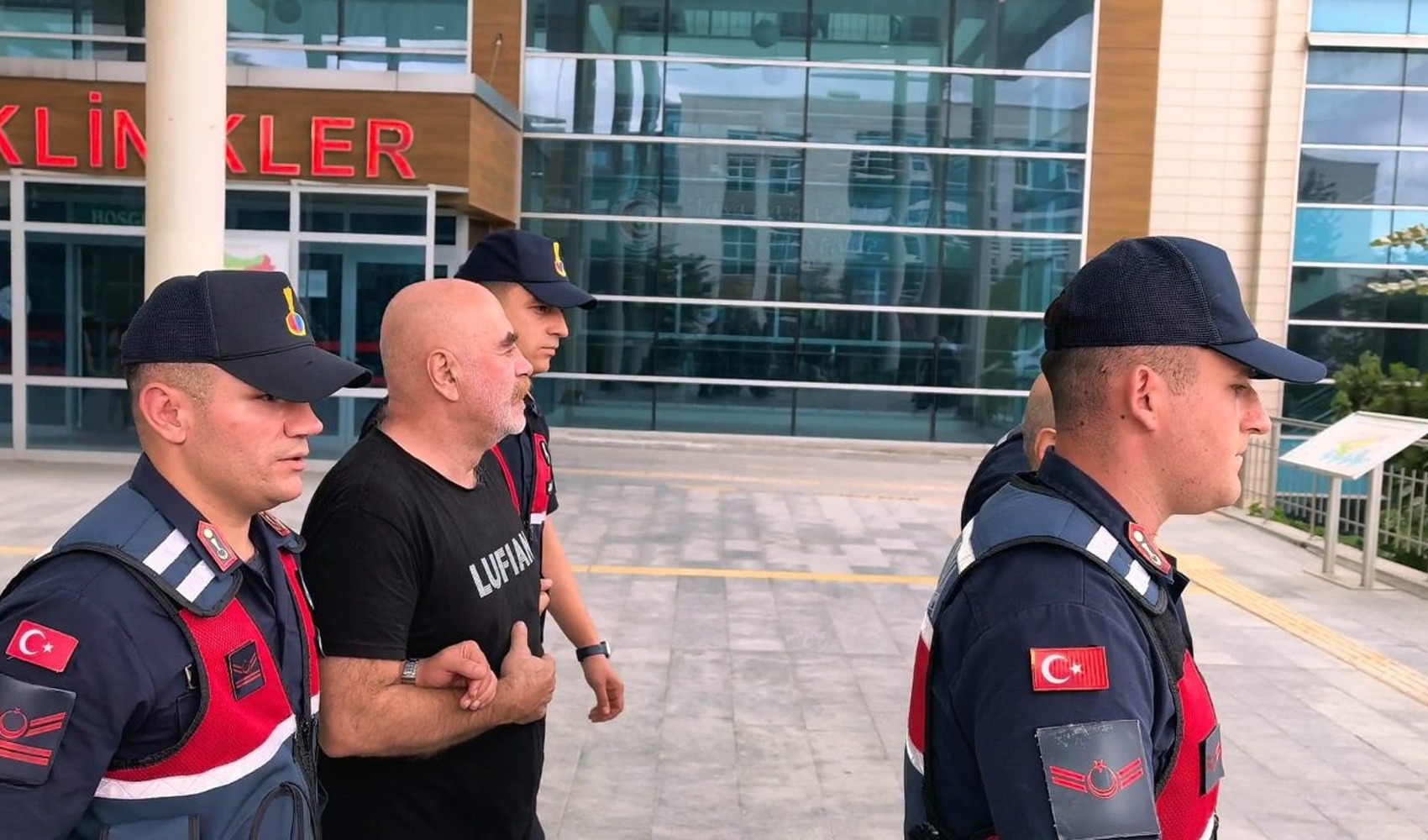
Ezel Akay and his brother's test results came back positive
Why is Paris burning? The crisis of the welfare state and the revolt of social justice
The politics of particles and the financing puzzle: 'Calamitous questions'
A new balance in the Eastern Mediterranean
Fenerbahçe's sponsor in crisis