


Happy 105th anniversary of the Revolutionary Assembly



It is not accurate to limit April 23, 1920, solely to the opening of the Grand National Assembly of Turkey, the organ of legitimacy for the National Will. April 23, 1920, is also the emergence of the New Turkish State onto the stage of history. The first step of the new state was the Amasya Circular of June 22, 1919. With the Amasya Circular, a stance was taken implicitly against the Sultanate and Caliphate, and directly against the Sublime Porte (the Armistice Government). The call for a National Congress, which pointed out that the integrity of the homeland and the independence of the nation, both in danger, could only be protected by the determination and resolve of the nation, was a challenge demonstrating that no will other than the national will would be recognized. The most appropriate definition for the Amasya Circular is that it was a revolutionary call that disregarded the political and administrative authority of the Istanbul government.
It would soon be understood that the Pasha sent by the Palace to the region to calm the public—who were resisting the occupation and responding to Pontic gangs—and to lower national tension, had a different agenda. As the 9th Army Inspector, Mustafa Kemal Pasha, who was sent to Samsun with broad civil and military powers, began organizing the Anatolian Revolution from the very first day of the first step (May 19, 1919). The Erzurum Congress, held in July before the National Congress called for in the Amasya Circular and scheduled for September in Sivas, should be read as the flare signaling the transition from regional to national with the participation of Mustafa Kemal.
The Sivas Congress, held despite all the obstruction efforts of the Palace and the occupiers, is a turning point where the roadmap for the National Struggle, covering Anatolia and Thrace, was determined. The passivity and lack of faith of the Armistice Governments under the pressure of the occupiers were replaced by the excitement of a sacred rebellion. The National Assembly, which opened in Ankara on April 23, 1920, was a much higher stage than the Congresses, a qualitative leap encompassing the entire nation.
The Representative Committee, formed under the chairmanship of Mustafa Kemal at the Sivas Congress, functioned as the executive board for the decisions taken at the Congress. Istanbul seemed to turn a deaf ear to the calls made at the Erzurum and Sivas Congresses for the reopening of the Ottoman Chamber of Deputies (Meclis-i Mebusan), which had been closed by Vahdettin on December 21, 1918. The Representative Committee would make a direct appeal to the public on October 7, 1919, for the formation of a National Assembly to lead the National Struggle. When Damat Ferit, unable to withstand the pressures from Anatolia, resigned, the Ali Rıza Pasha government that replaced him would decide to hold elections. Most of the deputies determined by the elections held were supporters of the Defense of Rights (Müdafaayı Hukuk).
Mustafa Kemal would insist on the Assembly convening in Anatolia. He would point out that it was impossible for an assembly to work freely in occupied Istanbul, and that there was a danger of it being raided and dispersed at any moment, and of nationalist deputies being arrested and sent into exile. Despite all of Mustafa Kemal Pasha's warnings, the view that the assembly should convene in Istanbul gained weight. Upon this, it was decided that the elected deputies would be invited to Ankara before going to Istanbul, where they would be told to form a strong Defense of Rights group in the Assembly and what they needed to do for national liberation.
The last Ottoman Chamber of Deputies opened on January 12, 1920, with the participation of 72 out of 164 deputies, under the chairmanship of the oldest member, Bursa deputy Hacı İlyas Efendi. Despite Mustafa Kemal Pasha's proposal for a Defense of Rights Group, the name Felah-ı Vatan Group (Salvation of the Homeland Group) would be used due to the insistence of some deputies. The last Ottoman Chamber of Deputies (January 12–March 16, 1920) would go down in history as the shortest-lived parliament. On March 16, 1920, the members of the assembly, whose doors were broken down by British rifle butts and whose deputies were arrested, would travel to Ankara by various routes upon the call of the Representative Committee.
It is as astonishing as it is admirable that a nation whose parliament was raided and whose deputies were arrested could convene a revolutionary assembly 37 days later in a barren Anatolian town. Prof. Dr. İhsan Güneş's characterization of the TBMM (Grand National Assembly of Turkey), which opened on April 23, 1920, as a revolutionary assembly, a constituent assembly, the first national assembly, a populist assembly, a supervisory assembly, and a self-sacrificing, entirely domestic, and entirely national assembly that worked by the light of gas lamps and where deputies wrote their motions on kerosene tins, is extremely accurate.
With the start of the work of the National Assembly—that is, the TBMM—on April 23, 1920, consisting of the members of the Chamber of Deputies who could somehow reach Ankara from occupied Istanbul, along with the deputies determined by the supplementary elections, the organ of legitimacy for the National Struggle had emerged.
On the 105th anniversary of the opening of the TBMM, the organ of legitimacy for the Turkish nation's sacred rebellion, we pay our respects and gratitude to the Pasha of the Assembly and the veteran deputies of the Gazi Assembly, which recognizes no authority and no power above the National Will.
Would you like to get notifications about new developments and save news?
- NotificationsNew developments and breaking news
- SaveNews is stored in the app
Most Read

National Anthem surprise from Japanese Ambassador
Kılıçdaroğlu sends formal notice to YENİ Party
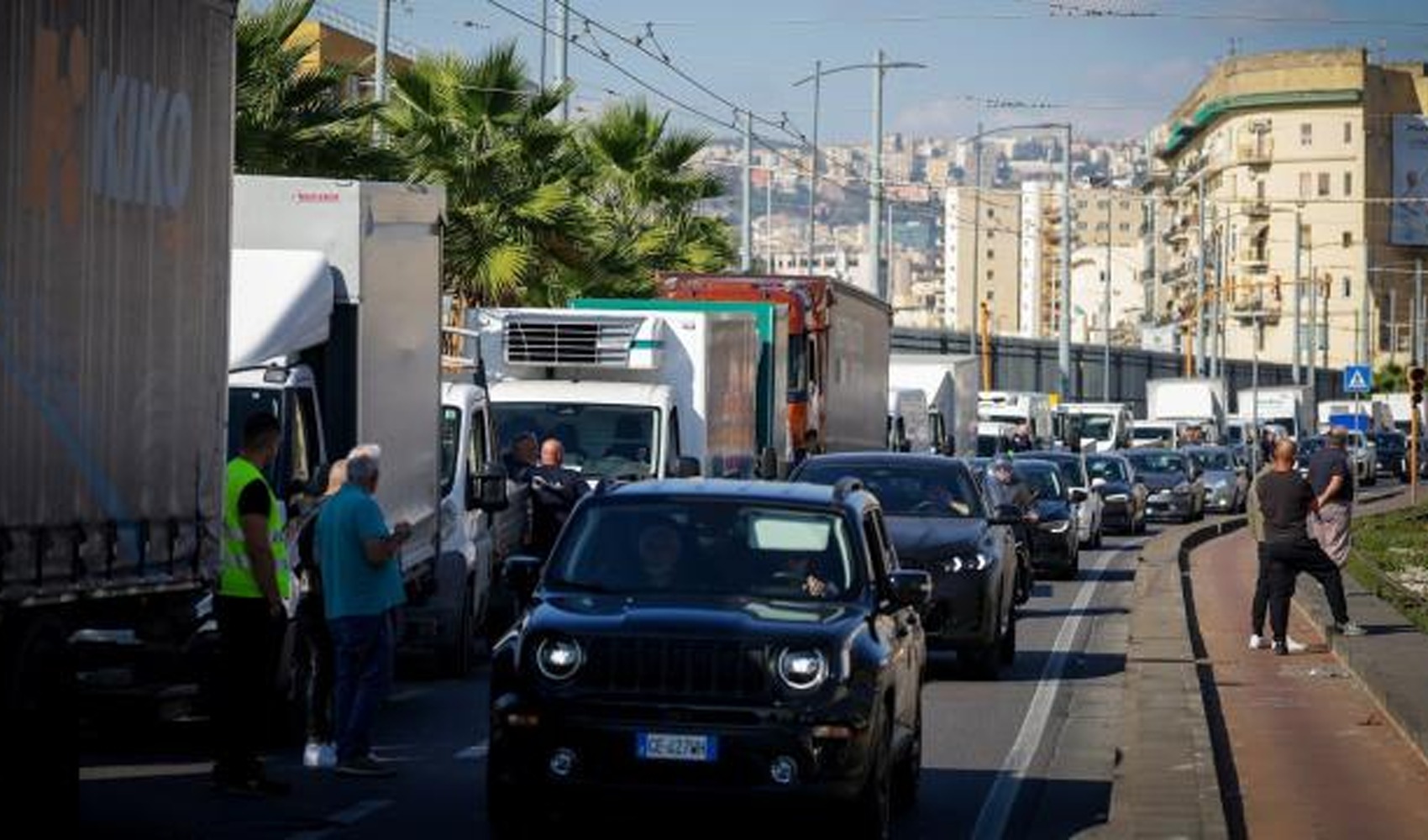
Diesel protest in Italy brings roads to a standstill

Is it time for the Turkish Parliament to revoke its 31-year-old 'Casus Belli' decision?

No to the 'opening' bar masked as change, yes to the Republic's bar
Ezel Akay and his brother's test results came back positive

Why is Paris burning? The crisis of the welfare state and the revolt of social justice

The politics of particles and the financing puzzle: 'Calamitous questions'

A new balance in the Eastern Mediterranean
Fenerbahçe's sponsor in crisis