


Behzat Ç. is back: Turkey is once again at the crime scene


In Turkey, some murders are solved, while others remain cold cases.
Some criminals walk free, while some innocent people waste their lives in prison.
Hiding some truths pays off, while revealing others is a crime in itself.
Behzat Ç., which has met its audience with its 4th season on HBO Max, continues its journey by reminding us of all this.
In the new season, Chief Behzat once again takes viewers to the dark pages of Turkey's recent history. It has been a season where different murders are committed in each episode, ranging from incidents involving the children of the powerful to covered-up homicides, and from the influence of religious sects on politics and bureaucracy to dirty relationships within the police force.
When Behzat Ç. was first broadcast on Star TV years ago, it was a series that fearlessly told the story of the Fethullahist Gang within the police department. If you recall, the FETÖ members were very powerful back then.
However, Chief Behzat and his team never backed down from trying to reveal their true faces.
The Saturday Mothers, the troubles of workers, the problems of educators, and the difficulties of seeking justice in Turkey—all sorts of national issues were made the subject of the series.
***
The new season continues to carry this social-conscious vein of Behzat Ç. Viewers will remember that the Sinan Ateş murder was covered in the first episode of the 3rd season.
In the first episode of this season, we watch a story that reminds us of the Rabia Naz murder.
While the death of Rabia Naz revealed a family's search for justice, it also made the attitude of public institutions and the interference of powerful political figures in the file a matter of debate.
Behzat Ç. made this reminder in the very first episode. A reminder that in this country, some murders are less about who the victim is and more about who they might be connected to…
***
The narrative built around how public resources are shared through a murder committed in a school canteen was also quite striking. Going first to party provincial administrators, then to a member of parliament, and then to a sheikh for a canteen tender…
The tender being delivered to the requested address after the final phone call…
In the episode in question, the viewer is not just dragged along in pursuit of a murder that happened in a canteen… They are confronted with a reality that exceeds the scope of that canteen. The reality that it is not rules and merit that are decisive, but political connections and religious sects…
***
Memduh Başgan is one of the most cult characters of the series. He seems to have lost none of his form in the 4th season. But this time, we see him moving from the depths of the state to the stage of politics. He is trying to become a conservative-democrat politician.
The irony the series builds through Memduh Başgan successfully draws a caricature of today's politicians with their tight suits and big bellies.
***
As the season progresses, the changing face of the criminal world also appears as one of the topics covered by Behzat Ç. Motorcycle assassins, new-generation gangs, competing criminal groups…
The 7 Dwarfs and the 40 Thieves…
It is debated today that even if these gang members are detained, they are released because they are minors, and even if they are arrested, they become even more powerful in prison. Behzat Ç. touches upon this very problem.
Behzat Ç. does not provide individual answers on how to solve these questions. But it makes an important reminder.
***
We can also say that the characters have changed in the new season. Of course, many changes have taken place in the Homicide Bureau over the years. Some left the bureau, some joined.
However, there are 3 people who have not changed: Behzat Ç., Akbaba, and Hayalet…
But they too have changed within themselves over 15 years.
The losses Behzat has experienced over the years and what he went through after Şule's death seem to have calmed him down a bit… We see that Behzat, who used to direct his anger mostly at others, has largely given up this habit.
Hayalet is now a bit more humorous and foul-mouthed. A bit more inclined toward matters of the heart.
Akbaba, who had a heart attack in the previous season, has evolved into a lovable grump as he has aged.
However, there is no weakening in the bond between this trio.
***
The 3rd and final episode of the series is, so to speak, the kind that touches a raw nerve…
What happens to the young woman, a Communications Faculty student and intern journalist, is quite familiar. First, her complaint is swept under the rug, and in the end, she is killed and made to look like a suicide.
This event in the series may not take place in Elazığ, but it brings to mind the words of Tansu Çiller, the prime minister of the Susurluk scandal era: "Those who fire bullets and those who take them for the sake of this nation, for the sake of the country, for the sake of the state, are always remembered with respect by us.”
It won't be hard for you to guess who the former state dignitary is.
***
The new season of the series does not stand out with its classic detective structure. No curiosity or mystery has been created while the murders are being solved. This may be a conscious choice because exposing political and social issues is clearly the most important desire.
This is quite satisfying for a viewer who is a fan of Behzat Ç. like me.
Because Behzat Ç. was never a detective story based solely on finding out who the killer is.
We loved it so much because it told the streets of Ankara, the corridors of the police department, the conflicts within the state, political reckonings, and the desperation in people's daily lives all together.
The topicality of the series comes from here. Because Turkey is once again at the crime scene.
Also, I am very curious about how those who watch the final scene of the new season will feel.
Sometimes life gets ahead of the script. And sometimes the script pins a person to their seat by predicting what is happening in life.
Behzat Ç. is back. Kudos to the entire team for their hard work.
Would you like to get notifications about new developments and save news?
- NotificationsNew developments and breaking news
- SaveNews is stored in the app
Most Read
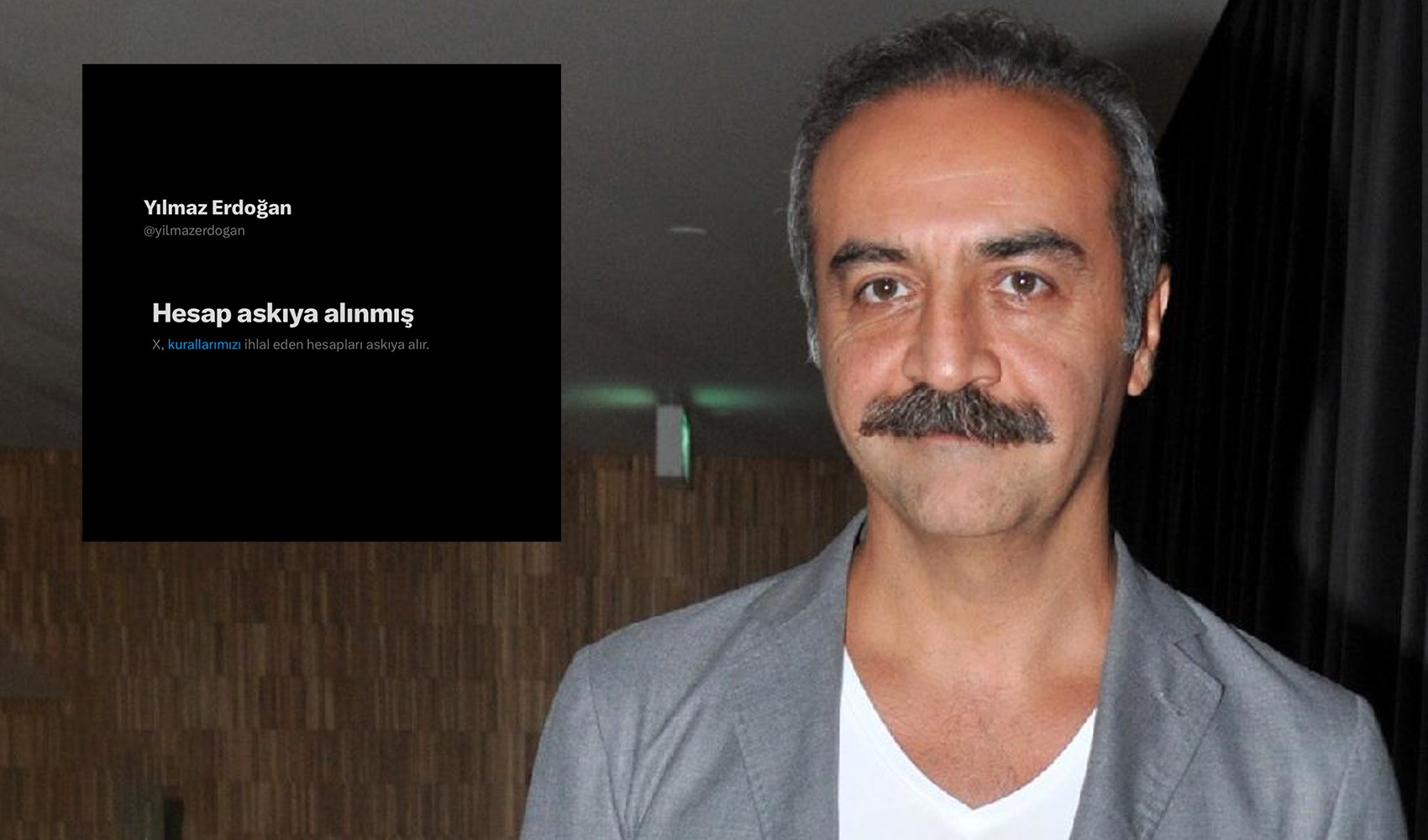
Yılmaz Erdoğan's X account suspended

Güneş: I wish Sergen Yalçın success

Apple's first foldable phone, iPhone Duo, has gone on sale
The fire of philosophy is stoked in Ankara

Application from Mustafa Sandal's wife Melis Sütşurup and her father

Multi-vehicle accident in Bağcılar: There are injuries

Decay at the torn threshold of the impossible: The 'Justice' of lawlessness in the fund crisis

Behzat Ç. is back: Turkey is once again at the crime scene
Borsa İstanbul caught in the crosshairs of interest rate cuts, geopolitical storms, and the fund law

Another municipality in Istanbul is switching to the NEW Party!