Hilal Özdemir
Politics in Turkey has always been a very chaotic, high-tension field. Society's interest in politics is also higher than it should be compared to many other countries. While politics is experienced so intensely, its capacity to solve problems is low. This contradiction lies in the way politics is conducted in our country and in the background relationships.
It is clear that the political arena will be redesigned in 2025... Süleyman Demirel once said, '24 hours is a very long time in politics.' However, looking at the events that have taken place in our country in recent years, and especially in recent days, we see that even 24 minutes is a long time.
MHP Chairman Devlet Bahçeli's statements regarding Abdullah Öcalan, the AKP government's appointment of trustees to CHP municipalities, and finally the removal of Istanbul Metropolitan Municipality Mayor Ekrem İmamoğlu from office and his imprisonment... The political agenda is more active than ever.
So, what will change for society while all this is happening?
What made me ask these questions was re-watching the film 'Nasipse Adayız', which Ercan Kesal stamped with his mark as screenwriter, director, and actor.
We don't know what will happen in politics in 2025, but Kesal's film gives us important ideas about the way politics is conducted.
'Nasipse Adayız' is a film adapted from Ercan Kesal's book of the same name, which recounts his candidacy process for the Beyoğlu Mayoralty in 2004.
The film focuses on one day of Dr. Kemal Güner's election campaign. This single day reflected on the silver screen reveals what candidates experience during the election preparation process, the attitudes of the people around them, and the place of women in male-dominated politics.
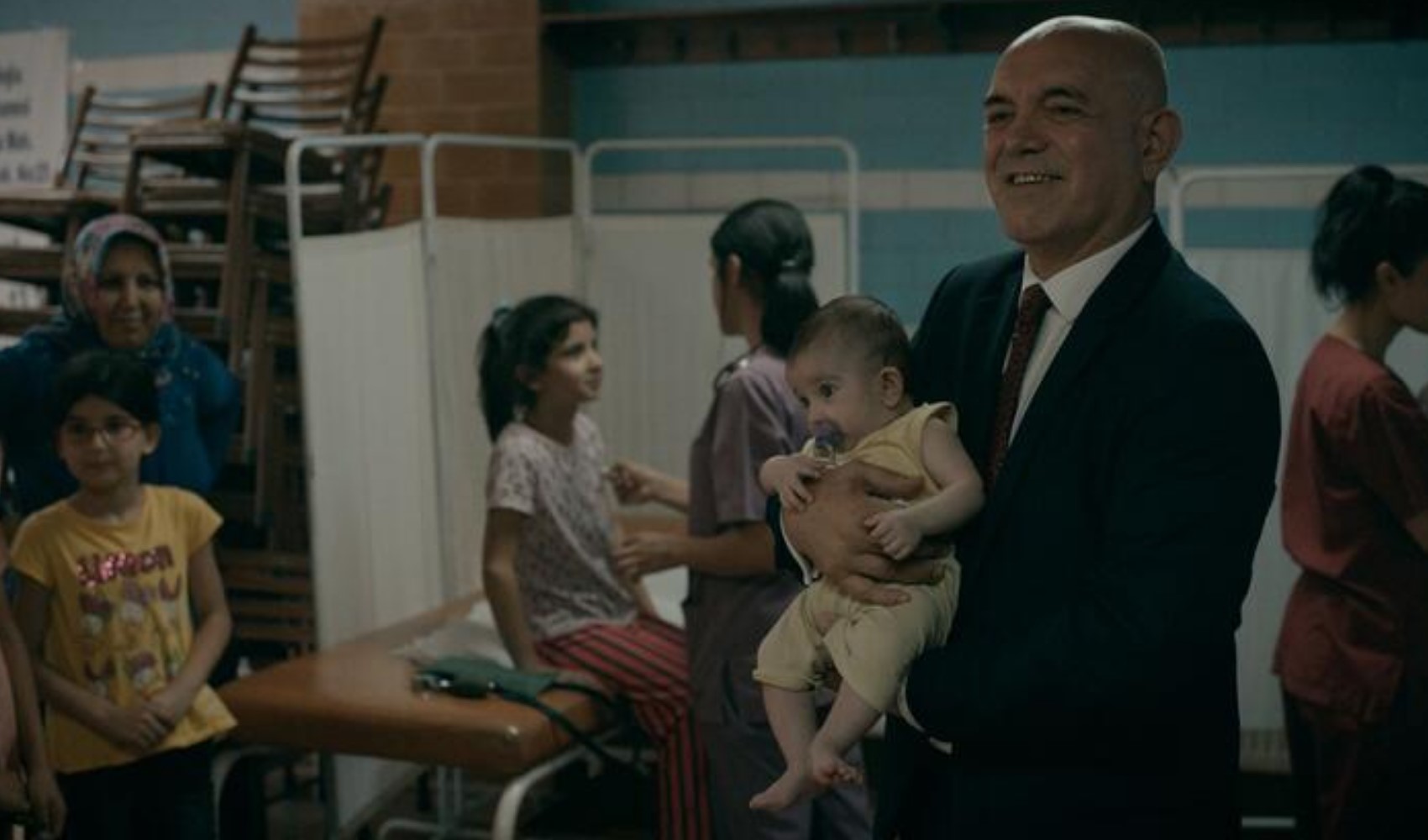
Starting his day at the hospital he owns in Okmeydanı, Dr. Kemal Güner meets with people from different walks of life, from neighborhood residents to shopkeepers, from association managers to party chairmen, within the framework of the election campaign. Although positions, offices, and titles change, the only thing that remains constant is the 'transactional' relationships in politics. Trying to gather support for himself in the election campaign, Güner leaves every door he enters with hope, carrying a burden of endless demands on his back.
In the film, where phrases like 'We'll handle it, brother', 'That job is definitely done', and 'If anyone can solve your problem, it's him' fly through the air, what remains for Kemal at the end of the day is to sip his drink in a textile workshop accompanied by the noise of sewing machines.
IT IS EASY TO RISE BY ELEVATOR, IF YOU CAN GET ON...
A few years ago, I read the book 'Lessons with Abbas Kiarostami'. Iranian director Kiarostami says the following while chatting with his students about film and screenwriting in his cinema workshop: 'I have always thought that elevators are good places to shoot films. There is a tremendous possibility of drama and poetry in stories that take place inside or around elevators.'
After these sentences, Kiarostami asks his students to bring short film scripts set in an elevator when they come to class the next day.
Ercan Kesal, as if he were a student of Kiarostami, tells of the complicated aspects of politics from the past to the present, its background that seems simple but holds deep meanings, with the elevator scene where he reflects the essence of the film to the audience in the best way.
'NUMBER ONE' WILL COME...
In the political arena in the film, there are more people looking to grab a seat for themselves on the political stage if they are elected than those who sincerely support Dr. Kemal.
Those who flatter him to his face, saying, 'If you don't win, who will?', are concerned with 'grabbing whatever we can in this process, even if he doesn't win' as soon as they take two steps away. Dr. Kemal, on the other hand, expresses the cycle of the political wheel succinctly by saying, 'Why does a man run for office every term knowing he won't be elected?'
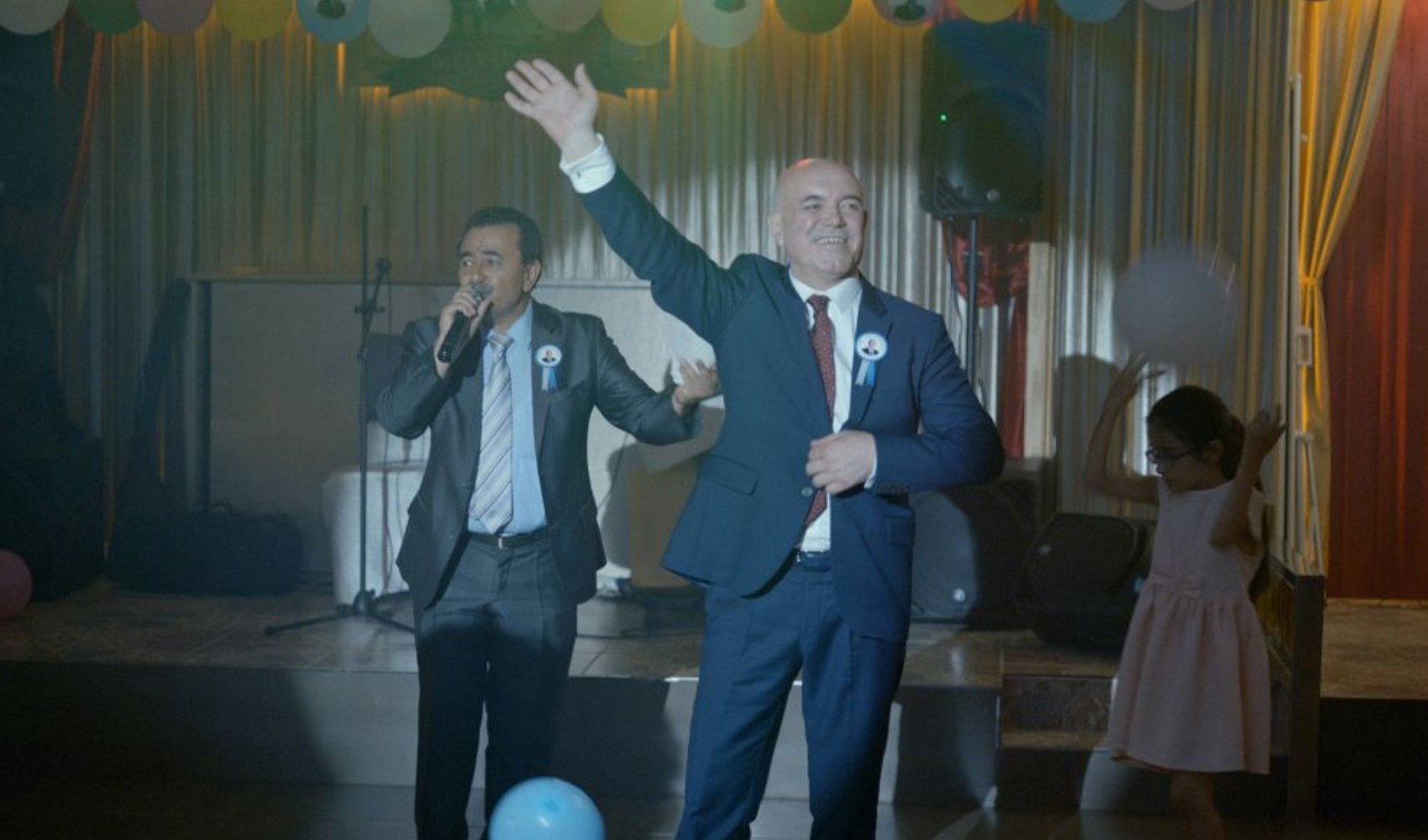
Number One is the chairman of the party for which Kemal is a candidate. After all, for Kemal, who is a 'candidate', to rise to 'candidacy', he needs to get into the good graces of Number One.
Kemal, who wants to meet at an event at the hotel and talk about the candidacy process, encounters a huge wall of people. Just as there are people around him trying to get their business done, there are plenty of these people around Number One as well.
Each of these people is like a lion trying to catch its prey, with sharp teeth and claws that are always predatory.
Kemal wants to be one of them too. They all head towards the elevator together. The goal is clear; to go up with Number One. It is precisely at this point that Ercan Kesal shows his mastery in the script and reflects the essence of politics, which could be explained in pages, onto the screen with a single scene.
Going up with Number One is to step up the political ladder more securely. You now have the 'Chairman' behind you. However, since there are dozens of people in this race, neither politics nor the elevator used as a metaphor can carry the load of so many people. To rise, one must get rid of some burdens. For the elevator to go up safely, one person must get off. That person is Kemal, the crawling individual of politics, who has not yet reached the power of an experienced hunter.
In this scene, Kesal and Kiarostami meet in the universal language of cinema in the elevator metaphor.
A POLITICAL CAREER RISING ON THE HANDS OF LABOR...
Another element that draws attention in the film 'Nasipse Adayız' is class conflict. At the end of the film, Kemal Güner throws himself into a textile workshop of a friend he knows.
On one side, there are people of different nationalities trying to finish flags for the election until late hours, and on the other side, the man introduced as the 'Former Minister', Doctor Kemal, and the workshop owner...
While one side is working their fingers to the bone for a few pennies to finish flags for the candidate, the other side is comfortable enough to light a barbecue inside the workshop and eat lamb chops with pleasure.
This is one of the scenes where the corruption of the order, the exploitation of labor, and the reality that politics does not go beyond 'we'll handle it, brother' are reflected most clearly.
ARE WOMEN WINDOW DRESSING OR REPRESENTATIVES IN POLITICS?
The prominent female characters in the film are Kemal's ex-wife Figen, Arzu who helps with the election campaign, and the waitress girl at the wedding hall.
Figen is a strong and pleasant woman. After separating from Kemal, they remained friends and continued to meet from time to time. The reason they come together again and present the image of a happy couple is 'politics'. After all, a man should first be able to manage his home, and candidates should impress with a good family profile.
However, Figen is a woman who is kept by her husband's side as an accessory just to give the image of a good family, and who is forgotten in a corner of the table while Kemal deals with other guests in the election hustle. Yes, she is forgotten... Because while the people coming to the hall are potential votes, Figen has to be there like a mandatory service.
Another woman in the film is Arzu...
Arzu, who runs the election campaign, suffers from not being listened to by men just because she is a woman while explaining the work that needs to be done to those around her. Men do not like to take orders from a woman. Especially, they do not like women who are in a higher position than them in the business world at all. No matter how much Arzu shouts, she cannot be as effective as a man's whisper.
Finally, the person we need to address is the waitress with the angel tattoo. We say 'with the angel tattoo' because we don't know this girl's name. No one even bothers to learn the name of the girl, who is at a lower status than the others. Because she is an employee who has to serve the people there. Learning her name is not as important as the 'fake sincerity' to be shown to the high-ranking people who come there.
'Nasipse Adayız' tells a lot about politics, society, and people. Let's end our article with the simple question of Dr. Kemal, who best expresses many of the things told: 'Why does a man run for office every term knowing he won't be elected?'
News Source: 12punto