



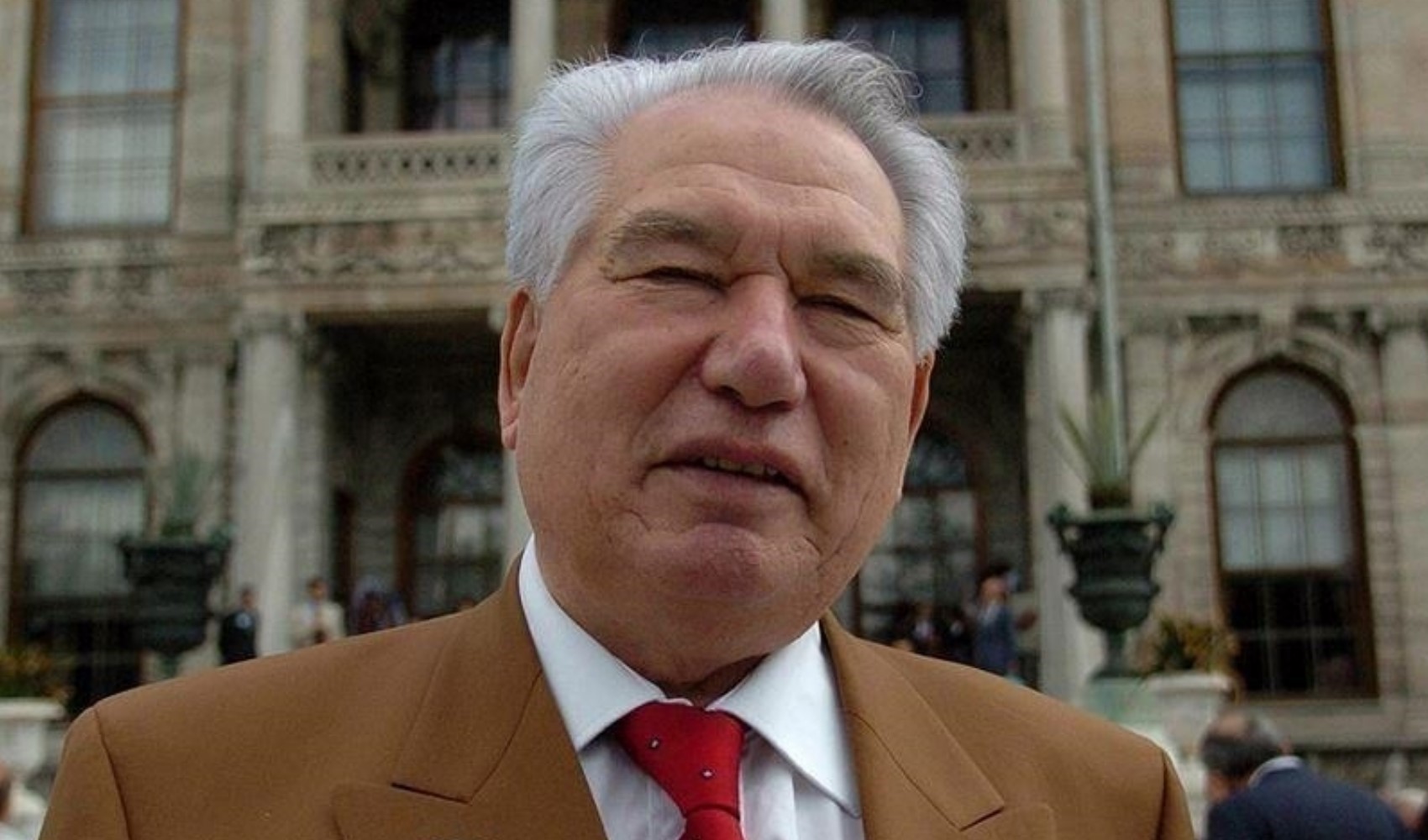
Chingiz Aitmatov, one of the greatest writers of Kyrgyz and world literature, is being commemorated on the 17th anniversary of his passing.
Aitmatov was born on December 12, 1928, as the child of statesman Törekul Aitmatov and Tatar-origin theater artist and teacher Nagima Aitmatova.
Born in the village of Sheker in the Talas region of Kyrgyzstan, the master writer began his school life in 1935 at a Soviet school in Moscow, where he also learned Russian.
-HE GREW UP LISTENING TO THE MANAS EPIC-
Following his father's arrest in 1937 and his execution by firing squad a year later, Aitmatov was raised by his paternal grandmother, Ayıkman Hanım, a wise woman who told him stories from the Manas Epic.
Continuing his education at a Russian boarding school in Kirovskoye, where his family moved in 1938, the writer began working at a young age due to his family's financial difficulties.
HE WORKED AS A RUSSIAN TEACHER AT THE AGE OF 14
At just 14 years old, Chingiz Aitmatov worked jobs such as tax collector, census taker for agricultural machinery, and Russian teacher.
After moving to Dzhambul with his family in 1946 following the Second World War, Aitmatov entered the Veterinary Technical School, graduating at the top of his class. He later graduated with honors in 1953 from the Frunze Agricultural Institute, which he had entered in 1948.
While beginning his writing career in Moscow, Aitmatov addressed the lives of Japanese children suffering from hunger and misery after the war in his 1952 story, "The Journalist Cyuda."
During his institute years in 1952, Aitmatov gained experience working as a reporter and writing columns for city newspapers.
The master writer also worked as a senior livestock specialist at the Kyrgyzstan Livestock Research Institute between 1953 and 1956.
Blending Kyrgyzstan's folkloric stories with modern literature, the master writer was admitted to the Soviet Writers' Union in 1957 with his works.
Aitmatov continued his education at the Maxim Gorky Literature Institute in Moscow from 1956 to 1958 and began to gain wider recognition, especially after his 1958 work "Jamila" was translated into French by the French poet Louis Aragon.
PASSED AWAY IN GERMANY IN 2008
Awarded the Lenin Prize in 1963 for his work, Aitmatov also served as a deputy in the Soviet Union Parliament in addition to his literary endeavors.
Aitmatov, who was one of the five advisors to Mikhail Gorbachev, the former President and last leader of the Union of Soviet Socialist Republics (USSR), was appointed as Kyrgyzstan's UNESCO representative by Kyrgyz President Askar Akayev in 1996 with the title of "cultural ambassador."
After Kyrgyzstan gained its independence, Aitmatov continued his literary work and also represented his country as an ambassador in Luxembourg, Belgium, and the Netherlands.
Aitmatov, whose works have been translated into 176 languages, received numerous awards, including the 1985 Jawaharlal Nehru Award in India, the 1988 Japan Institute of Eastern Philosophy Academy Award, the 1994 Austrian State Prize for European Literature, the 1998 Friedrich Rückert Prize, and the 2004 Alexander Men and Lev Kopelev Prizes.
Never abandoning the lands where he was born and writing extensively about the steppes and their way of life, the author included themes of the war era, the pain of love, heroic tales, traditions and customs, lullabies, folk songs, fairy tales, and legends in his works.
The author suffered a sudden kidney ailment in Kazan, the capital of Tatarstan, where he had gone for a documentary shoot for a Russian television channel in 2008, and passed away on June 10, 2008, at the age of 79 in Germany, where he had been taken for treatment.
In accordance with his will, Aitmatov was laid to rest at the Ata-Beyit National History and Memorial Complex in Bishkek, where the grave of his father, for whom he had longed his entire life, is also located.
HE CAME TO TURKEY FOR THE FIRST TIME IN 1975
Aitmatov became known in Turkey with his 1970 novel "My Poplar in Red Scarf." The 1977 film of the same name, adapted from the book and starring Kadir İnanır and Türkan Şoray, became a classic of Turkish cinema.
Aitmatov, one of the most widely read foreign authors in Turkey, first came to Turkey in 1975 to receive the Turan Country Literature Service Award.
Chingiz Aitmatov visited Istanbul two more times: in 1992 to attend the Istanbul Cinema Days and in 2007 to receive the Turkish World Award and an honorary doctorate.
An international symposium was held in his name in Ankara in 1998, and the Chingiz Aitmatov Information House was opened in 2013 as part of the Eskişehir Turkish World Capital of Culture events.
Aitmatov, a source of pride for the Kyrgyz people who produced numerous works throughout his life, became the greatest gift the Kyrgyz people gave to the Turkic world and world literature.
The year 2018 was declared the "Year of Commemoration" for Aitmatov in the Turkic world by the International Organization of Turkic Culture (TÜRKSOY) on the 90th anniversary of his birth.
Under the leadership of Prof. Dr. Sami Güçlü, Chairman of the Anatolian School Executive Board, more than 600 high school and university students in Turkey read all of Aitmatov's works in honor of the 90th anniversary of his birth.
The Manas and Chingiz Aitmatov National Academy was established in Kyrgyzstan to research, preserve, and promote the Manas Epic and the works of Chingiz Aitmatov.
In February 2025, the Chingiz Aitmatov Institute began operations in Ankara to keep the memory of Chingiz Aitmatov alive and ensure the transfer of Turkish culture to future generations.
HE INTRODUCED THE CONCEPT OF "MANKURT" TO WORLD LITERATURE
Aitmatov used the concept of "mankurt" in his 1980 novel "The Day Lasts More Than a Hundred Years" to warn nations about people who turn their backs on their history, forget their past, become alienated from their families, their nation, and their own values, and have no purpose.
The concept of "mankurt," also used to describe alienation from one's society, was embraced and adopted by the world as much as it was by Aitmatov himself.
HIS WORKS WERE PUBLISHED IN 128 COUNTRIES
Aitmatov authored many unforgettable works, including "Difficult Passage (1956)," "Face to Face (1957)," "Jamila (1958)," "My First Teacher (1962)," "Mother Earth (1963)," "Tales of the Mountains and Steppes (1963)," "Farewell, Gulsary! (1966)," "My Poplar in Red Scarf (1970)," "The White Ship (1970)," "The Ascent of Mount Fuji (1973)," "The Day Lasts More Than a Hundred Years (1980)," and "The Cloud Piebald Dog Running Along the Edge of the Sea (1990)."
Chingiz Aitmatov received 46 state awards from different countries, along with the Kyrgyzstan State Hero Award, the India Jawaharlal Nehru Award, the Japan Institute of Eastern Philosophy Academy Award, the Austrian State Prize for European Literature, the Friedrich Rückert Prize, and the Alexander Men and Lev Kopelev prizes.
News Source: AA









