Hilal Özdemir
In our country, thousands of workers have lost their lives in mining accidents throughout history. Looking at recent history, one of the greatest disasters etched into our memories is the Soma mine disaster, where 301 workers perished under the rubble. In the 2024 accident in İliç, Erzincan, we lost 9 of our workers.
While all these tragedies occur, workers continue to seek their rights to work under better conditions.
The most recent example of this was the struggle of the Çayırhan mine workers. Before the tender for the privatization of the Çayırhan Thermal Power Plant and Mine in Ankara, the workers barricaded themselves inside the mine.
While the labor struggle in general, and the struggle of mine workers in particular, continues almost uninterrupted, there are very few films in our cinema focusing on the labor struggle since the September 12 coup!
For this reason, while the struggle of mine workers is on the agenda, I have chosen a 1978 film that deals with the struggle of mine workers in our cinema.
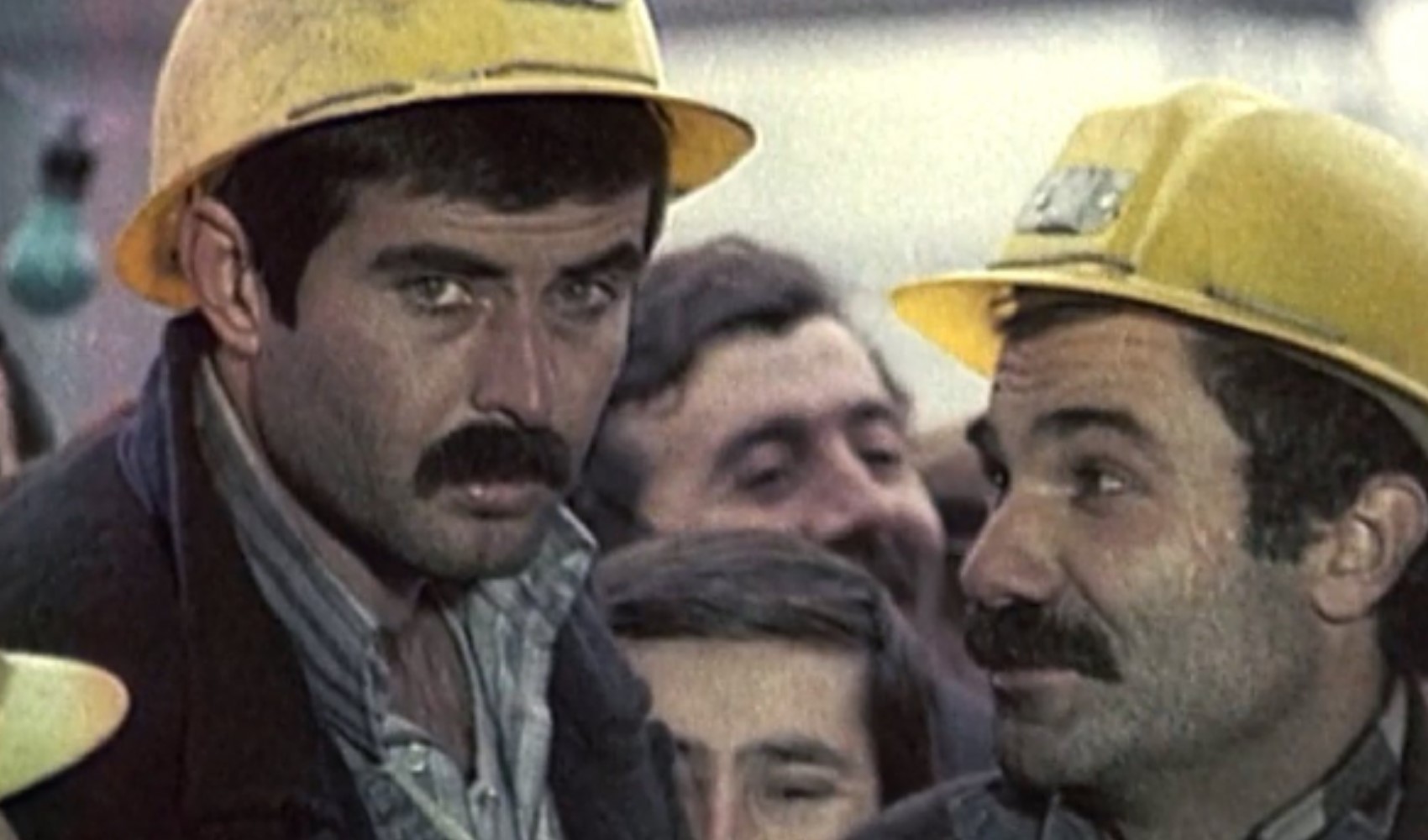
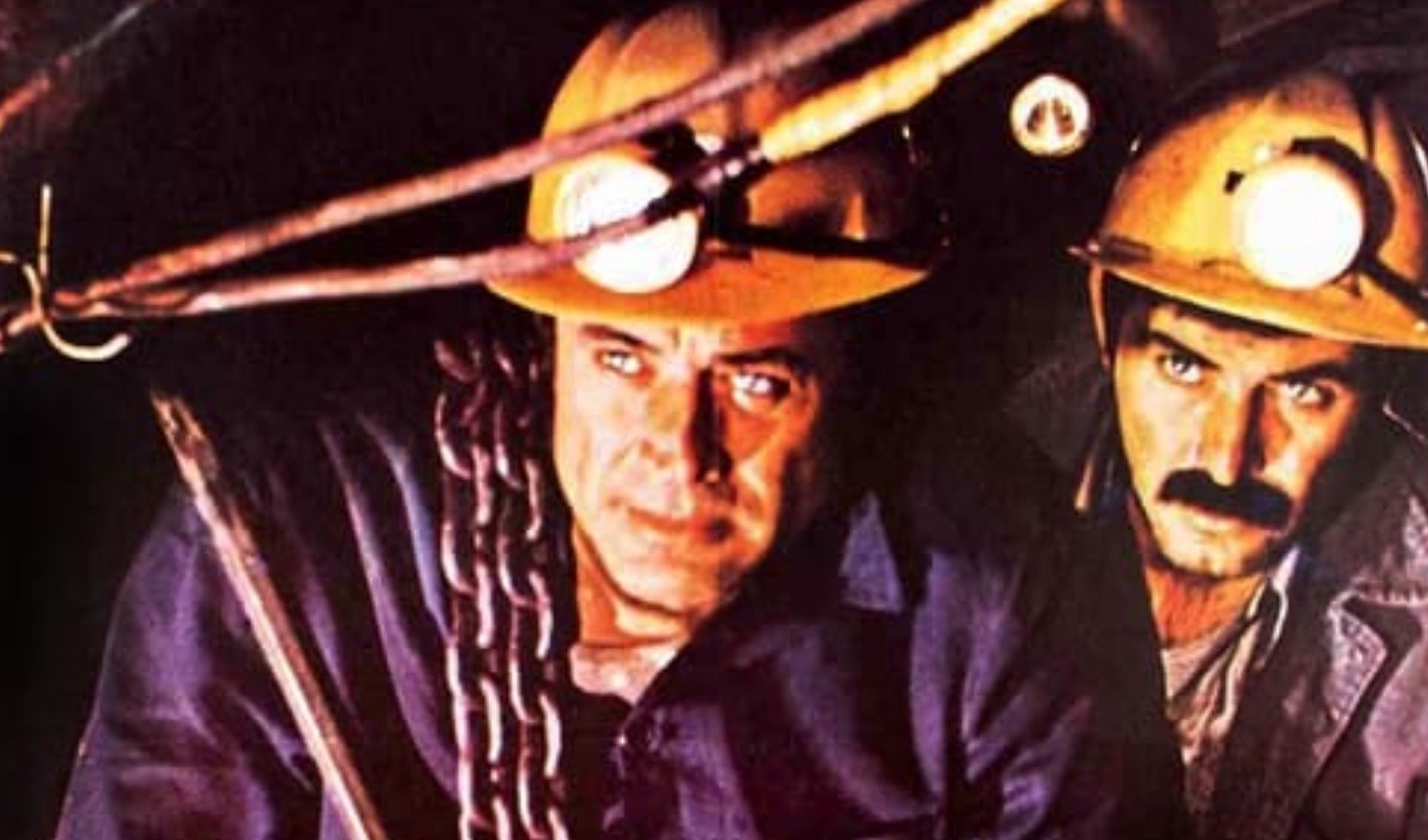
Filmed in 1978 during a turbulent period in Turkey and directed by Yavuz Özkan, the film 'Maden' brings together Cüneyt Arkın, Tarık Akan, Halil Ergün, Hale Soygazi, and Meral Orhansoy in the lead roles.
The film opens with footage of workers carrying their friends, who lost their lives in an accident at the mine where they worked, to an ambulance. After laying their deceased friends to rest, the workers gather at the mine. İlyas (Cüneyt Arkın), who possesses political consciousness regarding labor rights, tries to persuade his friends to collect signatures for the inspection of the mine. While İlyas is speaking, the workers' eyes suddenly catch a traveling tent theater that has arrived in their town. The workers do not even wait for İlyas to finish his speech before heading to the tent.
İlyas: We mourn them for three days. Then it's back to business as usual.
Workers: It's destiny, İlyas brother... When your time comes, a headache is just an excuse.
İlyas: Does our time always have to come!
These lines in the film are proof that there has been no change from the past to the present in the approach to workplace homicides, especially mining accidents. After every disaster that occurs in our country, the memory of officials appearing on screens and reciting words like "destiny, fate, and nature" one after another remains fresh.
In the film 'Maden', the criticism is not directed only at the bosses. Harsh criticisms are also leveled at the collaborative, pro-management union.
Nurettin (Tarık Akan): We are not donkeys. We are workers! We created this world, damn it! Everything that exists is thanks to us!
İlyas's efforts to organize the workers, as he explains to his friends at every opportunity that they must seek their rights, reach the ears of the boss and the union. The boss's men assassinate İlyas. İlyas is wounded. It is after this incident that Nurettin's transformation begins. Nurettin starts the change and transformation in his life with his relationships with his family. He shows the attention he had not previously shown to his wife and children. Nurettin emphasizes that everything should be white. By painting the walls of the house he lives in with his family white, he turns a new leaf in his and his family's life.
Considering that white also symbolizes cleanliness, purity, and honesty, the symbolic value of this scene in the film increases even further.
Nurettin has now taken over the leadership of the workers at the mine. He goes to the mine and gives a speech to his friends. He talks about the need to change the exploitative order in working conditions and that if they do not unite, more of their friends will die. The workers, whose eyes have now been opened by the shooting of İlyas—who had lost his friends one by one in the mine—support Nurettin. They begin to collect signatures and slow down work.
While all this is happening, İlyas recovers and returns to work. However, the boss, who could not take his life by having him shot, this time makes a plan to kill İlyas in a mining accident. While İlyas, Nurettin, and other workers are working in the mine, a collapse occurs. The workers who survive the collapse carry İlyas's lifeless body out on their hands toward the light.
The film, which begins with a collapse, ends with the same scene. In the final scene, the workers return to the place where they lost their friends in the mine. But this time, they are arm in arm, more united, and seeking their rights.
'Maden' is a very successful film in terms of its screenplay, acting, and the realistic portrayal of underground mine shafts on screen.
We see once again that our local cinema was bolder in the past in addressing issues of migration, social problems, women, and labor. Moreover, these films were shot under the conditions of martial law and censorship leading up to September 12.
An important issue addressed in the film 'Maden' is the perspective on women. The women in the tent theater represent another aspect of exploitation. The fact that mine workers, who are caught in the gears of harsh exploitation, cheer "open, open, open" at the women singing and dancing at the tent entertainment shows the view of women held by workers whose class consciousness has not yet developed.
The events between the 'Halkacı Kız' (The Hoop Girl) played by Hale Soygazi and the character of Nurettin played by Tarık Akan, and the fact that the 'Halkacı Kız' does not even have a name, are among the other important scenes reflecting the perspective on women.
'Maden' also holds an important place in our cinema for bringing together two star actors like Tarık Akan and Cüneyt Arkın, who had mostly played in Yeşilçam melodramas and adventure films until then, in a film about the labor struggle.
Tarık Akan describes his participation in social realist films, the embargo applied to him because of this, and sharing the lead role with Cüneyt Arkın in the film 'Maden' in an interview: "Because I didn't want to shoot salon films, Ertem Eğilmez banned me. He said, 'You will go hungry, you will do what I say.' I was stubborn... And no film offers were coming. I couldn't shoot a film for a year and a half. For a year and a half, I slowly ate through the money I had saved and finished it. During this period, I read the script of 'Maden' that Yavuz Özkan had given me. But there was no money. Yavuz Özkan said, 'Let's offer it to Cüneyt Arkın too; if two stars come together for the first time in Turkish Cinema, we'll shake things up.' Cüneyt read the script and accepted. We made an agreement, he became a partner in the company. With that agreement, I went to all the companies that bought films in Anatolia and sold 'Maden'. I came to Yeşilçam with bags full of promissory notes. We did a great job with this film! The seven companies that put an embargo on me were left speechless, I completely broke their embargo."
As we come to the end of the article, it is impossible not to mention the awards the film received. The film 'Maden' brought the 'best film' award at the 15th Golden Orange Film Festival, as well as the 'best actress' award to Hale Soygazi, 'best actor' to Tarık Akan, and 'best supporting actress' to Meral Orhansoy. The film's music, which belongs to Zülfü Livaneli, still holds its place in our memories.
News Source: 12punto