Interview: Sercan Meriç
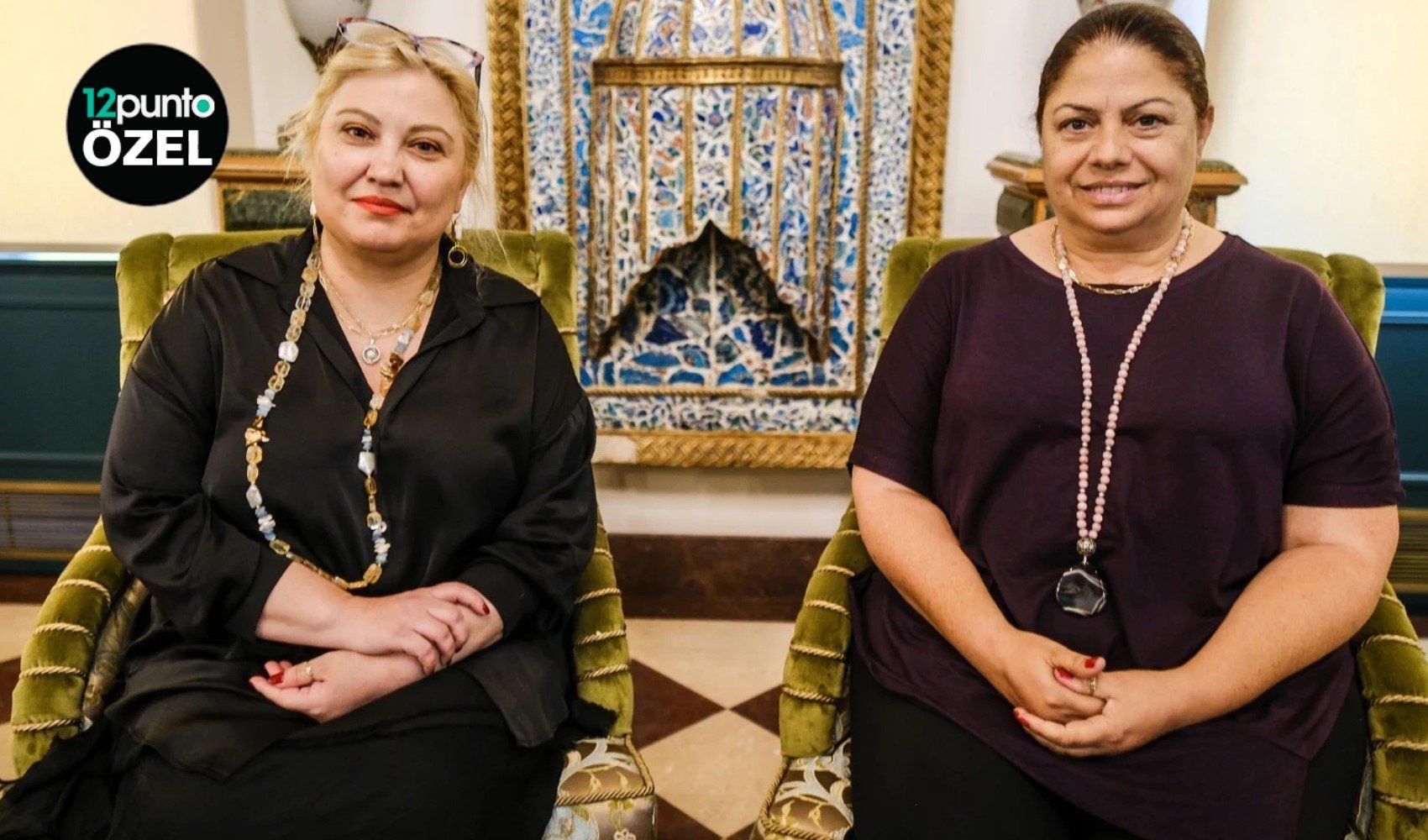
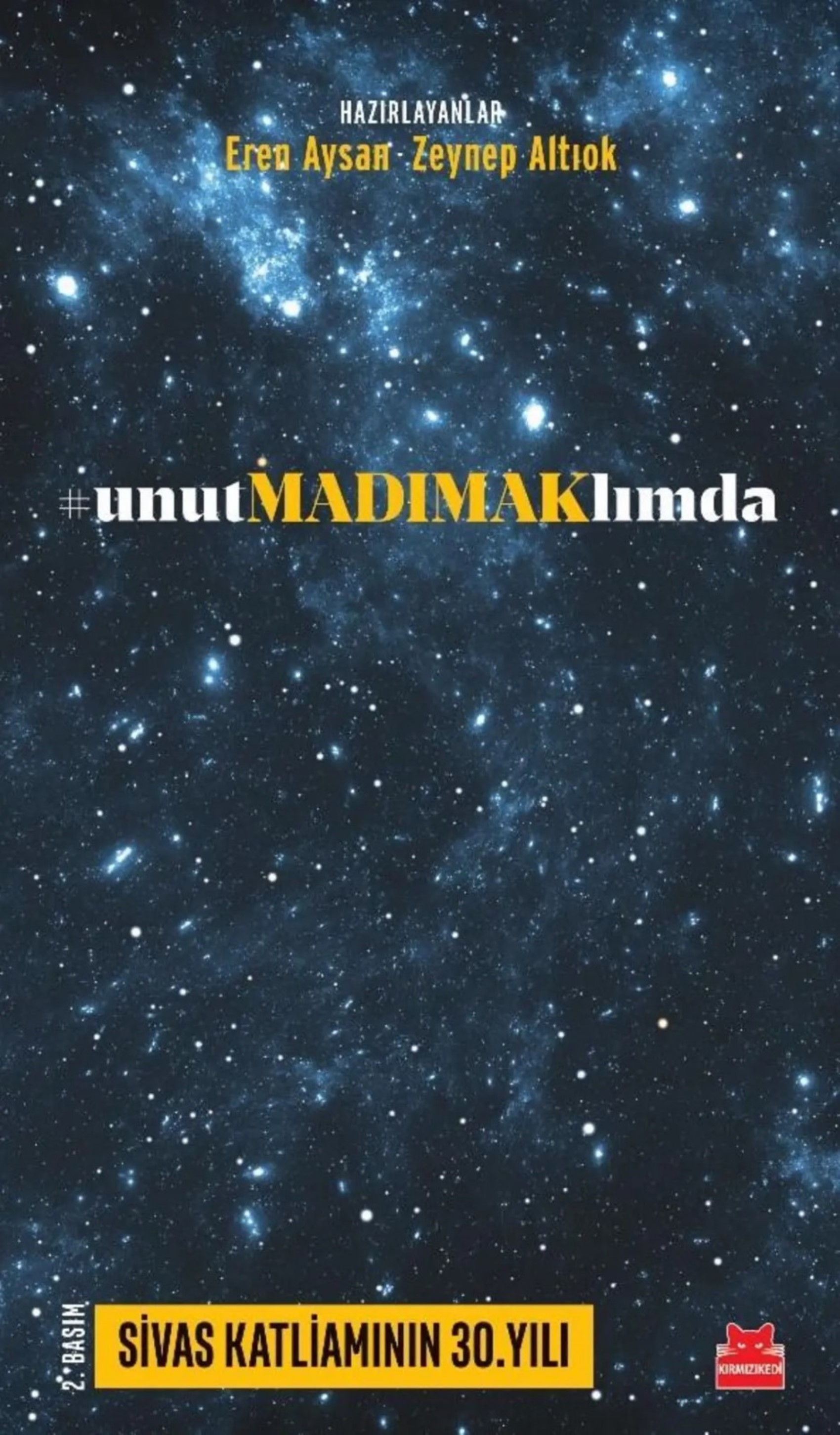
32 years have passed since the massacre that took place at the Madımak Hotel on July 2, 1993... What has changed since that day? How much does society remember this great pain? What walls does the search for justice hit? The book "#IHaveNotForgottenMadimak" (#unutMADIMAKlımda), published by Kırmızı Kedi Publishing by Zeynep Altıok and Eren Aysan, became one of the most important works addressing the process. The daughters of Metin Altıok and Behçet Aysan, who were killed in the massacre, continue their struggle not only as carriers of memory but also as two voices of conscience raised against this darkness. On the anniversary of the massacre, we listened to the testimonies of these two individuals for a deep confrontation regarding policies of oblivion, statutes of limitations, the culture of impunity, and the construction of cultural memory. Here is what Zeynep Altıok and Eren Aysan had to say…
We are in the 32nd year of the Sivas Massacre. You summarized the process in your book “#IHaveNotForgottenMadimak” which you published on the 25th anniversary. What has happened in the time that has passed since?
Zeynep Altıok: We had also released a new edition of our book for the 30th anniversary. At that time, we tried to update it with a preface that summarized not only the fact that we hadn't taken a positive step forward in legal terms, but also the steps we had taken backward. Time has passed since then as well. Honestly, time flows quickly. When the issue is injustice, even if that process doesn't make one feel that it is flowing so fast, when you look back and talk about it now, you realize time has passed. In that book, we had requested articles from various names, writers, academics, and poets to include different perspectives. In this intervening period, there is a process where we have experienced the darkness that led to the release of the murderers even more deeply. From here on out, perhaps we would never want it, but who knows how many more books this case and this injustice, this pain, this misery, and this grief will provide material for in Turkey. I wish it weren't so.
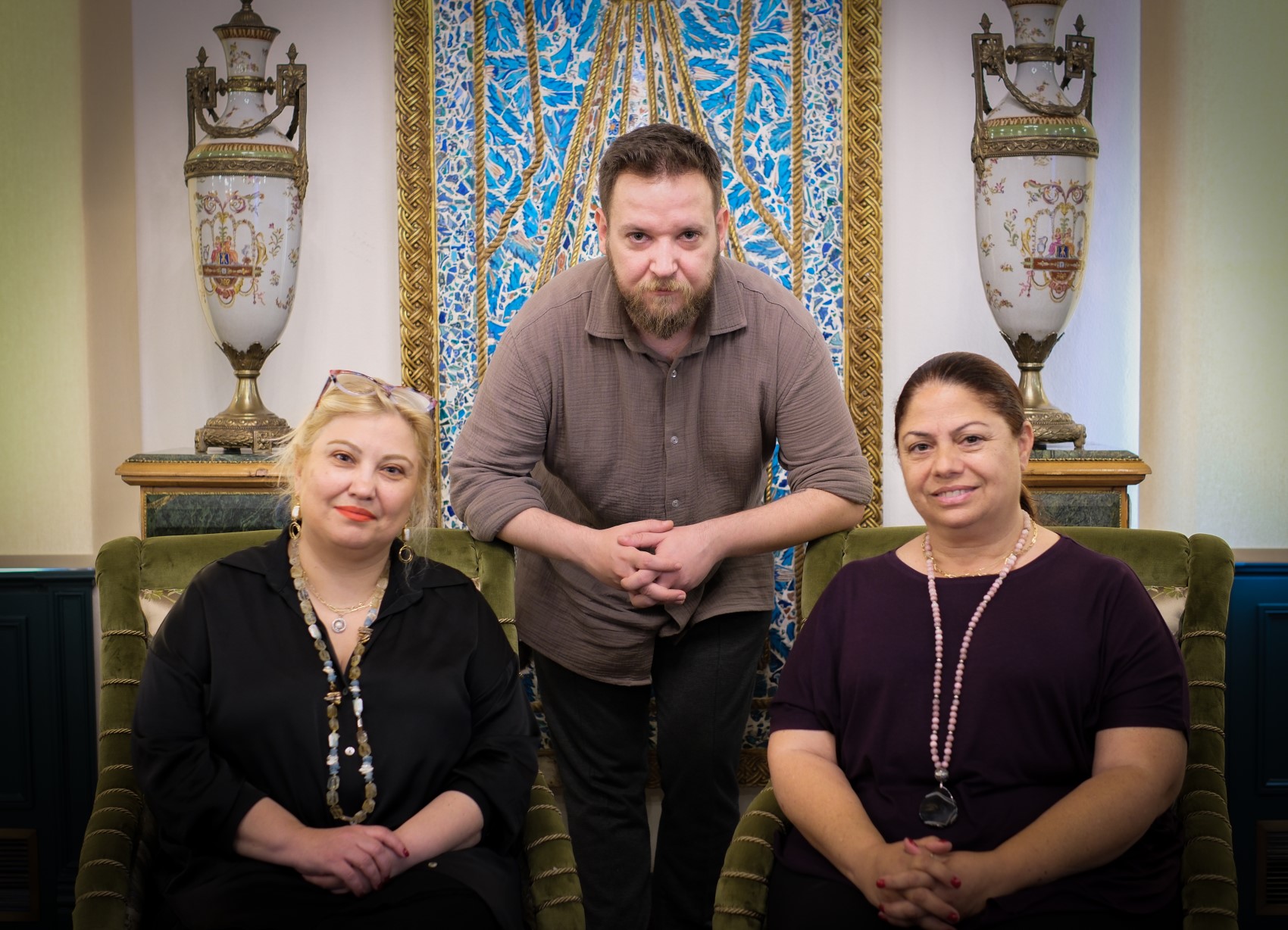
(Eren Aysan - Sercan Meriç - Zeynep Altıok) Above
At the end of your book “A Lilac Death: Behçet Aysan,” you ask, “Is Turkey crying for Sivas today? Or has it surrendered itself to a great oblivion?” What is your answer to this question?
Eren Aysan: I think only a certain segment in Turkey remembers massacres like the Sivas Massacre. When we look at the general conscience of society, there is a solid lack of foundation that coincides with a lack of memory. When I say solid lack of foundation, there is actually no foundation at all, first and foremost. It is not just specific to the Sivas Massacre; when we look at all political assassinations, a similar picture emerges. Because, for one thing, there is no transfer of memory to younger generations. Let's look at the names and intellectuals killed in the 70s... For example, Ümit Kaftancıoğlu, Doğan Öz, Bedri Karafakioğlu, Ümit Doğanay, Sevinç Özgüner, Akın Özdemir, Abdi İpekçi… Along with many names I have forgotten, the list is endless. There is no transfer of these names to younger generations. Since I teach at a university, if I were to ask the younger generation, “Who are these people?”, I am sure that most of them would be hearing these names for the first time. The second fundamental point is, of course, impunity. Impunity, which seems like a legal term, flows from a point where the deceased is left with their death, and at the same time, the perpetrator feels honored and feels good. The third is a fundamental phenomenon that we encounter in our case, but also in other cases; the statute of limitations... Just as the case of Kemal Türkler, one of the leading names of the trade union movement in Turkey, was time-barred, and just as the murder of Adana Police Chief Cevat Yurdakul was time-barred, the Sivas Massacre case is also being steered toward social oblivion through the phenomenon of injustice by being subjected to the statute of limitations, which is another point of impunity. Therefore, I think these books, or our individual efforts, or the joint work I have done with my dear sister Zeynep, carry a great meaning in terms of keeping the fundamental social conscience alive and planting that seed in the social conscience.
What assessment would you make today regarding the approach of the public or politicians to the Sivas Massacre?
Zeynep Altıok: Unfortunately, there are countless cases in our country waiting for justice, and their impunity also encourages new pains. The search for justice has reached such a point that on the same day, there are hearings in courthouses and courtrooms in three different corners of Istanbul that need to be followed with the same weight and importance. As human rights defenders, as legal professionals, as members of the press, and as people who follow this issue and are sensitive, we sometimes don't even know which one to go to, we can't keep up, we can't decide. Many of them are left alone. This is also done somewhat consciously and systematically. That is, so that people cannot go and public opinion cannot be formed in this sense... The understanding we are currently in, the understanding that governs us, already exists by feeding on a conscious and systematic policy of de-culturalization, and it does not manage this process only by preparing a curriculum suitable for its own ideology within the education system or by censoring and banning some things. It disconnects people from art and life, distances them from points of gathering, distances them from conversational environments, and distances them from civil society organizations. So, there is a very systematic attack, and under this attack, people who do not read become even shallower within that degeneration. Politicians in this country don't really read much either, to tell the truth, and therefore, the issue we call the agenda, the current issue, has also taken politics hostage. When our case was time-barred in 2013, those who made that decision and those who gave the instructions for that decision to be made were met with such an extraordinary reaction... Whether it was civil society organizations, the press, or politicians, everyone had taken responsibility in that sense. It was organized with a bit of conscience, a bit of political awareness, and a bit of a sense of responsibility.
People had reacted to the decision on the streets…
Zeynep Altıok: There were rallies with hundreds of thousands of people on the streets, and newspapers had made it their headlines. So, there was always indifference. There were also years when we struggled a lot. However, when the second case was time-barred at the beginning of this year, the leaders of political parties, opposition parties, and politicians didn't even tweet. They didn't even say a word. It was limited to the news coverage of a very small number of sensitive newspapers. Yet, the result this will create; this lawlessness being met with such lack of reaction and in such a normalized way also makes the job of the understanding that targets local administrators systematically to prevent the right to opposition, and even targets the main opposition party with the threat of closure, easier. Because it also allows for these cases.
There have been many debates in the past regarding the Madımak Hotel and the commemorations in Sivas. What is the situation there now?
Eren Aysan: First of all, there has always been a problem regarding the situation of the Madımak Hotel, and it exists today as well. Because it first appeared as a kebab shop. After the hotel renovation, it became the Madımak Kebab Shop. To tell you the truth, I have never been able to figure out how people could sit and eat in a place where such an atrocity took place. I mean, I thought that eating with gusto in a place permeated with the smell of blood and soot must be an approach related to another kind of human immorality. About 15 years ago, the kebab shop was closed, and a cultural center was opened as a result of our reactions. However, unfortunately, at the opening of that cultural center, along with those who died in the massacre, the plaques of two murderers who supported the massacre and entered the hotel to burn it were also nailed up. When we asked about this, they said, “We are trying to make everyone one, we are presenting a peaceful approach over the massacre at the same point for everyone.” We reacted to this with incredible intensity. The interior and content of the cultural center we imagined were extremely far from the points we wanted. In this country, there is always an approach based on covering up the pain. However, when memory is not refreshed, when there is memory loss, we see that the same pains are experienced over and over again. Each generation is heading toward the point of re-experiencing its own pain, re-discovering its own America of pain. This is unfortunately true for the Sivas Massacre as well. I mean, this approach, which is seen as the great pain of the 90s, has drifted toward a point where it is placed with figures that will not remind of the massacre at all within two cultural works on the basis of a lack of memory. The second is this: Of course, it is not the tragedy of that city. I am sure the people of Sivas are unhappy about being remembered for a massacre. Because of this, no one can have an approach that can look to the future with hope. But for this not to happen again within that city's memory, those who are there, the children there, and those looking to the future need to know, understand, learn, and evaluate it so that similar attempts do not happen again. As long as all of these are not a state policy and as long as the refreshing of memory cannot be established with a systematic structure in a sense, social peace cannot be achieved anyway. That is why the situation of the Madımak Hotel in Sivas actually gives us a field study of an incredible example of memory-lack of memory. But as I said, if the unity, if the social line is to be re-established, it can be established with the cultural perspective of a state and a brand new activity and memory-refreshing area related to it.
Your legal struggle against the statute of limitations decision also continues. How is that process progressing?
Zeynep Altıok: The statute of limitations decision was taken over one case in 2013. This year, it happened by being seen as a precedent over the second case. Actually, we had applied to the higher court with a petition through lawyers in 2013… Unfortunately, Turkey is the second country that makes the most applications to the European Court of Human Rights regarding crimes against humanity. In contrast, it is the first country whose applications are accepted. Therefore, because so many files come in, there is an operational clause regarding the exhaustion of domestic legal remedies by the court in order to cope. When this is the case, since the legal system here is unfortunately not a real legal system, it considers it a duty to block your path to the European Court of Human Rights, which is your most natural right, by stalling and dragging it out, and on the other hand, by never exhausting that domestic legal remedy. There is such a process. Now, through our lawyers, my dear sister Eren Aysan, our dear brother Mazlum Çimen, and I, the three of us, are in an initiative that will open a precedent path for all our families as well. We are in a study and initiative that will make the shortcomings in the domestic legal path visible and create public opinion through our lawyers. We will share this with the public very soon.
News Source: Sercan Meriç