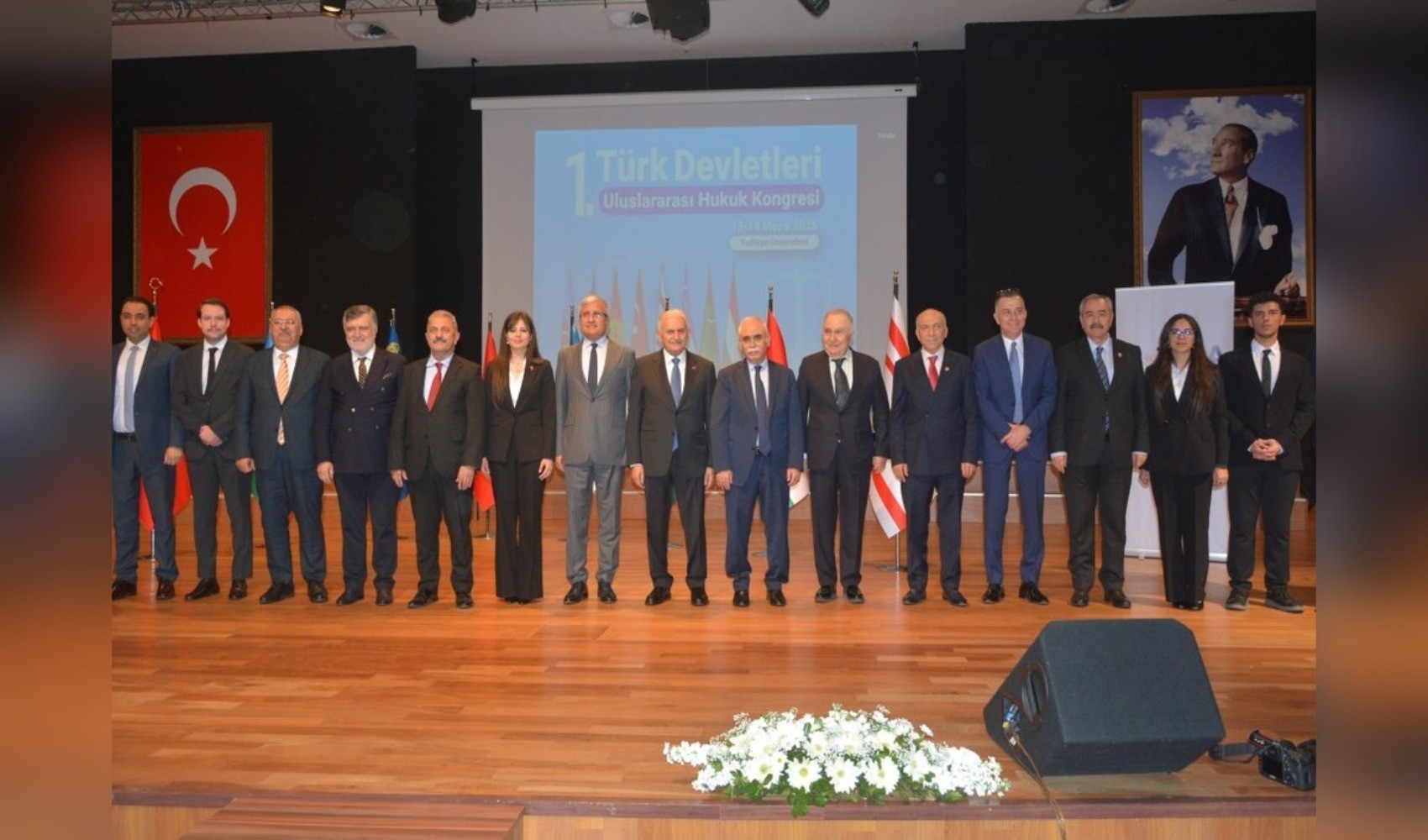
TURKSOY (International Organization of Turkic Culture) Deputy Secretary General Sayit Yusuf, in his opening speech at the congress, stated, "If the Turkic World has a common history, a common language, and a common civilization accumulation, then the establishment of common legal mechanisms is also essential."
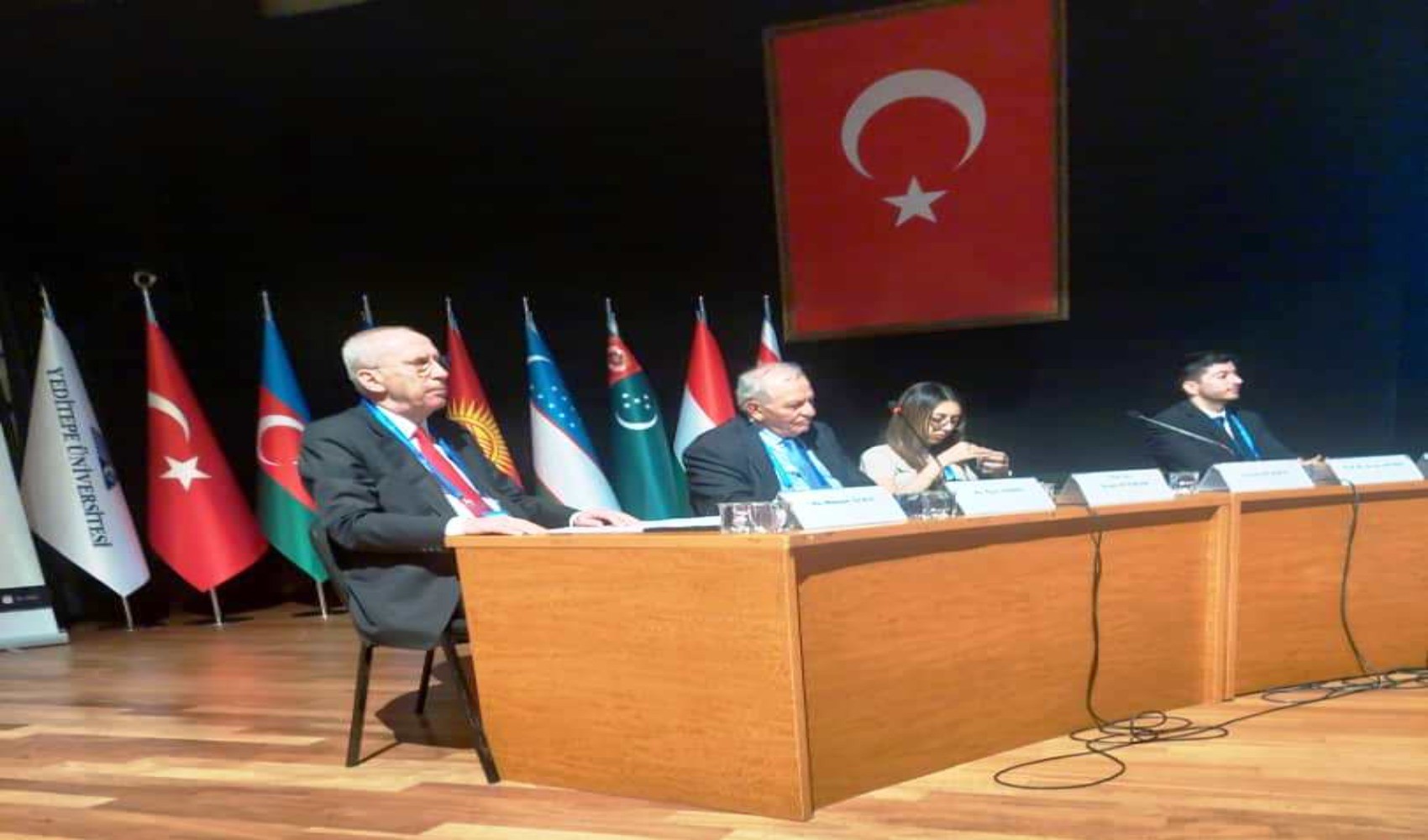
In the Turkic World, the congress, where comprehensive sessions were held under topics such as common legal sources, the implementation of the rule of law principle, cyber security law, and international arbitration centers, was attended by legal experts, academics, and scientists in their fields.
Delivering a presentation titled "Transforming the Cultural and Historical Commonalities of the Turkic World into Legal Commonalities" at the congress, former TBB Vice President, former General Secretary of the Istanbul Bar Association, and 12punto columnist Attorney Hüseyin Özbek said, "It is a historical necessity that the legal commonalities to be established based on the cultural commonalities of the Turkic World must be based on the rule of law, democracy, human rights, judicial independence, separation of powers, and a judicial system free from the influence of political power."
Özbek spoke as follows:
"We are experiencing the excitement of seeing the idea of 'Unity in language, thought, and action'—the vision of the Crimean thinker, journalist, and teacher İsmail Gaspıralı, who dedicated his life to Turkic enlightenment and the creation of a common language that could be understood by people from the same roots thousands of kilometers apart, from the boatman on the Bosphorus to the camel driver in Kashgar—turn from a utopia into reality, becoming so close that it is almost tangible."
The political borders of states and the cultural borders of nations can undoubtedly be very different from one another. We define cultural commonality as the empathy, the sense of closeness, and the desire for solidarity created by a shared historical past, cultural and linguistic similarities that bring different and distant geographies as close as a neighbor's house, and the memories of a shared past dating back thousands of years, as well as the cultural codes recorded in our subconscious and collective memory. The agenda of the current stage is the transformation of cultural commonalities into legal commonalities. Cultural commonality is highly valuable in terms of serving as both a starting point and a facilitator in establishing legal commonalities.
The fact that the Republic of Türkiye was the first state to recognize the Republics of Azerbaijan, Kazakhstan, Kyrgyzstan, Uzbekistan, and Turkmenistan, which were established after the dissolution of the USSR, should be reflected upon. This stance by Türkiye is not a matter of diplomatic haste or an eagerness to act before other countries to gain an advantage. It should be known that behind the hand extended by Türkiye to friendly and brotherly states, as a requirement of a state policy that will not change according to governments, lie the open hearts of the Turkish nation to its brothers and the longing of centuries.
It must be underlined that a highly significant stage was reached with the transformation of the Cooperation Council of Turkic Speaking States into the Organization of Turkic States at the summit on November 12, 2021. In 1992, The institutionalization that began with the 'Summits of Heads of State of Turkic Speaking Countries,' transformed into the 'Turkic Council' with the decision taken at the last summit on September 16, 2010, and took its current form at the November 12, 2021 summit—that is, evolved into the Organization of Turkic States—should be seen as a turning point in the transformation of cultural commonalities into legal commonalities. The most important proof that the first serious steps have been taken at the state level for the Turkic World to come together, and that the transition has been made from rhetoric to action and from theory to practice, is the emergence of a permanent intergovernmental structure under the name of the Organization of Turkic States.
The confirmation of the member countries' commitment to fundamental principles such as democratic values, respect for human rights, the rule of law, and good governance should be evaluated as concrete steps toward transforming into a legal commonality.
It should be noted that cooperation within the scope of the Organization of Turkic States is built on the basis of a shared history, culture, identity, and the special solidarity stemming from the linguistic unity of Turkic-speaking peoples, and that these are not only the fundamental pillars of building a strategy with collective wisdom but also its goals.
The decisions taken at the Third Meeting of the 'Turkic World Common Alphabet Commission,' held in Baku on November 9-11, 2024, within the body of the Organization of Turkic States and in cooperation with the Turkish Language Association and the International Turkic Academy, show that significant progress has been made in creating a common alphabet. The attainment of a common alphabet as a cultural commonality should be seen as an important stage in the realization of the ideal for which Ismail Gasprinski fought and dedicated his life a century and a half ago.
What Kind of Legal Commonality
It is a historical necessity that the legal commonalities to be established based on the cultural commonalities of the Turkic World must be founded on the rule of law, democracy, human rights, judicial independence, separation of powers, and a judicial system free from the influence of political power.
This necessity is, without a doubt, a prerequisite for gaining respect in the international community as a state governed by the rule of law that has achieved contemporary standards, and for being accepted into the league of democracies. I conclude my remarks by expressing the same longing and the same wish for the entire Turkic world, from east to west, from north to south. A power that respects the law, a legal order that functions with all its institutions and rules, an impartial and independent judiciary, and a democratic administration where people feel safe. With the longing and wish for the days when these things I have listed will not just be empty words, but will turn into the ordinary elements of daily life, I offer my respects to you all."
News Source: 12punto