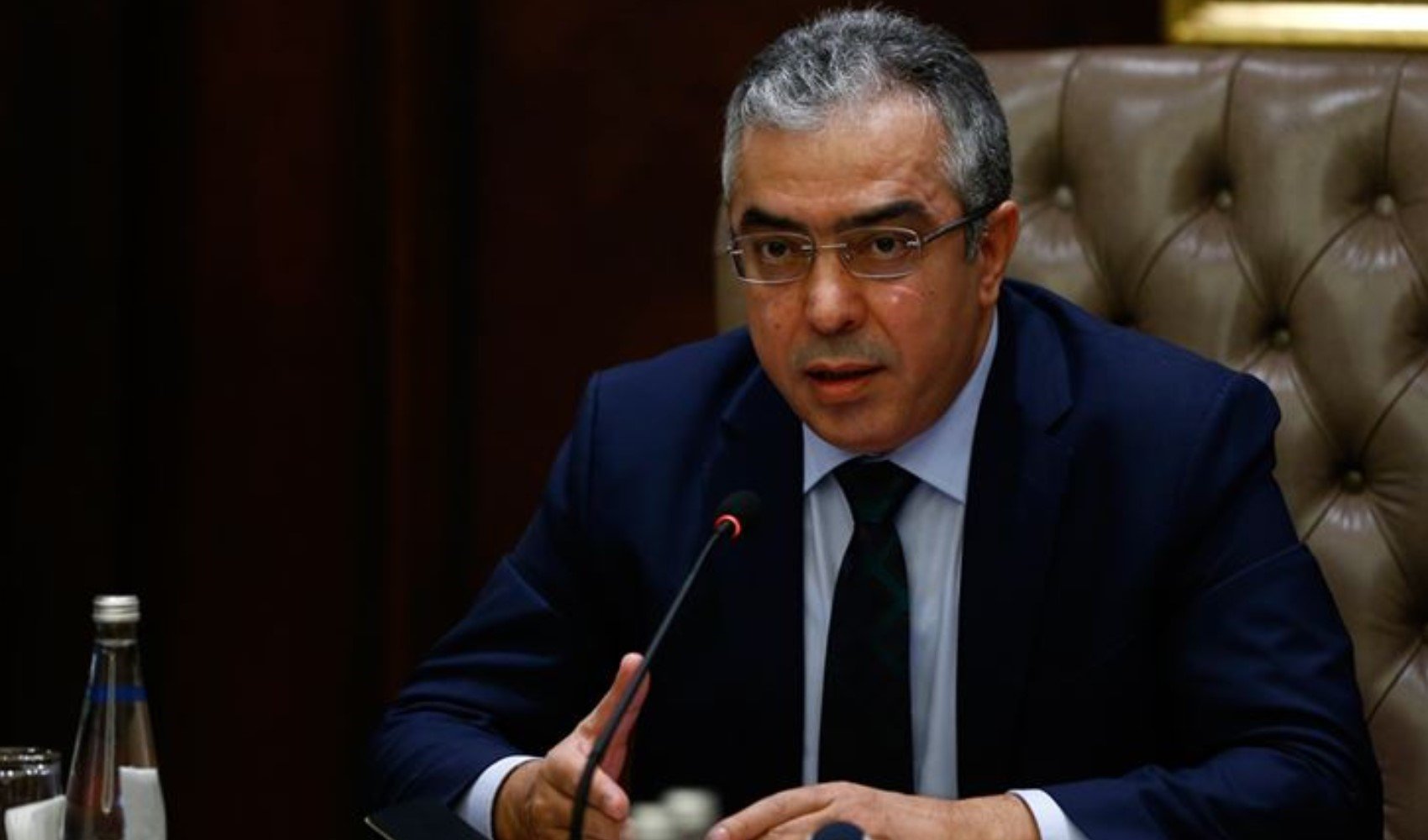
Chief Advisor to the President and Deputy Chair of the Presidential Legal Policies Board, Mehmet Uçum, wrote an article for AA Analysis on why early election debates in Turkey are not realistic.
Mehmet Uçum's article is as follows:
"Following the June 24, 2018 elections, which enabled the transition to the Presidential Government System, an 'early election' debate was attempted to be brought to the agenda after the March 31, 2019 Local Elections.
During the debates at that time, it was repeatedly stated that 'it is not realistic to expect an early election in a presidential system based on parliamentary system experience.' Indeed, the elections that were supposed to be held on June 18, 2023, were moved forward by about a month due to holidays and seasonal conditions and were held on May 14, 2023. In other words, an 'early election' did not take place as some expected and in the sense implied. Although the elections were moved forward by about a month for technical reasons, they were held within their normal period.
Despite this experience, the 'early election' debate is being brought to the agenda again after the March 31, 2024 Local Elections, which followed the Parliamentary and Presidential elections held on May 14 and 28, 2023.
CONSTITUTIONAL SYSTEM
It is useful to recall the constitutional system for the debate to be conducted in the correct context.
First of all, let us state that there is no concept of early election in the new Constitutional System. Both the President and the Parliament are elected for a fixed term of 5 years.
However, this period is not a guaranteed fixed term for both institutions, but a flexible fixed term. Because within this period, the Parliament or the President can decide to renew the elections. The political and social result of this may be called an early election. But its legal meaning and name is the renewal of elections.
In this case, when the issue is discussed under the name of 'early election,' which is a concept of the old system, the matter is naturally viewed with the justifications of early election experiences in the old system. This leads to an election debate with arguments that are completely foreign to the new system and outdated.
For this reason, the debate should be conducted through the concept of 'renewal of elections' and the question should be asked, 'under what social, political, economic, and legal conditions can the renewal of elections occur?' Otherwise, a debate cannot be conducted in its proper context.
Therefore, it is necessary to look at the legal and factual dimension of the matter and evaluate how the decision to renew elections is made and what its consequences will be.
RENEWAL OF ELECTIONS
The President can make the decision to renew elections, and if they make this decision in their first term, they waive their remaining term. Furthermore, if they are to be a candidate again, they take on the political and social risk regarding being elected.
If a President decides to renew elections in their second term, this time they both waive their remaining term and cannot be a candidate again.
In that case, requesting the renewal of elections by the President is a decision that can only be made in extremely extraordinary circumstances and in cases where there is no other remedy, that is, as a last resort.
If the Parliament is to make the decision to renew elections, 360 deputies (a 3/5 ratio) must make this decision. Of course, the deputies who will make this decision must also take on political and social risks if they want to be re-elected. Accordingly, since the Parliament's making this decision also requires a qualified majority and a consensus can only be reached for this under extraordinary conditions, it will be an exceptional situation. Considering that even early election decisions that could be made with a simple majority in the old system could only be taken under certain conditions and with difficulties, it can be better understood how difficult and extremely exceptional this will be in the new system.
JUSTIFICATIONS PUT FORWARD IN THE EARLY ELECTION DEBATE
In the face of this systematic, what extraordinary and exceptional situations have occurred in Turkey that either the President or the Parliament should decide to renew elections, or that this possibility should be a realistic option?
Two justifications are put forward:
First, the local election results; second, the effects of the global economic crisis on Turkey.
It is never possible to read the message given by the people in the local elections as a demand for a change of government. 10 months ago, despite the same economic conditions and even harsher conditions due to the earthquake disaster, the people clearly demonstrated their trust and support for President Recep Tayyip Erdoğan and the People's Alliance.
The People's Alliance won the parliamentary majority. President Erdoğan was also elected in the second round with more than 52 percent of the vote.
In the local elections, it is generally accepted that the people gave a message regarding economic conditions. Then, the people's expectation is not an early election, but the improvement of economic conditions. The people's expectation is for the government to take action towards solving economic problems and for the opposition to support these actions.
Accordingly, concretely, neither the local election results nor the economic conditions are sufficient, accurate, and appropriate justifications for an election before its time.
In general, at this stage, Turkey is neither in an extraordinary situation in terms of the functioning of the political system nor is it facing an exceptional condition that requires renewing the Parliament and the Government. In this case, the 'early election' debate is not a realistic debate as long as extraordinary conditions and exceptional situations do not arise until 2028.
At this point, opening the way for a final candidacy in the 2028 elections for President Erdoğan, who is a great asset for Turkey in terms of leadership experience and strong and pioneering political influence on many issues in the world, can be counted among these exceptional situations. It is already clear that the People's Alliance will show determination on this issue. It can also be foreseen that a strong tendency in this direction may emerge in the Parliament. However, in the normal course of events, this issue is expected to come to the agenda towards the end of 2027. Therefore, it is clear that the time for this issue has not yet come.
WHAT IS THE REALITY OF THE EARLY ELECTION DEBATE?
So why is this debate being brought to the agenda today? It is extremely clear; an ideological move is being made to undermine the political stability advantage that Turkey possesses until 2028. Turkey is being sought to be distracted from its real agenda regarding both the economy and the law with a highly artificial early election debate.
Another important point is that the early election debate is also used as a tool by the opposition to cover up their inability to produce alternative policies and programs on the country's internal and external issues, their sterility, and the sharp competition among them.
Democratic politics and democratic public opinion should not fall into these traps; on the contrary, they should expose them.
Let it not be forgotten that due to the design of the new system; the conditions for holding elections before their time, in other words, the renewal of elections, arise in such a way that no one enters into a debate about whether elections should be renewed; on the contrary, the need and decision for renewal is accepted as legitimate by everyone.
For this reason, it is necessary to put aside such artificial and diversionary debates and focus on our country's reform agendas and goals that are needed, primarily the new constitution."
News Source: 12punto