



 1 / 14
The Institute for Social Studies has published a report on the results of the consumption boycott on April 2, which was initiated by university students following the İmamoğlu protests.
 2 / 14
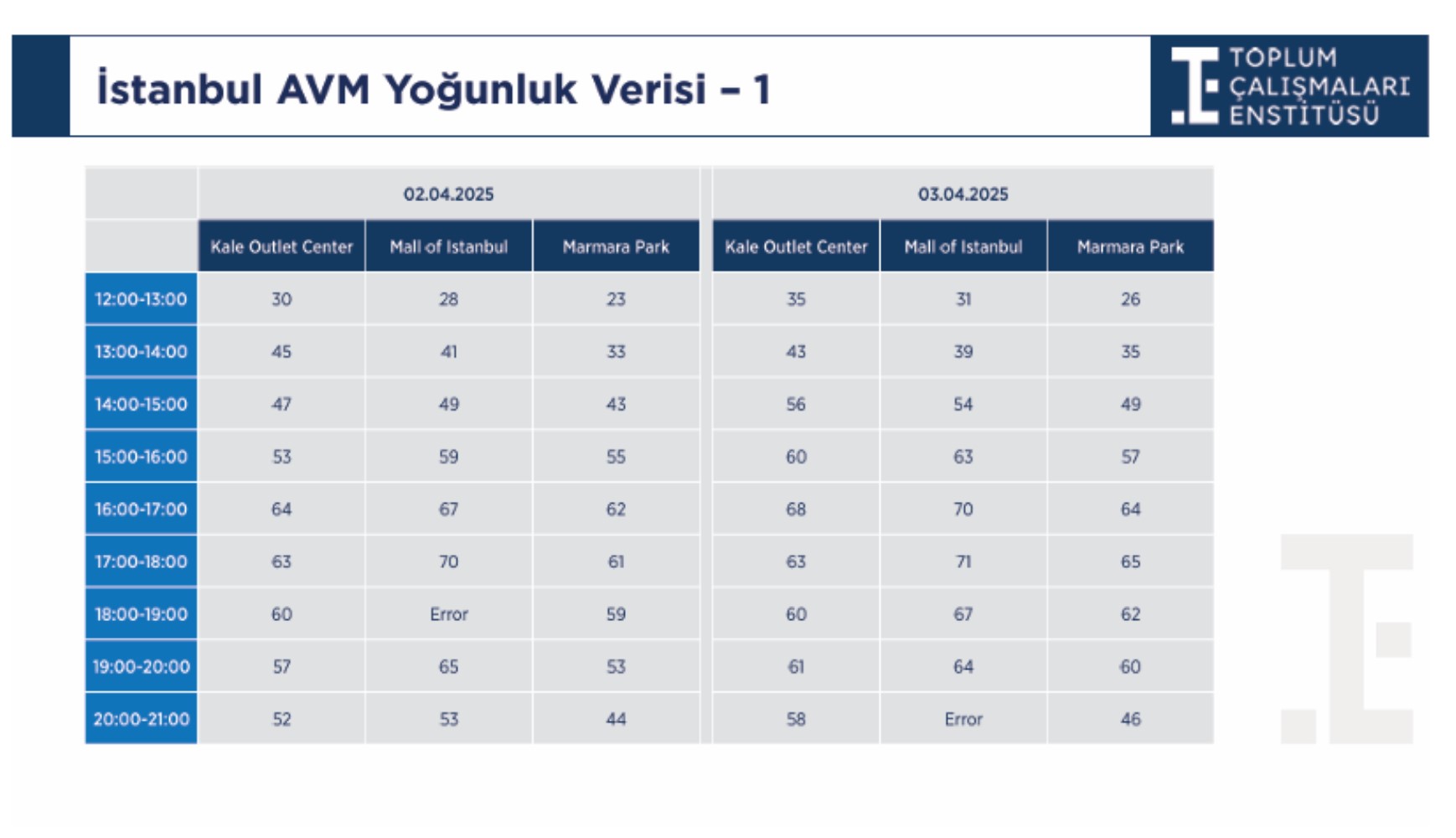
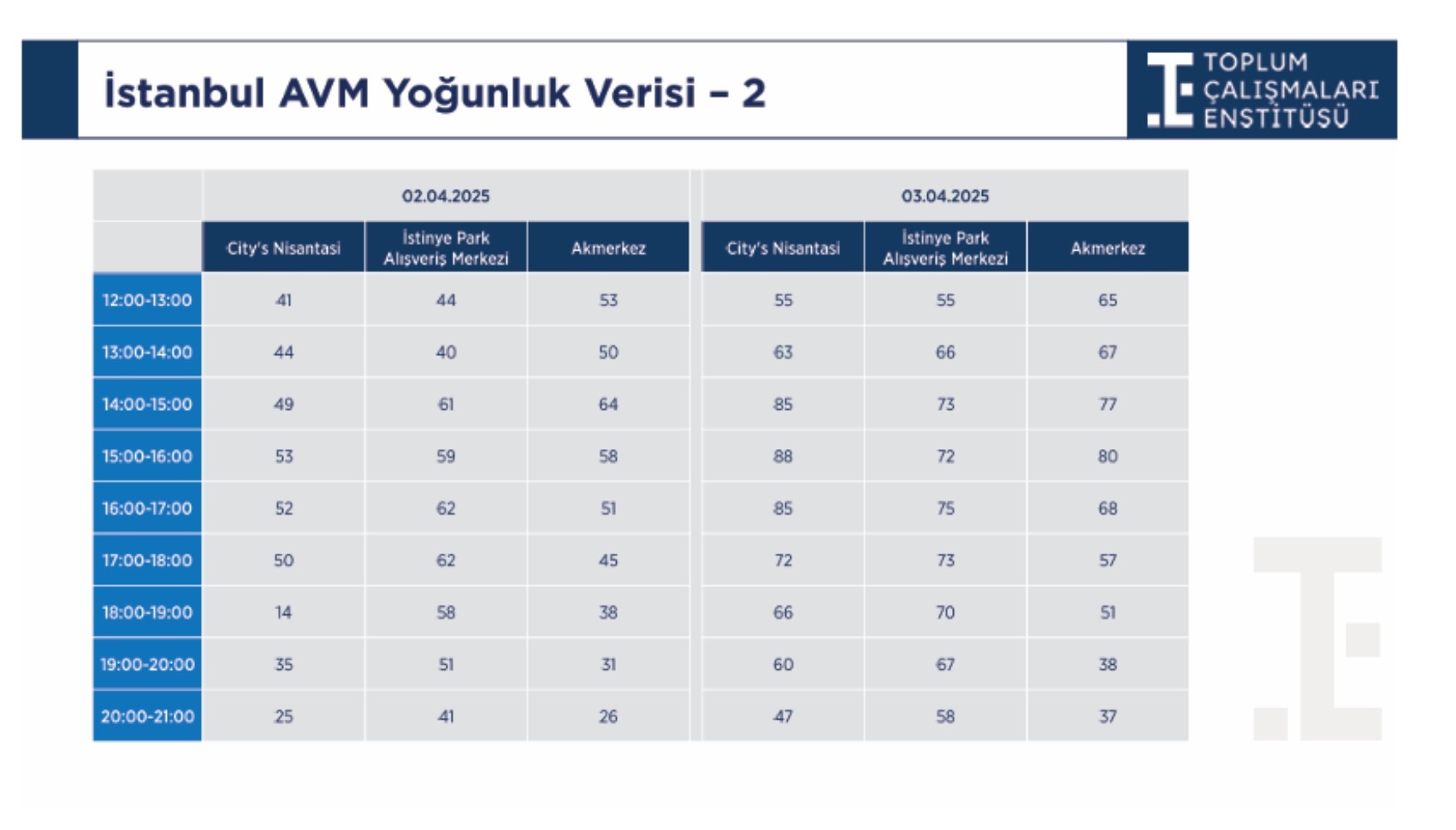
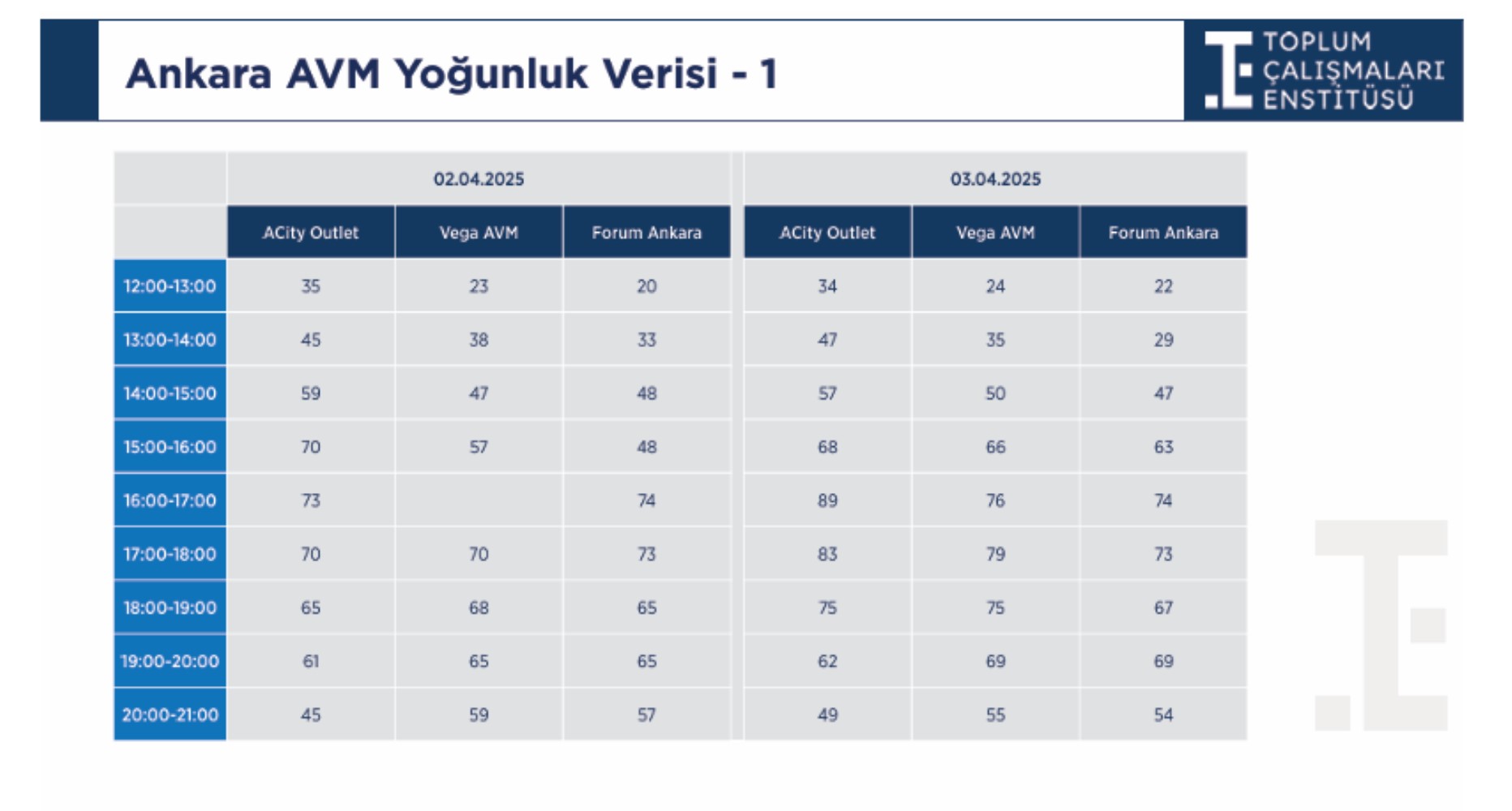
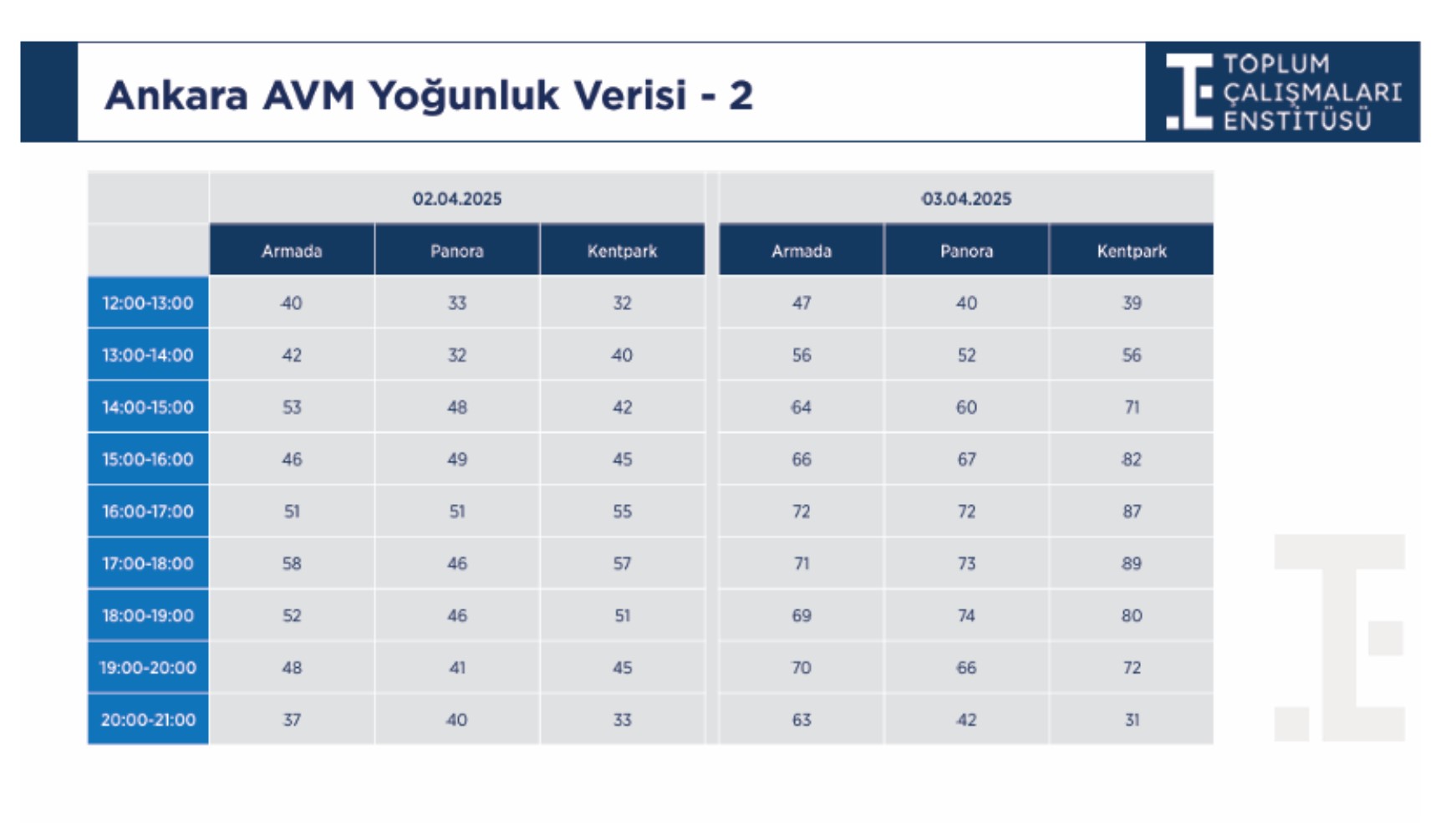
The Institute analyzed the boycott that took place on April 2 in light of density data obtained from Google Maps, face-to-face interviews conducted with tradespeople and business employees the day after the boycott, and statistics from the Central Bank of the Republic of Turkey.
 3 / 14
THE LATEST SITUATION IN SHOPPING MALLS THE DAY AFTER THE BOYCOTT
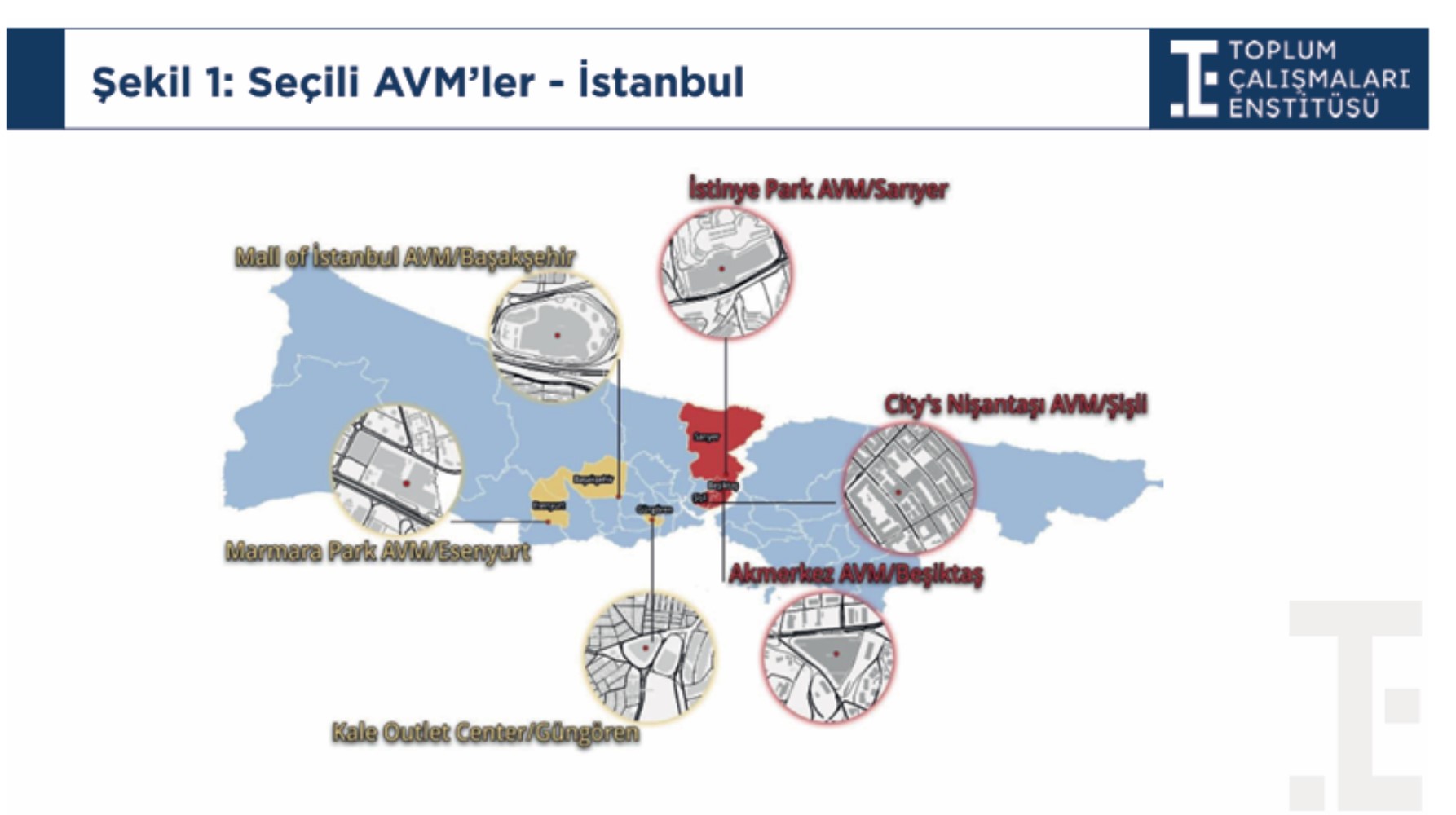
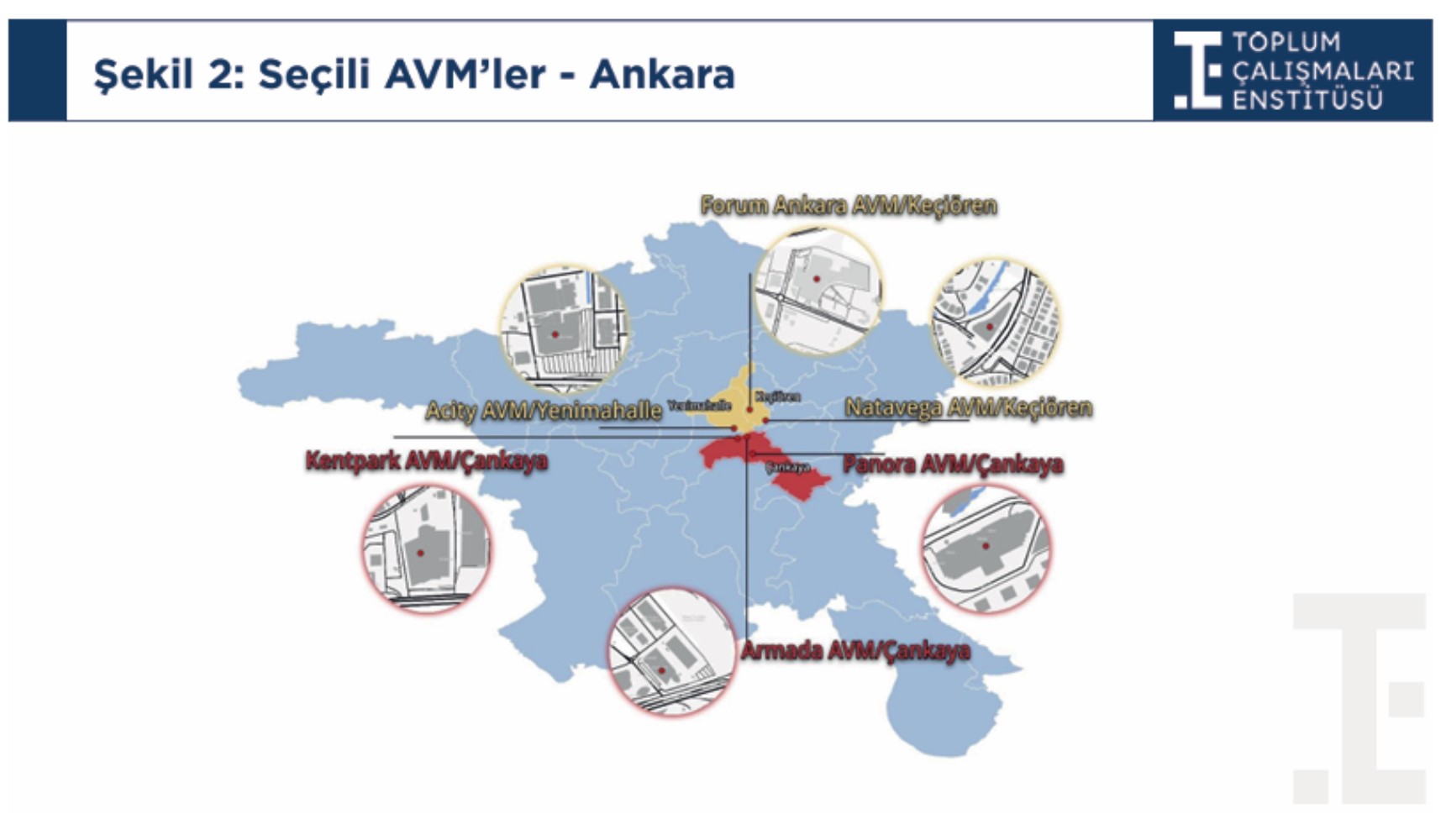
Selecting shopping malls from regions in Istanbul and Ankara where both CHP and AKP voters are concentrated, the Institute observed a slight increase in density the day after the boycott in shopping malls located in districts where the AKP's social base is strong.
 4 / 14
In shopping malls in Istanbul's Güngören, Başakşehir, and Esenyurt districts, a density increase of around 3 percent was observed on April 3 compared to April 2.
 5 / 14
In shopping malls located in the districts of Şişli, Beşiktaş, and Sarıyer, where the CHP's social base is stronger, an increase of up to 28 percent was observed on April 3 compared to April 2. The change between April 2 and April 3 was recorded as 28.66 percent in the shopping mall in Şişli, 14.55 percent in the shopping mall in Sarıyer, and 13.77 percent in the shopping mall in Beşiktaş.
 6 / 14
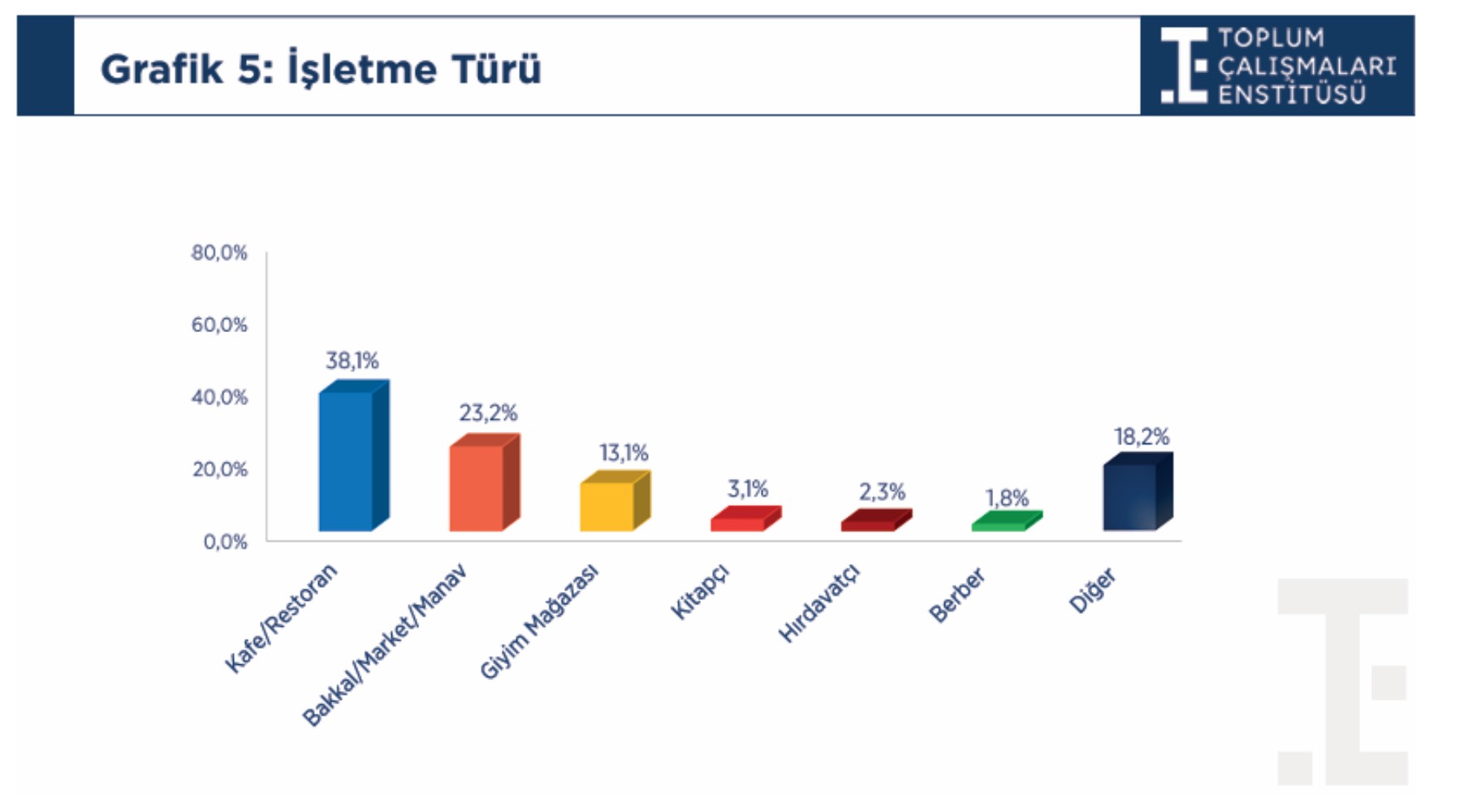
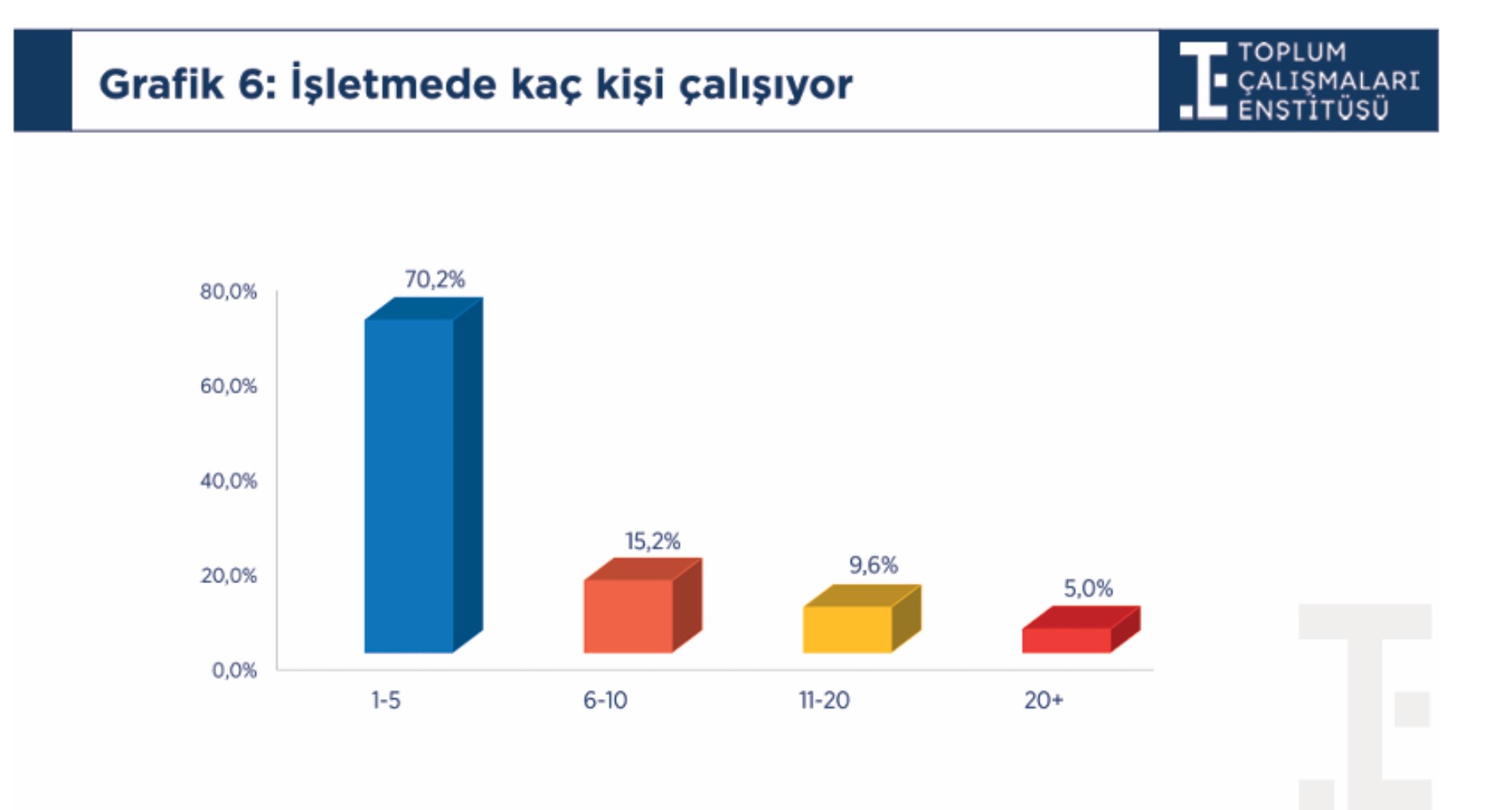
The second part of the Institute for Social Studies' boycott report consisted of the results of 384 face-to-face interviews conducted with tradespeople and business employees in Ankara.
 7 / 14
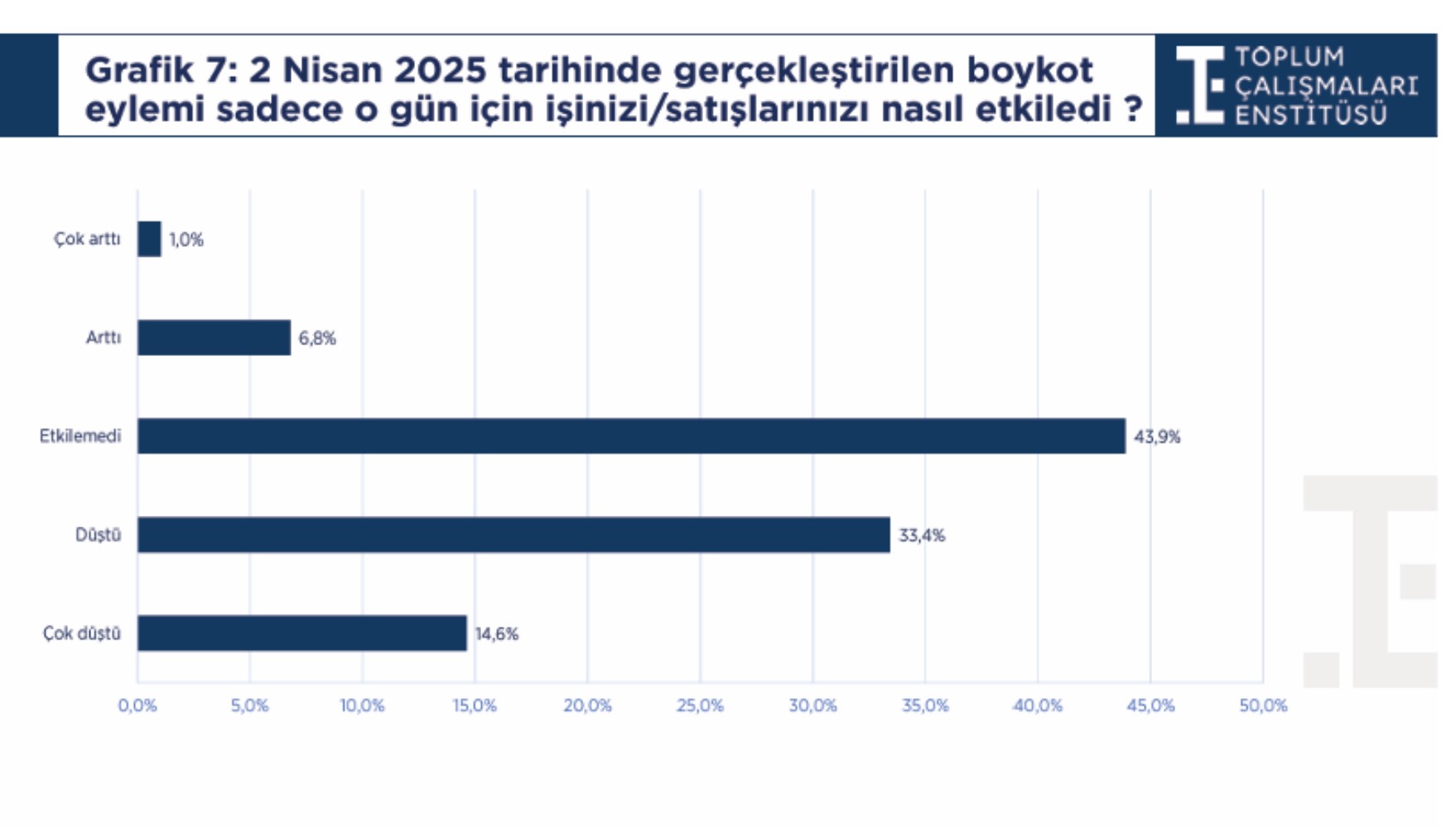
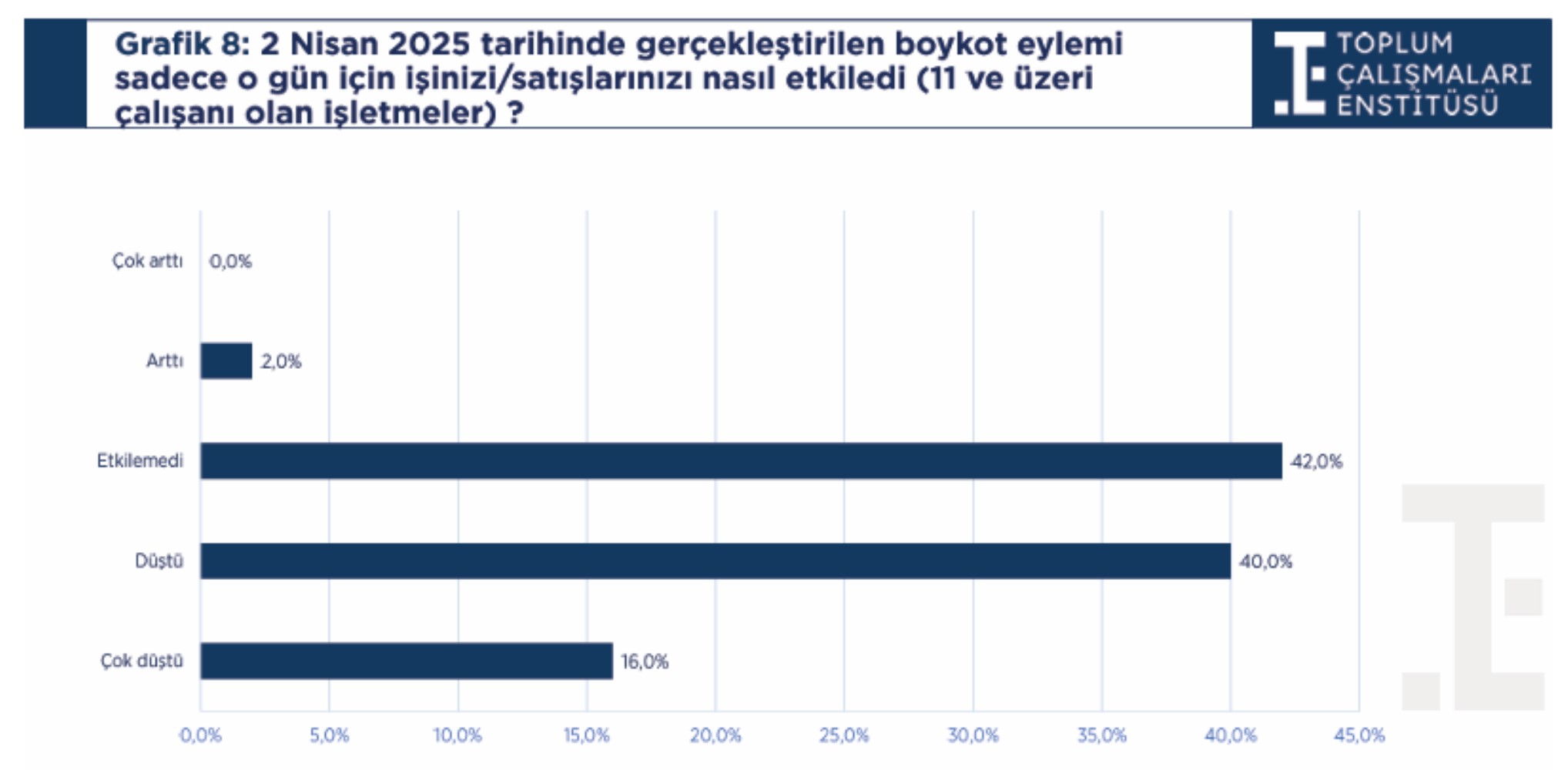
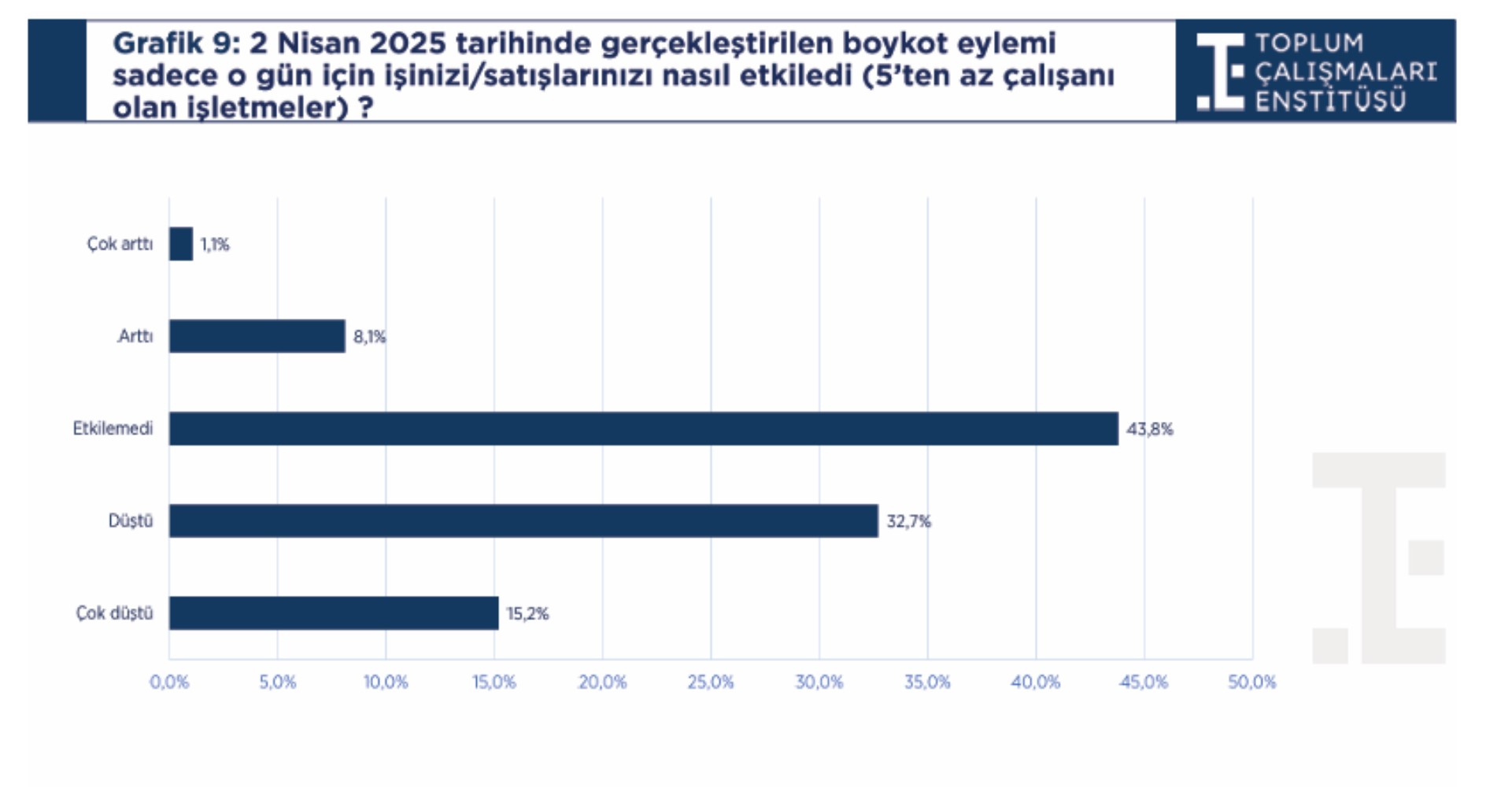
When asked about the effect of the boycott, 47.5 percent of businesses with 1-5 employees stated that sales had fallen. This rate rose to 56 percent for businesses with 11 or more employees.
 8 / 14
The report examined the payment system statistics provided by the Central Bank. In these statistics, "remaining payments" were taken as a basis, excluding salary payments.
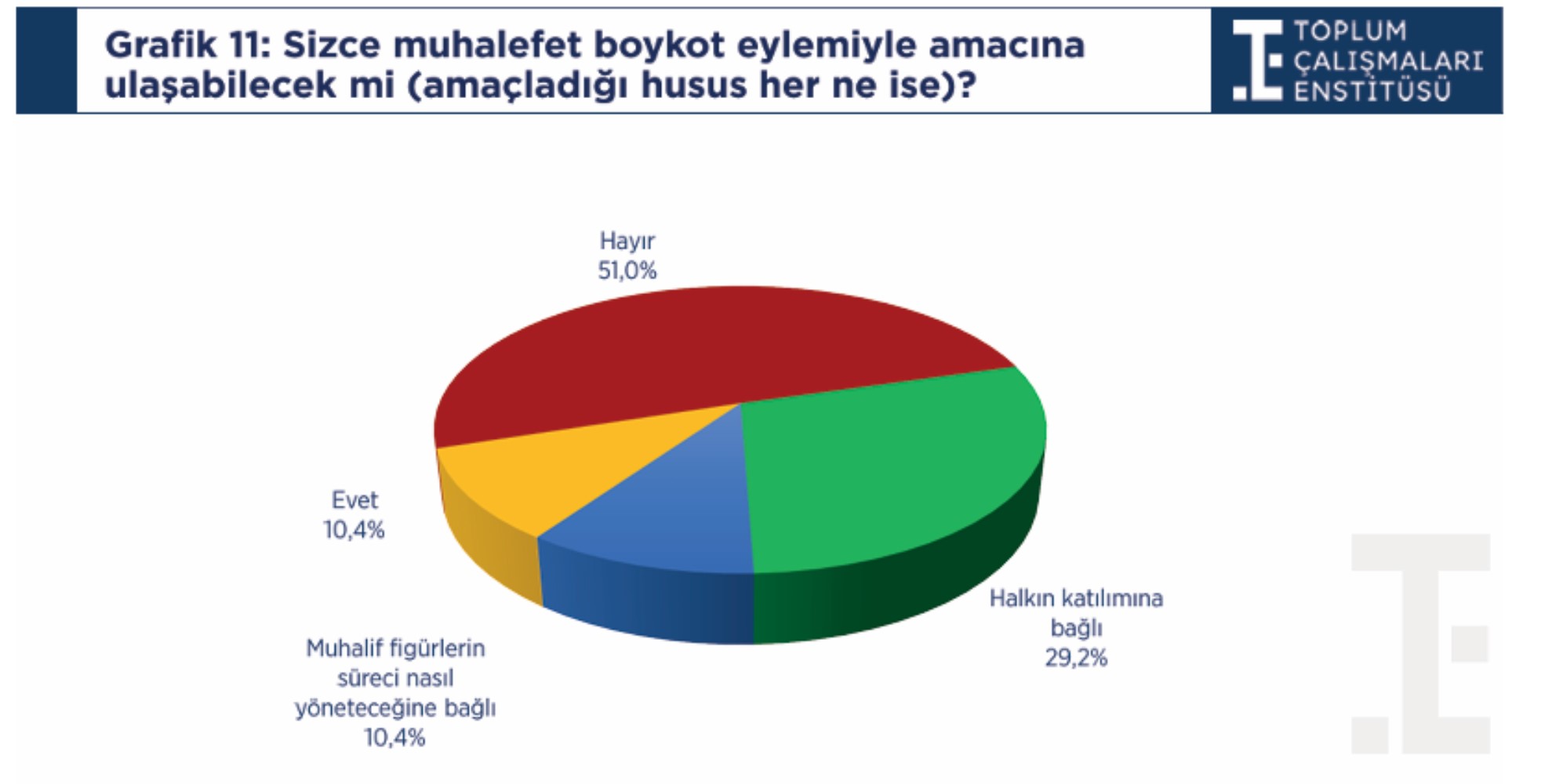 9 / 14
Explaining the statistics with detailed tables, the Institute reached the finding that, "In this context, despite the consumption-increasing effect of salary payments made during the holiday and just before the holiday, when the analyses included in this report are also taken into account, it can be said that the April 2 boycott caused a notable decrease in consumption."
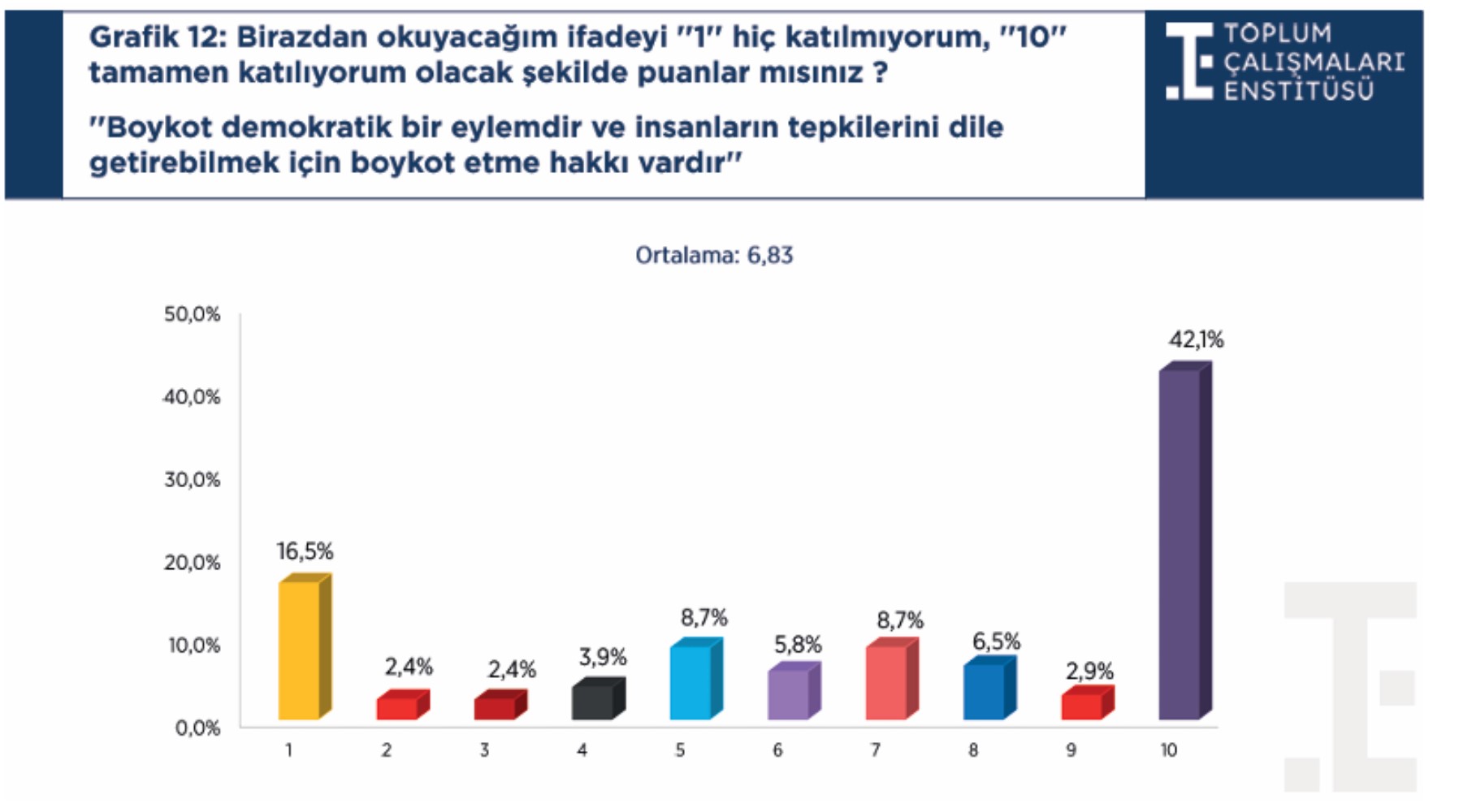 10 / 14
However, pointing out that periodic effects such as salary payments and holidays directly and strongly shape demand dynamics, the Institute for Social Studies stated, "Therefore, in order to understand and measure the economic effects of the boycott that took place on April 2, the structural and periodic factors detailed in this section must be taken into account," noting that a 26 percent decrease in consumption demand was detected in 2025 compared to the pre-holiday period when employee payments were excluded.
 11 / 14
 12 / 14
 13 / 14
 14 / 14
News Source : 12punto









