



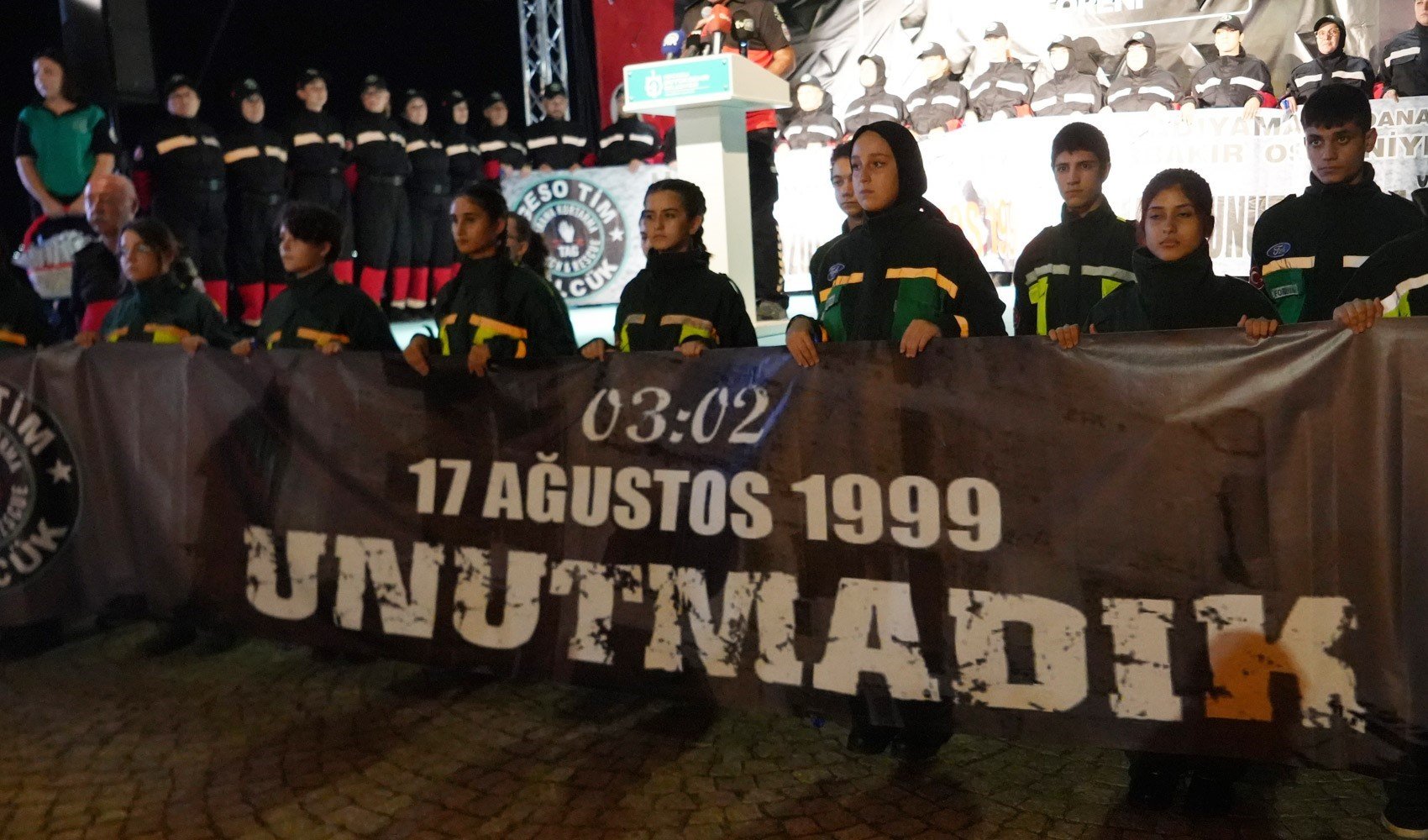
25 years have passed since the Kocaeli-centered earthquake that lasted 45 seconds on August 17, 1999, at 03:02. While 18,373 people lost their lives, 48,901 people were injured, and hundreds were left disabled.
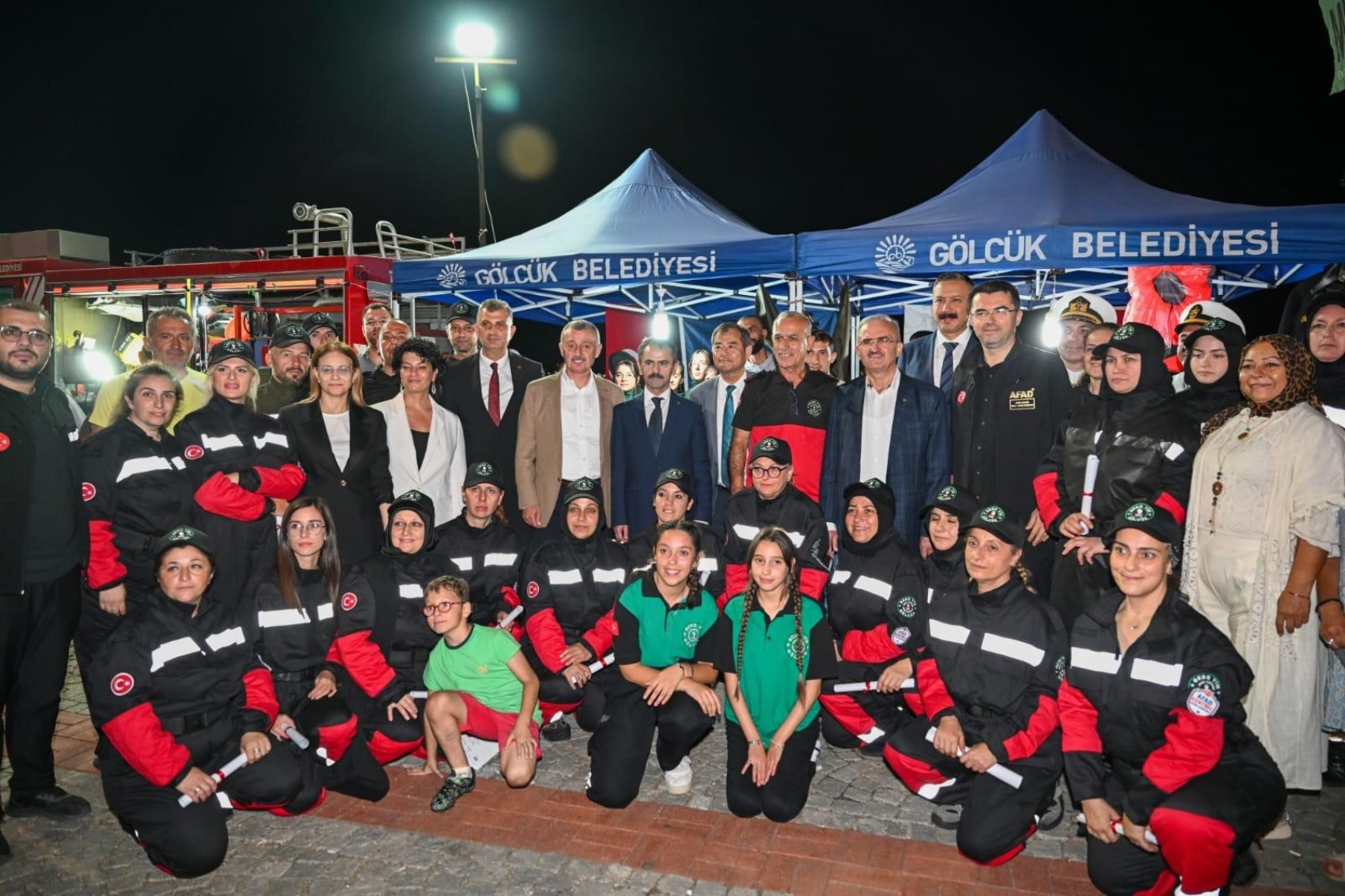
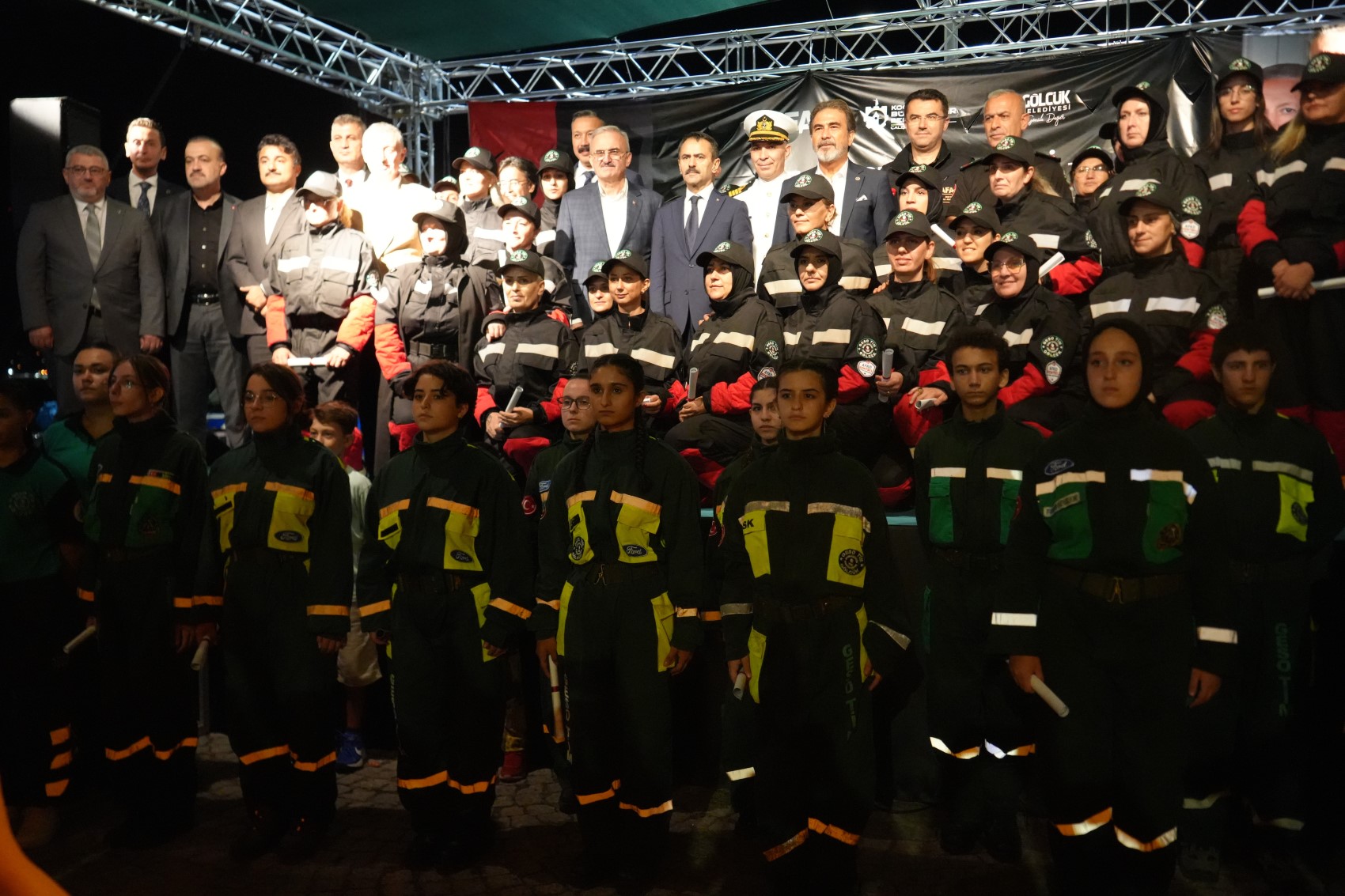
A program was organized at the epicenter in Gölcük to commemorate the earthquake martyrs and draw attention to the reality of earthquakes. During the program, citizens were informed at a stand set up on Kavaklı Beach. Speaking at the program, Gölcük Mayor Ali Yıldırım Sezer said, “It is possible for us to encounter all kinds of disasters at any time.
We live in an earthquake zone. Therefore, it is in our hands to prevent the loss of new lives. What needs to be done regarding this was also shown in the images just now. The work is being carried out. If we build our residences and workplaces as required by science and engineering, it means we will not face these losses. An urban transformation is being carried out in the center of Gölcük.
It consists of a 36-decare area with two floors of underground parking, followed by 406 workplaces and 360 residences. If we transform our residences and make them sound, and if we build the subsequent ones soundly as well, the number of buildings that will be damaged during an earthquake or a disaster will decrease. Therefore, it is always possible to reduce and prevent the damage to be incurred with the measures we will take,” he said.
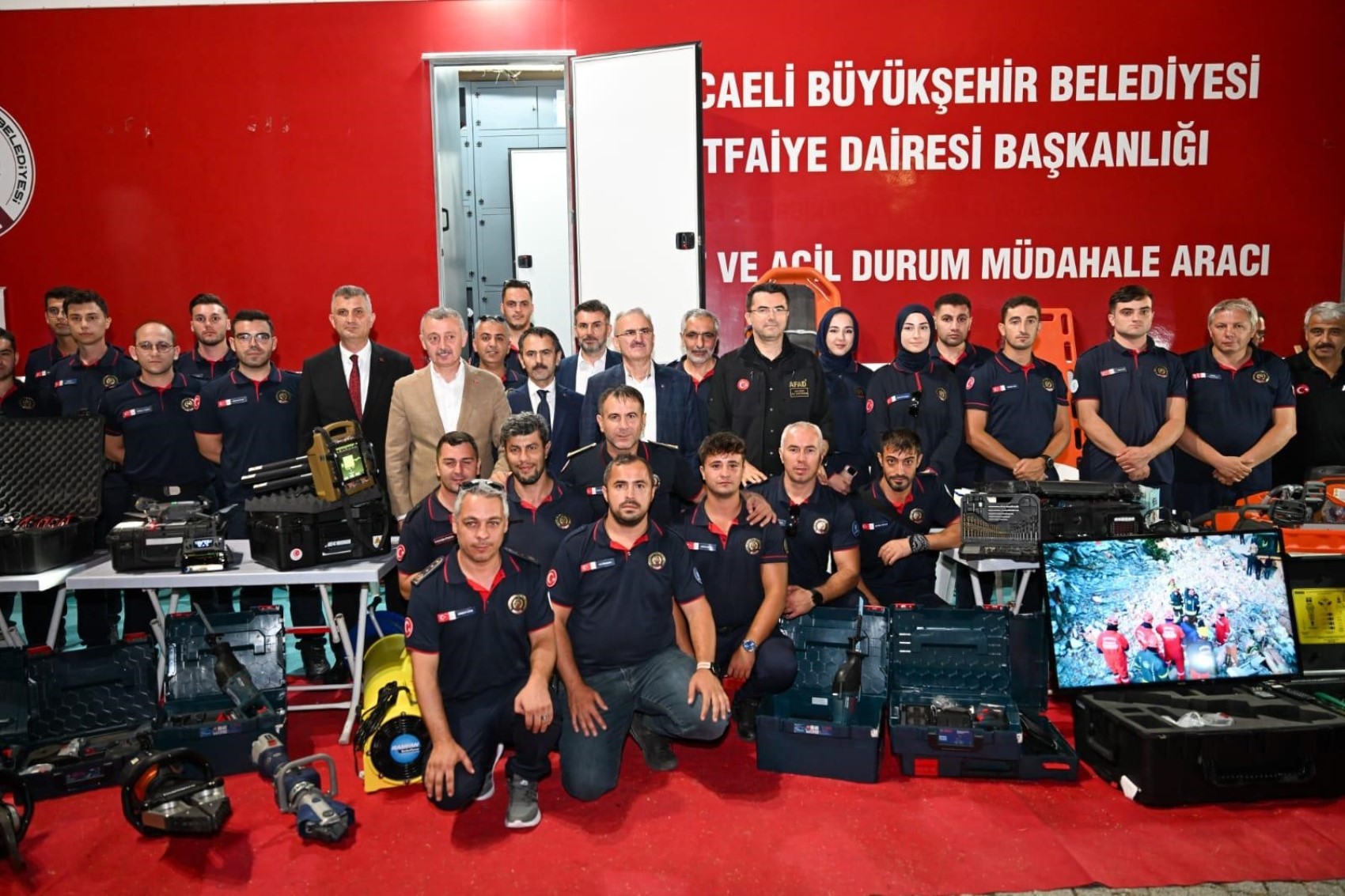
"APPROXIMATELY 30 THOUSAND RESIDENCES HAVE BEEN RENEWED"
Kocaeli Metropolitan Municipality Mayor Tahir Büyükakın said, “When we take it from the beginning of the 2000s to the present, approximately 30 thousand new residences in our city have been renewed through TOKİ, Emlak Konut, and our municipality's company, Kent Konut. Currently, urban transformation work is continuing at 7 different points in different districts of our city, one of which is in Gölcük Merkez Neighborhood.
We have scanned a total of 160 thousand buildings built before 1999 and a total of 250 thousand buildings built before 2007, based on the 2007 regulation, using the rapid screening method in accordance with the Annex A protocol of the risky buildings regulation, and we have completed our scans.
In this sense, we are also proud to be the first city to complete scanning activities. There are a total of 315 thousand buildings in Kocaeli. 250 thousand of these 315 thousand buildings were built before the 2007 regulation. 160 thousand of them were built before the 1999 earthquake. According to the preliminary screening, the data shows this: 130 thousand independent units and about 30 thousand commercial units need to be transformed before the earthquake in the coming period,” he said.
"THE MOST IMPORTANT RISK REDUCTION IN EARTHQUAKES IS URBAN TRANSFORMATION"
Stating that Turkey is an earthquake zone and explaining the scale of earthquakes that have occurred over the years, AFAD President Okay Memiş said, “We are shaken by an earthquake over magnitude 7 every 10 years. We are shaken by a magnitude 6.5 earthquake every five years. And we are shaken by a magnitude 6 earthquake every 3 years. Our geography also reminds us how important, real, and impactful earthquakes are. There are 3 stages in disaster management. One is risk reduction before a disaster.
By spending 1 lira, you prevent a cost of 12 liras. For us, the most important risk reduction in earthquakes is urban transformation. We know how our cities' buildings in our country will behave in a potential earthquake over magnitude 7. We must definitely accelerate urban transformation for these.
Two, disaster response is also very important. In response, your capacity must be evaluated very well. Three, post-disaster recovery efforts. We experienced the disaster of the century on February 6, we experienced the disaster of the century with 7.7 and 7.6 magnitude earthquakes and subsequently 6.5 magnitude earthquakes. When a team intervenes in search and rescue in terms of response capacity, it consists of 25 people. If we assume they do not work 24 hours and work 8 hours, you need 75 search and rescue workers in one building.
39 thousand buildings were destroyed in the February 6 earthquake, and people were living in 26 thousand of these buildings. 1 million 950 thousand search and rescue workers would need to intervene in 26 thousand buildings. Well, how many search and rescue workers are there in the world? According to the study conducted in the world, there are 750 thousand search and rescue workers. Even if it were twice the capacity in the world, it would not be enough for the intervention in the February 6 earthquake. We intervened with 35 thousand people, including our own country's capacity and search and rescue teams coming from abroad. However, 650 thousand public officials worked in the field, our NGOs also worked, but this was the number of search and rescue workers we had. In other words, there is a situation that is not enough even if it were the world's capacity,” he said.
"WE ARE MAKING A GREAT EFFORT"
Stating that they are focusing on work against risks as AFAD, Memiş said, “Of course, we learned lessons from here, and we have now started to train our Turkish Armed Forces, our army, our gendarmerie, our police, our firefighters, our miners, and our non-governmental organizations. When proportional to our population, we will be the country with the most search and rescue teams in the world in a very short time.
But what we really need to do is risk reduction; we have to build sound buildings on sound ground. As for recovery efforts, there is currently a Republic of Turkey state and the Turkish nation that is carrying out the world's largest post-disaster recovery operation. The work done is huge. Within one year, approximately 80 thousand permanent residences, sound buildings built on sound ground, have been delivered, and we will hopefully deliver 200 thousand residences by the end of the year, and is this operation in itself really the world's largest post-disaster recovery operation a feat?
Yes, it is a feat, but the real feat is to be able to build buildings that do not collapse in these earthquakes, no matter how large they are. In the light of science, in the light of technique, in the light of the information that engineering tells us, we must do the best. We are working 24 hours a day in this direction. We are making a great effort not to be embarrassed before our citizens,” he expressed.
"WE DID NOT HAVE AN EARTHQUAKE REGULATION WHEN THE AUGUST 17 EARTHQUAKE HAPPENED"
Speaking at the commemoration program, Kocaeli Governor İlhami Aktaş said, “The fact that the first ceremony of our governorship, which I started a short time ago, is such a painful commemoration ceremony will also hold an important place in our professional memoirs. But such commemoration events, especially anniversaries like the 25th, 50th, 10th, and 100th years, are anniversaries that give us opportunities to sit and think again, to take stock of the past, and to examine what kind of measures we should take in the future,” he said.
News Source: İHA









