



12punto.com.tr / Aslı Ağırdil
Istanbul's busiest locations, the Spice Bazaar, is among the city's tourist attractions with its historical atmosphere, traditional architecture, and diverse shopping opportunities.
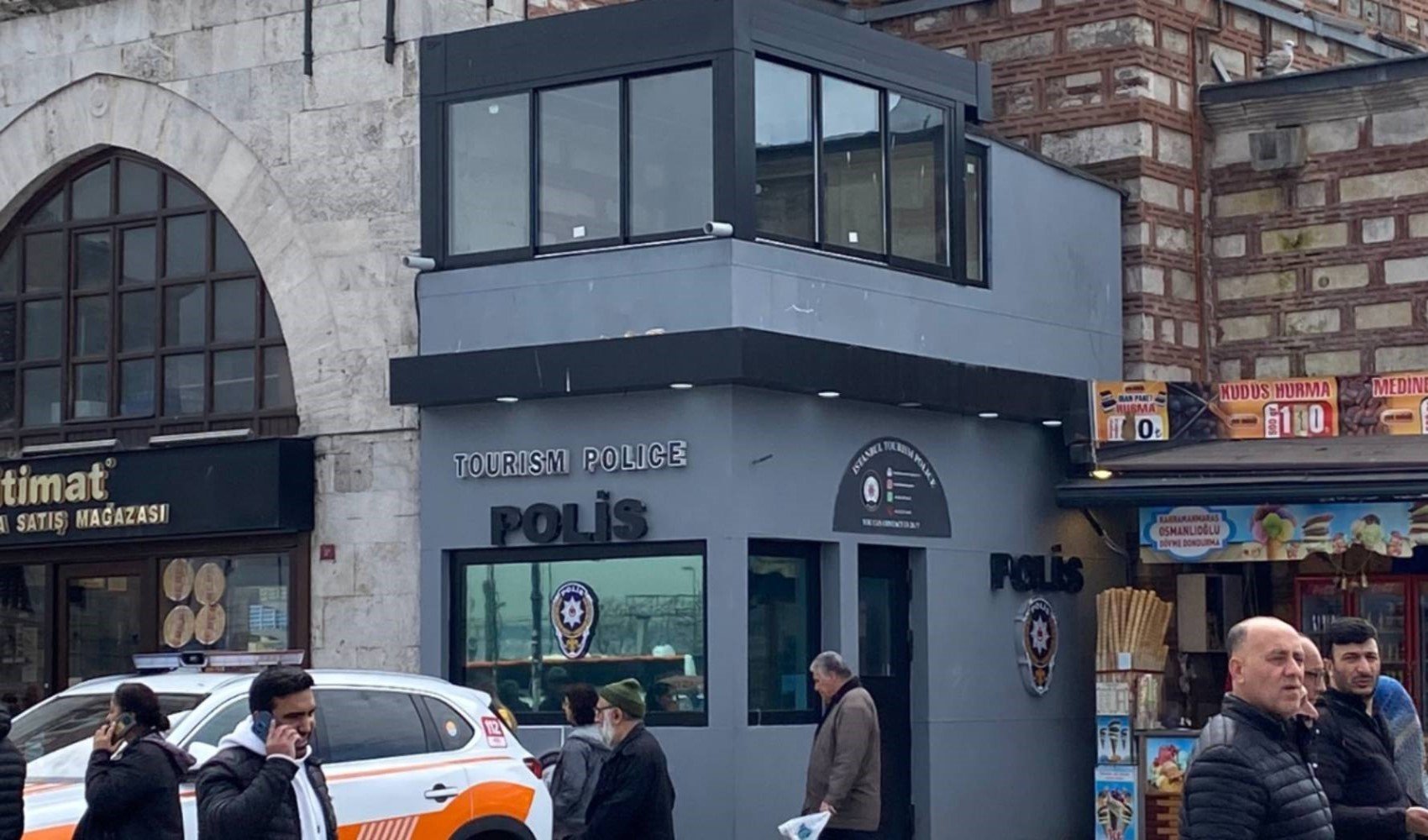
The new police booth positioned at the entrance of the Spice Bazaar, which has recently become a focal point for tourists, has sparked debate among social media users.
This new arrangement creates a structure that could cast a shadow over the historical and cultural values of the Spice Bazaar.
It is believed that adding a modern structure that is not in harmony with the traditional bazaar atmosphere damages the aesthetic values of the bazaar.
DEBATED ON SOCIAL MEDIA
The debate continues among users on social media. One user commented, "A monstrous structure." Another user asked, "Is there no aesthetic perspective at all?"
 HISTORY OF THE SPICE BAZAAR
The Spice Bazaar, one of the most vibrant places in Istanbul, was built in the 1660s as part of the New Mosque complex. It is one of the oldest covered bazaars in Istanbul. The bazaar was named the Spice Bazaar (Mısır Çarşısı) because it sold spices, medicinal herbs, and similar products arriving from Egypt.
Designed in an L-shape, the Spice Bazaar consists of 88 vaulted rooms. The bazaar, which has six gates, has a two-story section at the Haseki Gate. In its time, the upper floors were used as a court; disputes between tradesmen and their customers, as well as among the tradesmen themselves, were resolved here.
In the Spice Bazaar, where herbal medicines prepared according to old prescriptions were also sold during the Ottoman period, today there are traditional delicacies such as spices, herbal teas, nuts, dried fruits, fruit leather (pestil), and Turkish delight, as well as jewelry, fabrics, baskets, and various souvenirs.
Swiss national Ernest Mamboury, a French teacher at Galatasaray High School who spent a significant part of his life in Turkey, also introduced the Spice Bazaar in his 1925 Istanbul Tourist Guide. The guide states that a wide variety of products were sold in the Spice Bazaar. Pharmaceutical products were particularly abundant. Among these, while dried leaves, flowers, and all kinds of spices were found, there were even snake skins, turtle shells, and dried mollusks. The products were displayed in very elegant glass and earthenware vases.
The Spice Bazaar has been a frequent destination for decades for those who want to fill their bags with edible souvenirs and for travelers in pursuit of colorful snapshots.
News Source: 12punto









