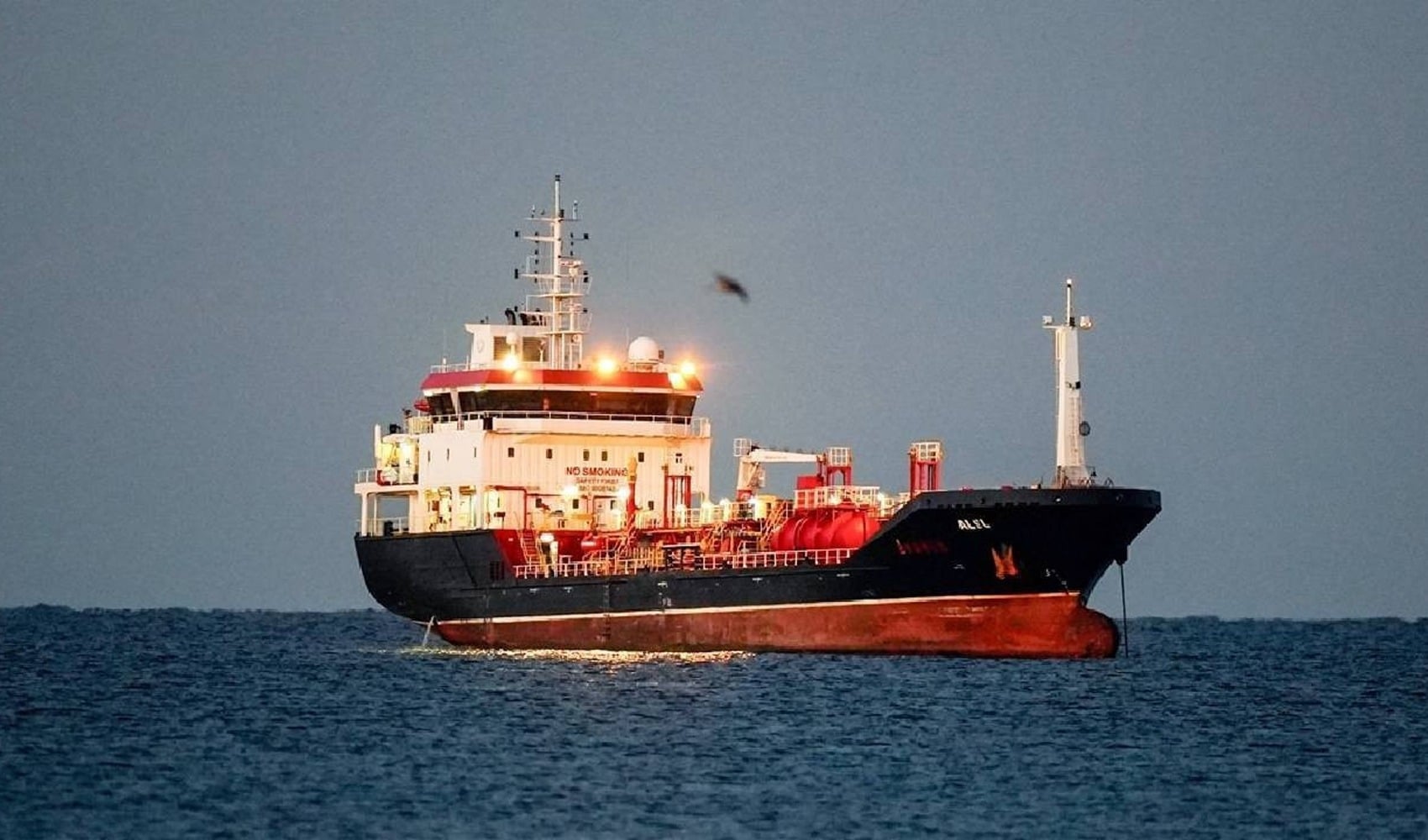
The preliminary expert report prepared as part of the investigation into the collision of the Turkish-flagged commercial vessels "Alsu" and "Tuğberk İmamoğlu" off the coast of Silivri has been revealed. The report assesses that the accident occurred as a result of "bilateral bridge weaknesses," a loss of situational awareness, and maneuvers that contradicted radio agreements.
The investigation, conducted by the Silivri Chief Public Prosecutor's Office, is ongoing regarding the accident that occurred on September 2 at approximately 03:13 on the Marmara Sea Traffic Separation Scheme. In the collision, which took place about 18 nautical miles south of Silivri, the "Tuğberk İmamoğlu" vessel, which was reportedly carrying rolled sheet metal and construction rebar from Kocaeli to Aliağa, sustained damage to its port side and sank in a short time. The 10-person crew on board remains missing.
The expert committee examined the limited ECDIS playback data obtained from the "Alsu" vessel, logbook records, statements from the crew, and reports provided by the Coast Guard Command and the General Directorate of Coastal Safety. The preliminary report notes that visibility at the time of the incident was approximately 6 nautical miles, and that there was no fog, haze, heavy rain, or strong currents that would restrict maneuvering, concluding that no external natural factor caused the accident.
MAIN FINDINGS IN THE REPORT
According to the report, serious violations regarding bridge navigational safety organization were identified on the "Alsu" side. It was stated that only the 2nd Officer, Murat Evciman, was on the bridge at the time of the accident, that Evciman had joined the ship only one day before the accident, and that the shift in question was his first navigational watch on this vessel. The absence of a lookout, trainee, or helmsman on the bridge was also cited as a factor that reduced situational awareness.
The report states that Captain Ahmet Erarslan was not on the bridge during the accident, was sleeping in his cabin, and arrived on the bridge approximately 7-10 minutes after the collision. It was assessed that the "Alsu" did not comply with the watch standards stipulated in its own Safety Management Manual, and therefore, there were operational and systemic flaws.
Regarding the "Tuğberk İmamoğlu," it was noted that its AIS device might have been turned off, faulty, or not functioning properly due to external interference. The report states that for this reason, the ship was navigating as a "ghost ship" in the region in terms of other vessels and traffic monitoring stations, and that the "Alsu" could only detect the target as a radar echo at a distance of 1.8 nautical miles.
In the preliminary examination, it was reported that the "Alsu" watch officer declared that he had established radio contact with the other ship via VHF 16 and that a request to "steer to port" had come from the other side. However, according to the report, the "Tuğberk İmamoğlu" turned to starboard in the final 0.5 miles, contrary to this agreement. This maneuver was assessed as the operational flaw that physically initiated the collision.
The expert report also stated that the failure of the "Alsu" to perform speed-reducing maneuvers, such as an early engine stop or full astern, may have increased the severity of the collision. It was noted that after the collision, no major damage occurred on the "Alsu" that would hinder navigation or cause water ingress, other than light scratches on the starboard side.
It was reported that life rafts and a free-fall lifeboat belonging to the "Tuğberk İmamoğlu" were found empty at sea during search and rescue operations. It was emphasized that why the ship sank so quickly after the collision has not yet been finalized; additional documents such as cargo shifting, cargo securing weaknesses, loading plans, stability calculations, and camera recordings need to be examined.
The report stated that it is a technical necessity to include VHF radio voice recordings, extended VTS radar and screen recordings, the loading documents of the "Tuğberk İmamoğlu," and the external camera recordings of the "Alsu" in the file to reveal the material truth beyond any doubt.
News Source: 12punto