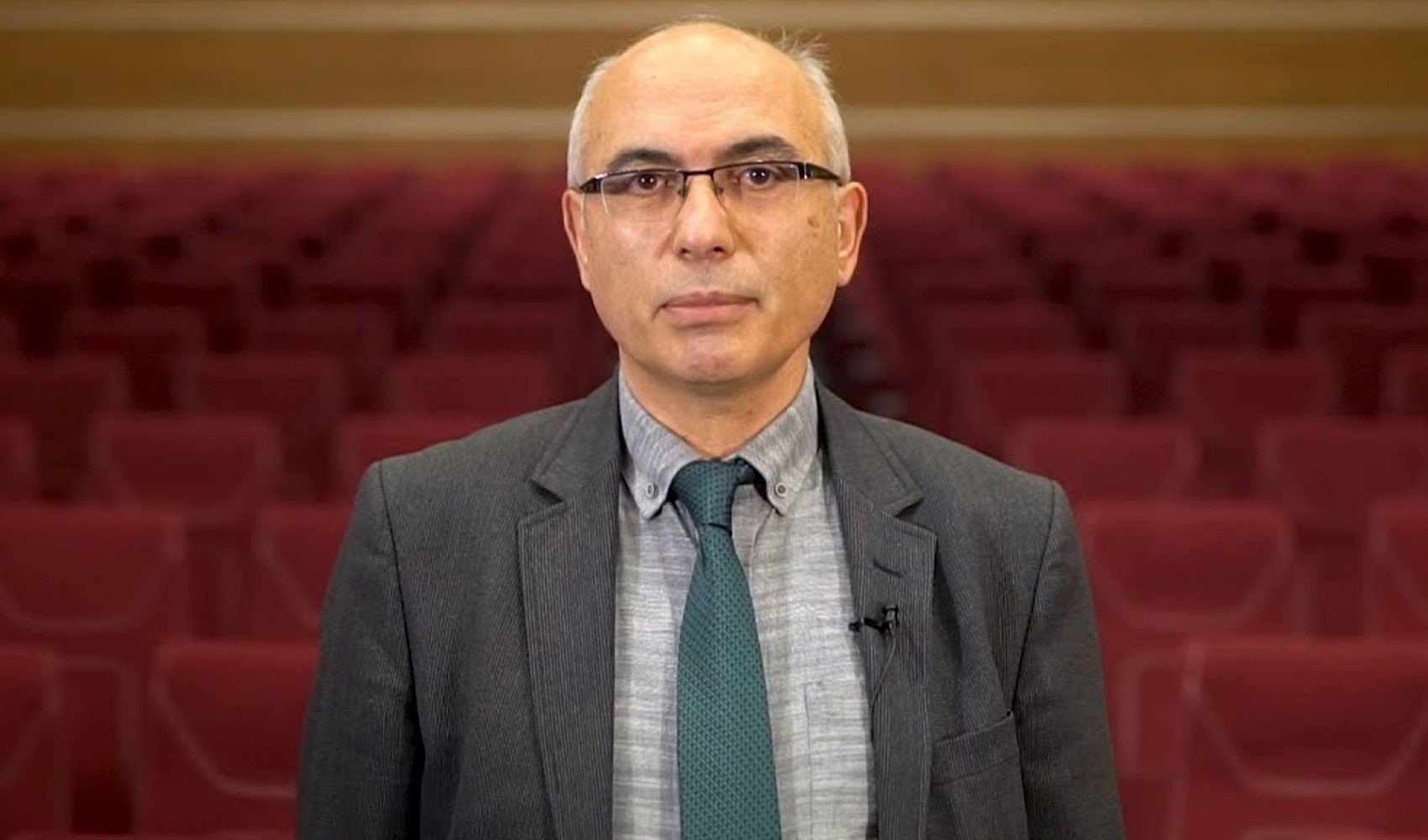
Kastamonu University Faculty of Communication Dean Prof. Dr. Muharrem Çetin has responded to allegations of "serious plagiarism in his theses" through a written statement. Çetin argued that the accusations are baseless, noting that academic ethical standards have changed over the years and that his theses were prepared in compliance with the rules of their respective periods.
"SOURCES WERE INCLUDED IN DIFFERENT SECTIONS"
Stating that the expressions claimed to be unreferenced in his master's thesis were actually cited in different sections, Çetin said, "The writing rules of that period were different from today's standards. Some works that were not in the bibliography were mentioned within the text or in footnotes. This cannot be presented as a conscious violation."
"THE SENTENCE BELONGS TO BESİM BAYKAL, AND IT WAS CITED"
Regarding a sentence in his doctoral thesis alleged to belong to another academic, Çetin stated that it was actually taken from Prof. Dr. Besim Baykal, adding, "The relevant expression was taken from a work by Besim Baykal, which is already included in the bibliography."
THE DEAN DEFENDS HIMSELF! HERE IS HIS RESPONSE
In the article titled "Copy-paste academy: Dean's theses found to be stolen," published on the website https://12punto.com.tr/ on 05.08.2025, baseless allegations were made against me based on accusations that are completely contrary to the truth.
It has been claimed that both theses were not prepared in accordance with basic academic writing principles in general. With what competence is it claimed that theses written in 1993 and 2000 do not comply with academic writing principles? Has the academic writing style of that period been examined to make such a claim? Anyone working in academia, let alone a faculty member, even a person working in student affairs or a secretary, knows that thesis writing rules have changed significantly over the years.
It was stated that the fact that a source was included in the footnote on the first page of the Introduction section of the master's thesis but not shown in the Bibliography was evaluated as a lack of bibliographic integrity and citation. It is not an understandable situation that works given in footnotes are expressed as a lack of citation. The fact that the cited works are not in the Bibliography can only be considered as "overlooked," as it will be seen when the thesis is examined that it was written with a typewriter under the conditions of the day.
When the master's thesis is examined carefully, it will be seen that the sentences in the Conclusion section, which are claimed to have been taken without citation, are similar to those on pages 56 and 60. It is a fact that there is no connection whatsoever with the mentioned book, and that the expressions on the specified pages were summarized and included in the conclusion section. It will be understood that the views of many thinkers such as Şenatalar, Ferhat; Teliman, Osman; Bingöl, Dursun; Tutum, Cahit; Dicle, Ülkü; Aşıkoğlu, Meral; Ertekin, Yücel; Renfield, Robert; Kepir, Handan; Ataol, Alpay; and Sabuncuoğlu, Zeyyat were cited on the specified pages, and that expressions similar to those stated in the conclusion are present in the body of the thesis when these works are examined. My master's thesis was submitted to the Gazi University Institute of Social Sciences in March 1993. The thesis must have been finished at least one month before being submitted to the relevant Institute. Considering that this thesis was written with a typewriter under the conditions of that day, this period is reasonable. Thus, the thesis must have been completed, bound, and made ready as of February. Everyone who does academic work knows this. How can it be labeled as "direct plagiarism" when the views in the conclusion section of a thesis submitted in February are compared to a book published in 1993, at a time when the internet did not exist and publications were not seen in a computer environment as they are today? This is, at the very least, nothing more than slander, a smear campaign, and character assassination. As stated in the thesis writing guides published today, the research problem, method, and interpretation of each result should be included in the Conclusion section. At that time, it was stated in the thesis writing rules that the views expressed in the sections of the thesis should be summarized and included in the Conclusion section, and it was not considered appropriate to provide citations in the conclusion section. Similarities in scientifically proven expressions are not seen as an ethical problem. Furthermore, when the publications of the thinkers whose sources I provided are examined, it is seen that similar expressions are included. Is it logical to scan a source for a sentence within a paragraph? Evaluating a thesis written over hundreds of pages as plagiarism based on one sentence does not fit either scientific ethics or human values. As can be clearly seen here, the content of the thesis has been examined with malicious intent. Again, as I mentioned above, the first edition of the mentioned work was published in the year the thesis was published. Anyone with an academic mission knows that it was much more difficult to make citations at a time when works were not in a digital environment and it was much harder to follow these publications compared to today's conditions. Moreover, it is clearly seen that I cited the mentioned source in my doctoral study that I did later. If I had ignored a source and committed plagiarism as alleged, I would have acted in the same way in my doctoral study. This shows that the actions were taken with the aim of smearing, slandering, and damaging reputation through publication, and that they lacked good faith. As stated in the thesis writing guides published today, the research problem, method, and interpretation of each result should be included in the Conclusion section. At that time, it was stated in the thesis writing rules that the views expressed in the sections of the thesis should be summarized and included in the Conclusion section, and it was not considered appropriate to provide citations in the conclusion section. When the master's thesis is examined carefully, it will be seen that the sentences in the Conclusion section, which are claimed to have been taken without citation, are similar to those on pages 56 and 60. It is a fact that there is no connection whatsoever with the mentioned book, and that the expressions on the specified pages were summarized and included in the conclusion section. It will be understood that the views of thinkers such as Şenatalar, Ferhat; Teliman, Osman; Bingöl, Dursun; Tutum, Cahit; Dicle, Ülkü; Aşıkoğlu, Meral; Ertekin, Yücel; Renfield, Robert; Kepir, Handan; Ataol, Alpay; and Sabuncuoğlu, Zeyyat were cited on the specified pages, and that expressions similar to those stated in the conclusion are present in the body of the thesis when these works are examined. My master's thesis was submitted to the Gazi University Institute of Social Sciences in March 1993. The thesis must have been finished at least one month before being submitted to the relevant Institute. Considering that this thesis was written with a typewriter under the conditions of that day, this period is reasonable. Thus, the thesis must have been completed, bound, and made ready as of February. Everyone who does academic work knows this. How can it be labeled as "direct plagiarism" when the views in the conclusion section of a thesis submitted in February are compared to a book published in 1993, at a time when the internet did not exist and publications were not seen in a computer environment as they are today? This is, at the very least, nothing more than slander, a smear campaign, and character assassination. It is claimed that a sentence was taken from Seda Çelik's master's thesis and was not cited. However, when the mentioned thesis is examined, it is seen that the specified sentence was taken from Besim Baykal's work, and Besim Baykal's work was shown as a footnote. When looking at the bibliography of my doctoral thesis, it will be seen that the mentioned work of Besim Baykal is included. It is seen that the same expressions are also included in Baykal's work. When the thesis is examined, similar sentences will be encountered in the body text of the thesis, and it will be seen that Besim Baykal was cited. The plagiarism allegation regarding the nature of a work included in the bibliography is a very serious and malicious allegation. In the news, it was claimed that the theses contained plagiarized sentences and paragraphs and used misleading bibliographies, and that because they were not cited with an appropriate citation system (whatever that means) despite being direct quotes, the claimant put themselves in the place of the Supreme Turkish Justice, acting as both prosecutor and judge, and ruled that the titles I had earned should be revoked and the financial resources should be returned with legal interest. By using accusations that have no basis and consist only of their own claims, they were able to deem my work null and void. Even these expressions are important in showing the extent of the grudge with which they were written. A person should know that they cannot put themselves in the place of justice; if they had seen any element of crime, they should have applied to the relevant institutions. However, realizing that their own claims were invalid, they resorted to slander via social media to cause false perceptions in the public, to smear, to slander, and to play with a person's reputation. This is an indicator of the kind of distorted thinking I am facing. During the period when I wrote my master's and doctoral theses, there were no programs such as Turnitin and iThenticate, etc., that indicate the similarities of theses. It is accepted by Higher Education Institutions that a 20% similarity rate is a scientifically acceptable rate when the similarities of an academic study are determined by the mentioned programs. We are talking about a study of over 400 pages including its appendices. In the text prepared for disinformation purposes, the allegations are also included below in order to show as if there were much bigger mistakes. When the theses are examined, it will be seen that hundreds of sources were utilized. It does not fit any logic, reason, understanding, or human values to show all the work as 90% plagiarism based on claims that a source was not cited in a study that utilized hundreds of sources and that those claims do not exceed two paragraphs in total. As I mentioned above, if I had seen the mentioned work while writing my master's thesis, I would definitely have shown it in the source. I cited the same work in my doctoral study. When a thesis is being written, an academic person definitely knows, it is read by the advisor, and necessary corrections (additions and subtractions) are made. It is naturally accepted in academia for an academic who has spent years in academia to filter the publications they read and reflect their own expressions into the thesis. Furthermore, before writing a thesis, the student writing the thesis must read hundreds of sources other than the ones they include in the thesis, just as they read the sources they include. No allegations could be made regarding any plagiarism in the body text of the thesis, and it was not considered appropriate to add footnotes to the conclusion section during the master's writing period. Looking at what is alleged, it cannot even be evaluated as carelessness, let alone serious accusations such as ethical violations or plagiarism. In the allegations, the sentences said to be conveyed by Cem Kozlu are already present in the book/report "A Business and Its Beliefs" written in 1963 by IBM Chairman Thomas Watson Jr. The book/report is open to the public and is offered for free. In the part claimed to be plagiarism in the conclusion section, the expression "it is believed" is used, not "I believe," and this expression is clearly seen as a general judgment gathered from the general-valid expressions of the thinkers cited before, in the context of the sources mentioned in the thesis. In conclusion, all these actions consist of an effort to smear, assassinate my reputation, throw mud, and create a different perception in the eyes of the public. However, such actions generally affect society's view of academia very negatively. I submit to the information of the esteemed public that criminal/legal paths will be sought regarding the mentioned article, and that I will continue to work devotedly as I have done until today.
WHAT HAPPENED?
It was alleged that Kastamonu University Faculty of Communication Dean Prof. Dr. Muharrem Çetin used texts belonging to other academics in both his master's and doctoral theses without citing them, and that this constituted a clear violation of academic ethical rules. In the report submitted to the rectorate on August 4, it was claimed that direct quotes were spread across various sections of the theses and that in some expressions, only a single word was changed.
News Source: 12punto