In an assessment shared on his social media account, Gürdeniz stated the following:
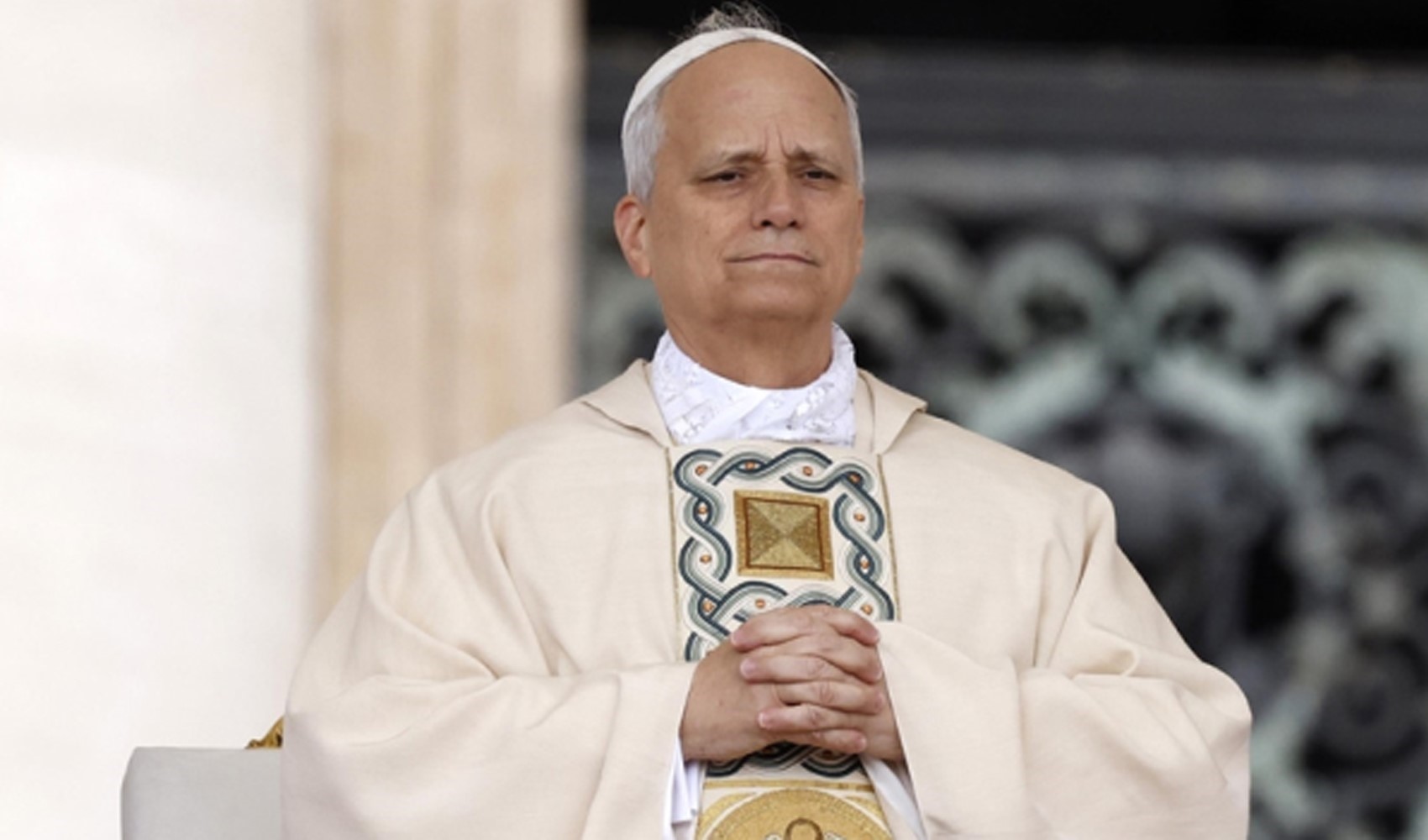
The visit of the American Pope Leo XIV to Nicaea is more than a religious ceremony.
It is significant that Leo XIV chose the Feast of Saint Andrew (November 30), which is accepted as the founding date of the Ecumenical Patriarchate of Constantinople, for his visit to Turkey and referred to Patriarch Bartholomew as the "host."
This move is a multi-layered strategy with theological, geopolitical, eschatological, and psychological dimensions.
The return to Nicaea, the birthplace of Christian dogma, is a theological message.
Taking the Fener Patriarchate along as the representative of the East is an attempt at geopolitical legitimization.
The discourse of re-establishing East-West church unity is an eschatological preparation.
One of the oldest narratives of Christianity:
"In the beginning we were one, we will be one again," is being staged once more in Nicaea today.
According to this narrative, when unity is achieved, the era of the Messiah's return begins.
Thus, the psychology that "history flows through our heritage" is being strengthened.
The Pope's call to Nicaea is based on the idea of uniting a divided Christianity for the last time. The unification of the Eastern and Western Churches is a doctrinal chain that involves the sanctification of Jerusalem and the acceleration of the process of the Messiah's return.
The geopolitical nodes of this chain are clear:
Istanbul (New Rome);
Nicaea (The source of dogma)
and, although not on the program, Hagia Sophia (The crown of unity).
For this reason, the subject is not worship, but sovereignty and symbolic dominance.
While Gaza has turned into a bloodbath and Israel acts with complete indifference, using religious rhetoric and claiming its actions are required by divine commands, the American Pope's Nicaea move should also be read as the European leg of the Evangelical-Zionist "accelerating the Messiah" doctrine in the US.
There are 70 million Evangelical voters in the US.
They have institutional representation in the Senate and Congress.
This doctrine has become state policy. During the first Trump term, when Jerusalem was recognized by the US as the capital of Israel, Secretary of State Pompeo said: "God sent Trump to build Israel," while Vice President Pence said: "We have placed Jerusalem on God's calendar."
These words are an official declaration that foreign policy has been surrendered to theology.
In short, the Pope's Nicaea move is the European leg of Evangelical-Zionist eschatology.
The goal is to unify the church, crown Jerusalem, and accelerate the Messiah doctrine.
The Ecumenical Patriarchate of Constantinople also plays a role in this scenario. Yet, Atatürk clearly warned in 1922: "The Greek Patriarchate is a nest of sedition that sows seeds of discord and strife in the country. Turkey is under no obligation to maintain such an organization on its soil."
Yes, what is happening is a war of symbols. However, let us remind you that in this war, both the spirit and the sovereignty of Anatolia belong to the Turkish nation. Sovereignty in these lands is established not in the name of God, but in the name of the nation.
The sovereignty of Anatolia is not a matter for negotiation.
Sovereignty cannot be surrendered to revelations and prophecy projects.
Amerikalı Papa 14. Leo’nun İznik ziyareti, bir dinî törenden ötedir.
— Cem GÜRDENİZ (@cemgurdeniznet) November 5, 2025
14.Leo’nun Türkiye ziyareti için Fener Rum Patrikhanesi’nin kuruluş tarihi kabul edilen, Havari Andreas Yortusu’nu (30 Kasım) seçmesi ve Patrik Bartholomeos’tan, “ev sahibi” olarak söz etmesi manidardır.
Bu…
News Source: 12punto