IŞIN ERTÜRK – STUTTGART
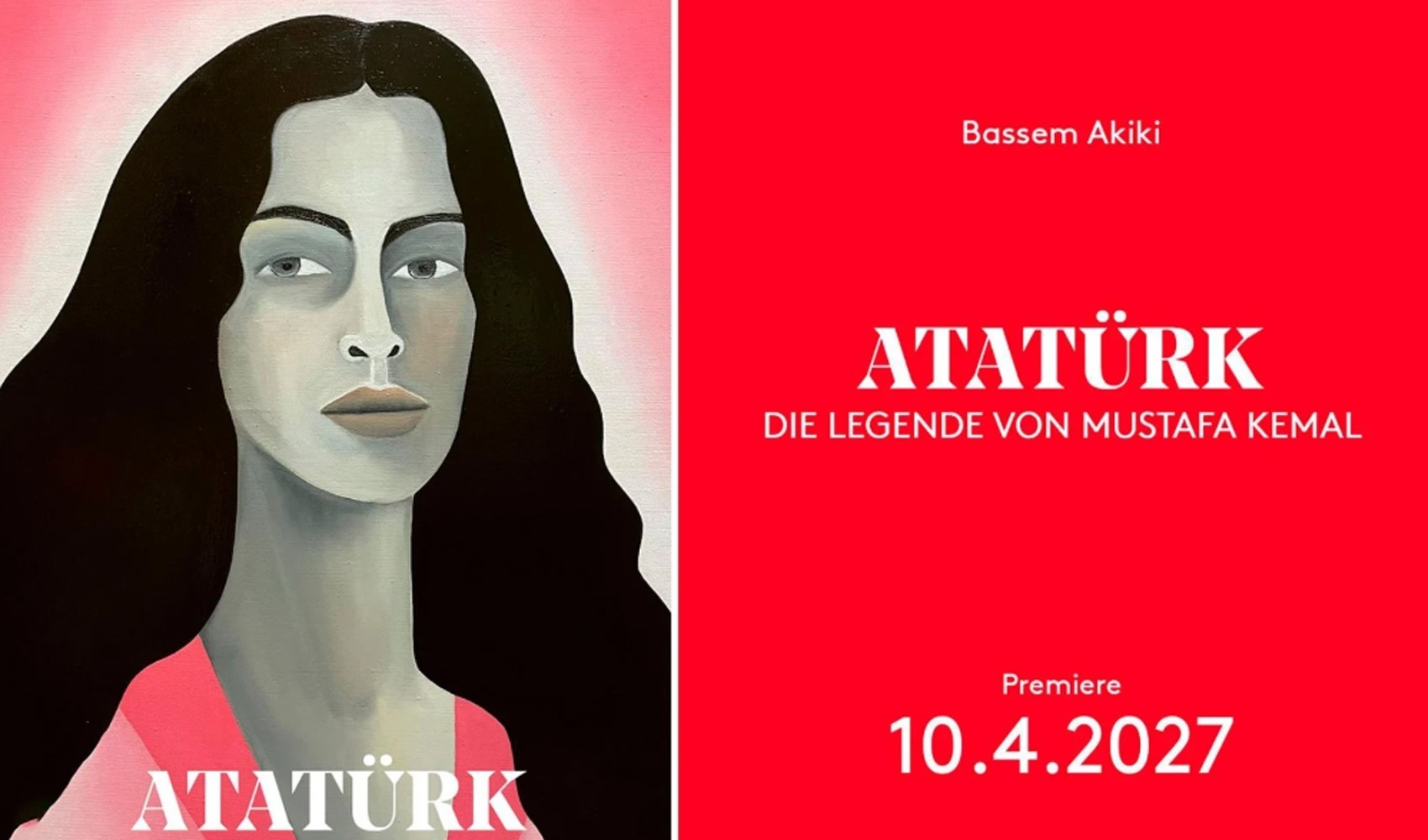
Tensions are growing around the opera "Atatürk - Die Legende von Mustafa Kemal" (Atatürk - The Legend of Mustafa Kemal), which the Stuttgart State Opera plans to stage in its 2027 season. However, the issue has long since ceased to be just an "opera debate."
The real question is something else…
What will the Turkish-origin community in Germany do from now on? Will they settle for just protesting?
Or will we witness a major cultural offensive that retells the founding spirit of the Republic, the idea of independence, and what Atatürk represents?
It is in this very atmosphere that an open letter sent to the Stuttgart State Opera by Elif Özel İsmailoğlu, President of the Stuttgart Atatürkist Thought Association (ADD), has been shared with the public.
In a news analysis we published previously on this subject, we reported that the presentation of Atatürk in the opera's promotional texts alongside concepts such as "violence," "authoritarianism," "nationalist ideology," "historical crimes," and "oppression" had sparked a major backlash within the Turkish community in Germany. Thousands of posts were made on social media, and numerous Turkish non-governmental organizations expressed strong reactions to the project.
In a statement released in response to the criticism, the Stuttgart State Opera announced that the opera "does not aim to heroize," "will not legitimize historical violence," and that "historical traumas related to Armenians, Greeks, and Kurds will also be included in the work." However, these statements were not enough to lower the tension.
The open letter from the Stuttgart ADD has moved the debate to a new stage.
The statement in the letter notes that the language used is "one-sided, ideological, and accusatory," and argues that Atatürk's role in world history is being distorted. Furthermore, questions were raised regarding which historical sources the work is based on, which historians provided consultation, and whether the views of Turkish historians were taken into account.
The open letter is expected to receive support from many Turkish non-governmental organizations in the region. It is evident that the debate is spreading rapidly not only among the Turkish public in Germany but also in Turkey and the Turkish-language media.
Let us first look at the full text of the open letter sent to the Stuttgart State Opera by the President of the Stuttgart Atatürkist Thought Association (ADD), Elif Özel İsmailoğlu:
"Dear Stuttgart State Opera Officials,
We have carefully examined the texts, promotional materials, and project content published for the opera project 'Atatürk – The Legend of Mustafa Kemal,' which is planned to be staged in the 2027 season.
First of all, we would like to clearly state that we are not fundamentally opposed to the artistic freedom of historical figures in works of art or the discussion of different interpretations.
In this case, it is inherently gratifying that a statesman as important to world history as Mustafa Kemal Atatürk is the subject of an opera. However, the opera, the concept used, and the recent statements regarding the content presented to the public raise serious concerns that the work will reinterpret Atatürk and the founding of the Republic of Turkey through an ideological and controversial perspective, rather than presenting a balanced depiction based on historical reality.
This is clearly visible in the published texts:
'What does progress mean? Who pays the price for reforms? And how much violence is hidden behind the dream of unity?'
'The chaos of the end, the intoxication of the beginning, and the long shadows left by political decisions...'
'Questions the Atatürk figure as a legend, on the border between human and monument.'
'Atatürk's private life has been deliberately fictionalized.'
'Atatürk appears not as an icon, but as a human trapped between a belief in progress, personal loneliness, and the pursuit of authoritarian power.'
'Facing the process of becoming a legend...'
'Violence, oppression, historical crimes, nationalist ideology, and authoritarianism are the main themes of the libretto.'
'Violence against Armenians, Greeks, and Kurds is explicitly addressed in the work.' These expressions are striking. These discourses create the impression that Atatürk's historical role is being handled from the outset within a problematic, accusatory, and one-sided framework. In particular, the direct placement of terms such as 'violence,' 'authoritarianism,' 'historical crime,' 'nationalist ideology,' and 'oppression' at the center of the Atatürk narrative strengthens concerns that the project aims to re-evaluate a historical figure through current political debates rather than interpreting them artistically.
Moreover, defining Atatürk merely as a 'figure,' 'myth,' or 'legendary figure' is a matter of extreme importance for the Turkish community.
Gazi Mustafa Kemal Atatürk remains a historical figure; he is the founder of the Republic of Turkey, the leader of the War of Independence, and the architect of the modernization process.
With his contributions to women's rights, the secular legal system, educational reforms, and the modern understanding of the state, he is one of the most important statesmen not only in Turkish history but also in world history.
More than Atatürk; the approach that handles the subject through the lens of 'authoritarian power struggles,' 'violence,' 'historical crimes,' and 'the reworking of myths' naturally arouses strong unease in the collective historical consciousness of millions of people.
In particular, the claim that Atatürk's private life is 'deliberately fictionalized' in the work raises a separate issue of responsibility.
The boundaries of fictional interventions into the private lives of historical figures are ambiguous. This fuels the fear that the line between historical reality and artistic fiction is being deliberately blurred.
The fact that the opera places Turkish, Armenian, Kurdish, Greek, German, and other languages into the same historical and political framework also raises questions in the public eye.
In 1981, the United Nations adopted a resolution honoring Atatürk as a personality who made special contributions to peace, international understanding, and international cooperation.
The following points were specifically emphasized in the justification:
• The principle of 'Peace at Home, Peace in the World,' which sets an example for international relations
• His commitment to anti-imperialist independence without aggressive expansion
• His efforts to promote cooperation and stability in his region (e.g., the Balkans and the Middle East)
• His role as a reformer who promoted education, science, and modernization, thereby contributing to peaceful development in the long term.
The UN also states that Atatürk is a role model not only for Turkey but especially for countries developing toward independence and a modern state.
For this reason, the year 1981 was declared 'Atatürk Year' internationally due to its importance for peace and understanding worldwide.
However, someone reading the description of the Atatürk character in the opera might think they are facing a devil rather than a human as defined in the UN resolution. Unless the artistic justification for these decisions is clearly explained, the impression arises that the project aims to initiate a political debate rather than tell a historical narrative. In this context, the audience expects answers to some fundamental questions:
On which historical sources is the libretto based?
Which historians, academics, or experts have consulted on the project?
Have the views of Turkish historians and various scientific perspectives been taken into account?
Is the work based on historical documents and scientific research, or primarily on fiction and contemporary political interpretations?
Why are Atatürk and the history of the Republic specifically associated with the terms 'violence,' 'authoritarianism,' 'nationalist ideology,' and 'historical crime'?
Does the work embrace historical pluralism, or does it aim to spark a debate about Atatürk and the founding of the Republic?
Does the work encourage historical pluralism, or does it aim to revive the debate about Atatürk and the founding of the Republic?
As the Turkish community in Germany, we do not refuse to engage with history, but we do reject the distortion of historical reality through one-sided interpretations. While we believe that art should foster understanding between societies, we believe it should not become a tool that ignores social sensitivities, deepens social polarization, and violates our shared historical memory.
We find it important that the sensitivities of the Turkish community in Germany be taken into account and that narratives that could lead to polarization, threaten social cohesion, and trigger conflicts be avoided.
Since we are taxpayers in this country and finance public institutions like the State Opera with our tax money, we expect the Stuttgart State Opera to transparently share the academic foundations and consultation processes of the project with the public, to give equal importance to various historical perspectives, and to respect the sensitivities of the Turkish community in Germany.
We believe that dialogue, mutual understanding, and a sense of historical responsibility should be the fundamental principles when addressing such a sensitive subject.
Atatürkist Thought Association - Stuttgart
Elif Özel İsmailoğlu”
Let us continue...
Millions of people of Turkish origin in Germany today actually stand upon a massive intellectual heritage. From Nâzım Hikmet’s immortal epic to Hasan İzzettin Dinamo’s "Sacred Rebellion," from Dr. Hikmet Kıvılcımlı to Behice Boran, from Aziz Nesin to Doğan Avcıoğlu, from Prof. Dr. Korkut Boratav to Prof. Dr. Yalçın Küçük, and even to Prof. Dr. Zafer Toprak, who passed away in 2023 after publishing thousands of pages on the republican era and Atatürk, to the studies of the current generation of young historians—that is, the debates on the Republic, independence, and modernization that Turkish intellectuals have been telling for decades and which are contained in tens of thousands of books of research are gaining renewed relevance. Especially young-generation thinkers are making very new contributions regarding Turkish modernization. Isn't that great accumulation, which is being read and reread today, actually left behind for times just like these?
Now all eyes are on the Turkish community in Germany.
Throughout 2026 and 2027, there is curiosity about whether a new cultural front will emerge that tells of the Republic and the founding idea of modern Turkey, ranging from conferences to theater projects, concerts to literature days.
Because for us, the Republic is not just a state model. The Republic is the name of our great struggle for independence waged against an imperialist occupation.
And this struggle can be told not through one-sided political readings, but with historians, artists, writers, archives, and cultural production.
We may be entering a new era where a much larger cultural and political reckoning will begin around the fundamental values of the Republic, the idea of independence, and its revolutionary vein.
It seems the only remaining solution is to "call the bluff" and...
To tell the story of the Republic.
News Source: 12punto