Netanyahu claimed that Yılmaz did not hand over the tablet due to the base of Recep Tayyip Erdoğan, who was the Mayor of Istanbul at the time. While Netanyahu's claim has been widely discussed, the importance of the Siloam Inscription, which dates back to the reign of Hezekiah, the last King of Judah, in Jewish history has become a matter of curiosity.
The history of the Siloam Inscription
2,700 years ago, in the 7th century BC, King Hezekiah of Judah (725-697 BC) viewed the Assyrian Empire to the east of his country as a major threat and felt the need to develop a project to secure the drinking water needs of the people of Jerusalem against a possible war or invasion. At that time, the Assyrian Empire was led by King Sennacherib. The city's water needs were met by the Gihon Spring. The location under threat of siege was the walled City of David in Jerusalem.
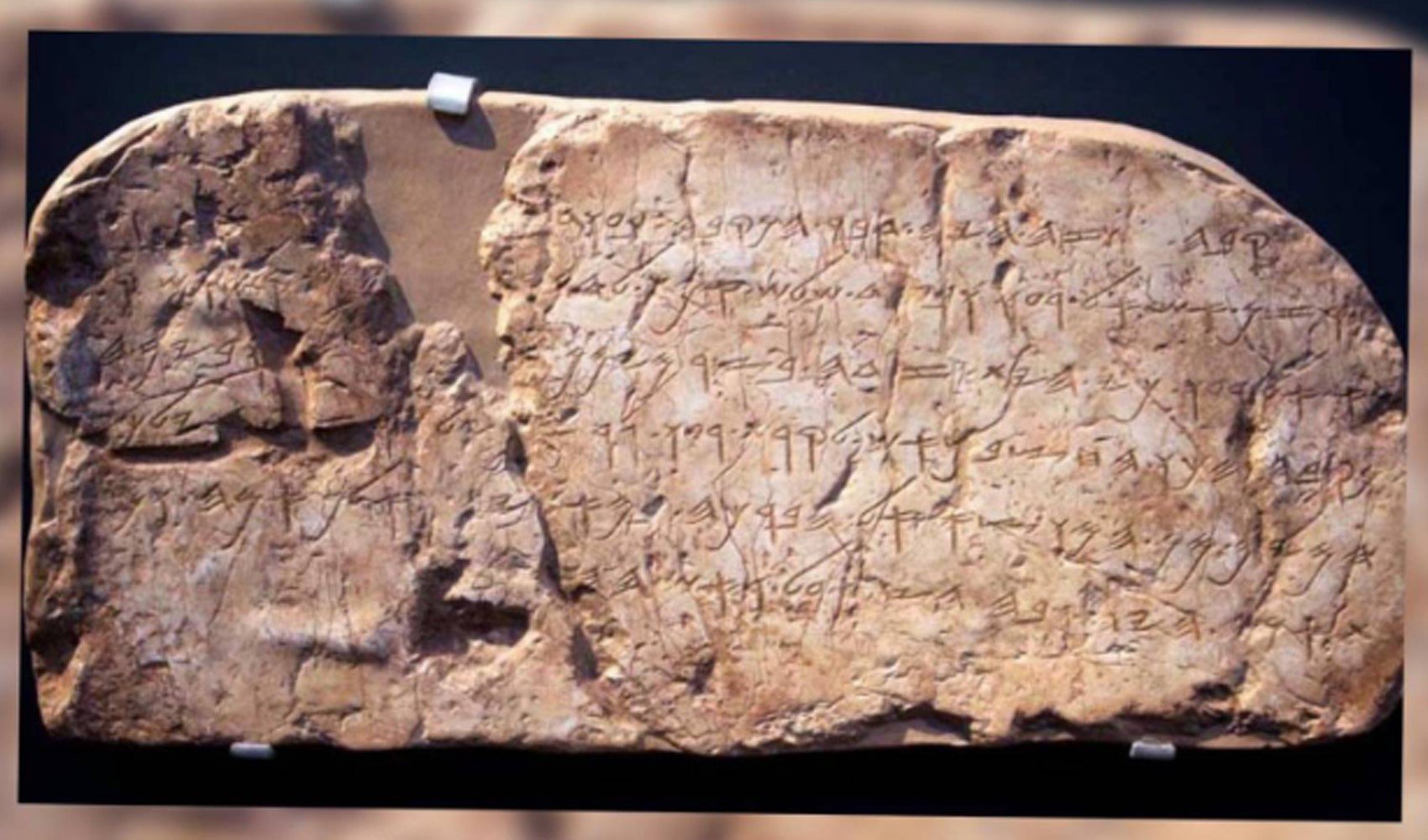
For this reason, Hezekiah had a tunnel dug under the city walls and connected the flow of the Gihon Spring to the Pool of Siloam in the center of the city. The excavation of the tunnel began from both ends separately and met exactly in the middle. To commemorate this achievement, an inscription in the Phoenician language, an ancient Hebrew alphabet, was placed on a stone tablet at this midpoint of the tunnel. The inscription, which mentions the meeting of two groups of workers, is known as the Siloam Inscription.
As King Hezekiah had anticipated, the Assyrian King besieged this city of Jerusalem. The completed water tunnel construction made it difficult for the city to fall and delayed it for a few more months. But in the end, the city fell, and Hezekiah became the last king of Judah. The reconstruction of the city took place after the Babylonian King Nebuchadnezzar and the subsequent permission for the exiled people to return.
The tablet, which was unearthed in 1880, is located in the Istanbul Archaeology Museums.
What does the inscription tell?
The 6-line inscription, written in Paleo-Hebrew, tells the story of the excavators who carried out the construction. The lines state, "These were the voices of those calling out to each other. Because the tunnel opened from the north and south met there. And on that day, the channel was opened. With the opening of the tunnel, the workers and their picks from both sides met."
An 'Ottoman property' that cannot be shared
Israeli officials have long been striving to bring the ancient artifact to their country. In 2017, Israeli Culture Minister Miri Regev offered two elephants in exchange for the inscription, but the proposal was rejected.
In 2007, then-Israeli President Shimon Peres requested the artifact on loan from his counterpart Abdullah Gül to be exhibited during the 70th-anniversary celebrations of the founding of Israel. Although Gül responded positively, the artifact remained in Istanbul due to Israel's policies in Gaza.
Israeli Prime Minister Benjamin Netanyahu also stated that other artifacts were offered in exchange for the inscription in 1998.
Mehmet Tütüncü, President of the Center for Arab World Research, discovered the lost inscription of Suleiman the Magnificent in the Israel Museum's storage in 2017, 120 years later, and stated that Israel wanted to trade this inscription for the one in Istanbul.
Ankara has insisted that the inscription remain in Turkey, stating that it has long been Ottoman property.
News Source: 12punto