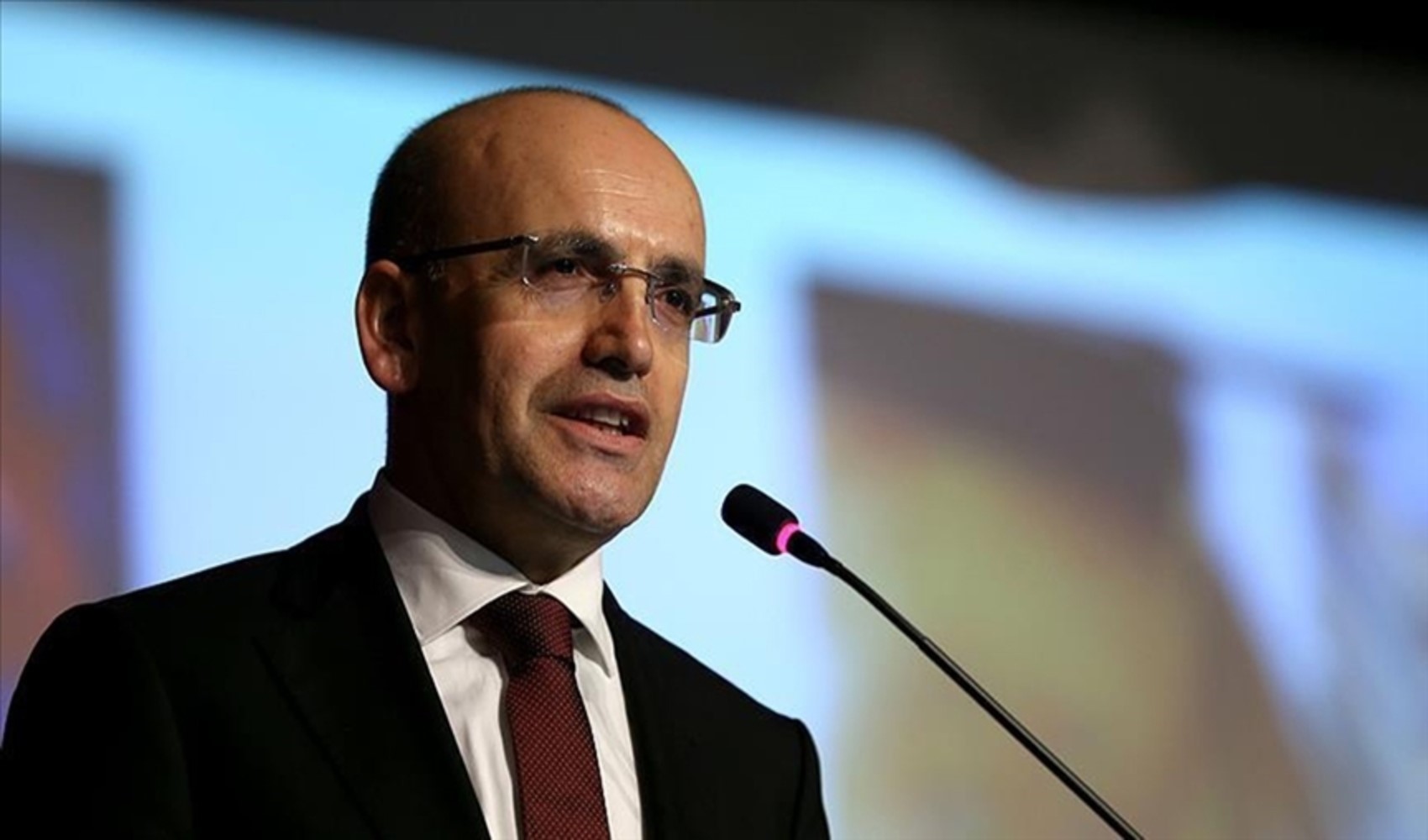
The 2026 budget and final accounts of the Ministry of Treasury and Finance were discussed at the Planning and Budget Committee. Responding to the deputies' questions, Minister Mehmet Şimşek said, "There is a deviation in the inflation targets. Last year, there was a deviation of 2-3 points.
But, for example, this year, I am truly not looking for excuses, but there is the impact of drought. The increase in food prices in August is 3-4 times the 20-year average. Similarly, in September, it was 3 times. This is not normal. When I say this, I am not saying it as an excuse. Ultimately, we are obligated to meet the inflation target, but getting close is important. Therefore, I believe that the decline in inflation will continue," he said.
"WE USED ALL OF THEM"
Responding to questions regarding the revitalization of the earthquake zone, Şimşek said, "With this year's prices, with 2025 prices, there has been an accrual-based expenditure of 3.6 trillion liras from the budget to date. No matter which country in the world it is, it is not easy to overcome such a massive disaster while managing macroeconomic imbalances. Immediately after the Kahramanmaraş-centered earthquake disaster, we provided every kind of facility in the earthquake zone in terms of taxes and fiscal dimensions. As you know, the law regarding the force majeure status was changed and extended last year. We used all of the extension opportunities. Therefore, a legal regulation will definitely be required to extend the force majeure status, which will end on November 30, again," he said.
Regarding questions about tax amnesty and restructuring, Şimşek stated, "Quite a few regulations were made in the past periods. In fact, the installments of some are still ongoing. In these regulations, there was generally no reduction or deletion of the principal tax amounts; only late interest and surcharges were updated at the inflation rate. However, it is very clear that this restructuring disrupts compliance. Therefore, as a matter of principle, we want to do the following: If a taxpayer truly asks us and shows that they are in difficulty by presenting their balance sheet and income statement, we gladly provide installments. Therefore, in this sense, restructuring is open to everyone in difficulty. There is no legal regulation on our agenda for this," he expressed.
"WE CANNOT IGNORE THE DIFFICULTIES"
Stating that they are aware of certain difficulties in labor-intensive sectors such as textiles, furniture, leather, and ready-to-wear clothing, Şimşek said, "We cannot ignore these difficulties, and indeed, we took a few steps at the beginning of this year. One of them was that we offered a monthly support of 2,500 liras per employee through KOSGEB. Actually, an exporter also means a manufacturer. Currently, the loan interest subsidy for exporters has reached almost 50 percent. These are not small figures; over 700 billion in loans have been provided in the first 9 months of the year. The daily amount has now been increased to 4.5 billion. We are still working on the difficulties of labor-intensive sectors such as textiles, furniture, leather, ready-to-wear, and footwear. We will take additional measures. We will continue to support our production and employment in the strongest way possible," he said.
Minister Şimşek continued his speech as follows:
"As for whether the program is working or not; on one hand, I am speaking on an accrual basis because cash-based comes with a delay. While we were making 90 billion dollars in earthquake expenditures, we also reduced budget deficits on the other hand. We largely met the budget deficit targets last year. Growth in 2025 did not materialize at the level we projected. True, such things can happen. Because many events occurred this year. There is a contraction in agriculture under the influence of drought and frost. Many developments occurred domestically and abroad. There was a war in our region. But despite that, look, the budget deficit was 5.1 percent last year, it will likely be around 3.5 percent this year. Therefore, the budget deficit is falling. In this sense, the program is working.
What is the budget deficit in developing countries? It is currently above 5 percent. Therefore, Turkey does not have a bad budget deficit compared to developing countries. The issue of debt was discussed a lot. The ratio of Turkey's public debt to national income is currently around 24.5-25 percent. The average in developing countries is around 74 percent. So, the interest burden is the most discussed topic. You can look at it as a ratio to national income, as a ratio to budget expenditures, or as a ratio to tax revenues. Yes, in recent years, especially due to the increase in our borrowing, we gave a primary deficit in 2023-2024 due to earthquake expenditures. Yes, we gave a serious primary deficit. A primary deficit means additional borrowing. Now, the effects of this borrowing are just beginning to emerge. The ratio of interest expenditures to national income will be 3.3 percent this year. The average of the last 20-plus years is over 4 percent. Today, with this rate, it is of course temporarily on an upward trend. The ratio of interest expenses to national income will enter a downward trend starting from 2027, especially by switching to a primary surplus."
Şimşek responded to questions regarding the current account deficit as follows:
"A serious current account deficit problem is not new. I do not claim that the problem is solved at the root, but it is a manageable issue. If you look at the last 20-25 years, excluding gold imports, the ratio of the current account to national income was 3 percent. Last year, there was a surplus of 0.2 percent excluding gold. This year, there will likely be a deficit of 0.3-0.4 percent excluding gold. Now, the deficit that Turkey can manage is around 2-2.5 percent at most. Therefore, the current account deficit has ceased to be a source of concern in this sense. Now, if the program were not working, if we were not getting results, why would credit rating agencies raise our rating? They could lower our rating. Therefore, we faced many shocks this year. Despite that, the program proved itself, and it turned out that we are resilient.
Regarding inflation, Şimşek said, "If you remember, I said in 2023 that this would not be easy. I even stated that 101 inflation shocks in 56 countries were examined and that it took an average of 3.4 years for these shocks to return to pre-shock levels. Now, we announced an MTP in September 2023, but the reconstruction of monetary policy took until March-April. Therefore, the starting conditions for where disinflation began are not the same. In 2001, a major currency shock occurred, and there was a correction in the exchange rate. In 2023, this correction did not happen. Why didn't it happen? It didn't happen because of the KKM (FX-protected deposit scheme). Because if we had allowed a correction in the exchange rate, then due to the KKM, a very serious monetization, that is, a monetary expansion by the Central Bank, would have been necessary, far beyond what was done. That could have led inflation to hyperinflation. While making choices, we sat down and acted with these sensitivities.
"THERE IS A DEVIATION IN TARGETS"
Therefore, I am trying to explain this. I don't even want to ask the question of what inflation would have been if we hadn't implemented this program. But one thing is certain; inflation fell from 64 at the end of 2022 to around 32-33 today, thanks to the program, I believe. Now, the conditions are in place for it to fall further, and it will fall. Of course, we have always been ambitious in our targets. There is a deviation in inflation targets. Last year, there was a deviation of 2-3 points. But, for example, this year, I am truly not looking for excuses, but there is the impact of drought. The increase in food prices in August is 3-4 times the 20-year average. Similarly, in September, it was 3 times. This is not normal. When I say this, I am not saying it as an excuse. Ultimately, we are obligated to meet the inflation target, but getting close is important. Therefore, I believe that the decline in inflation will continue."
News Source: 12punto