The Sulaymaniyah Incident, which went down in our political and military history as the Hood Event, took place in Sulaymaniyah, Northern Iraq, on July 4, 2003.
It is etched in memory as the event where 11 Turkish Armed Forces personnel, who had established a headquarters in the region, were apprehended in a surprise raid by soldiers belonging to the American 173rd Airborne Brigade, accompanied by Peshmerga, and were taken away with hoods placed over their heads, held for 60 hours, and interrogated.
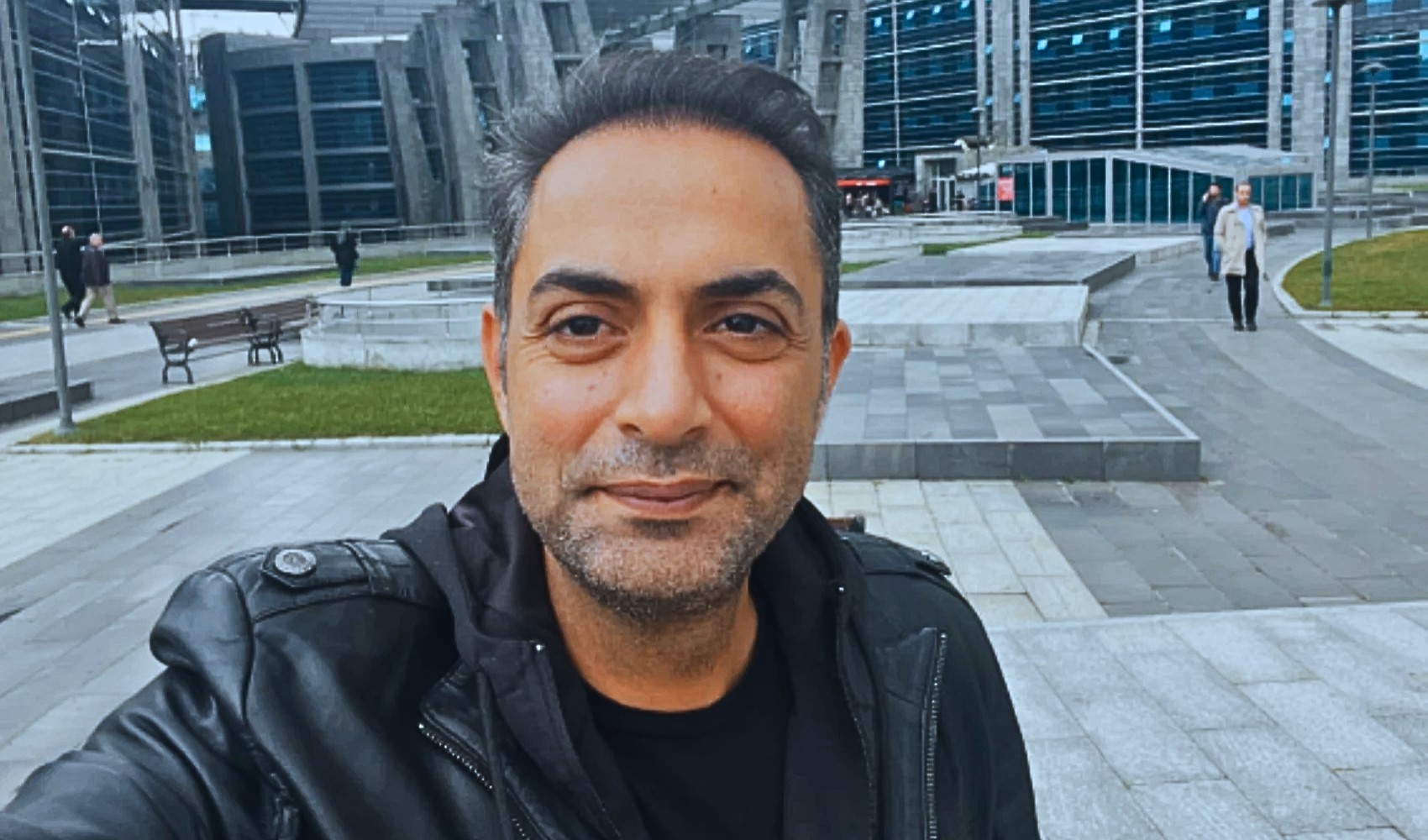
Retired Staff Colonel Aziz Ergen, known for the incident involving the hooding of our soldiers and the subsequent developments, explained what happened on the 12'den program, prepared and hosted by master journalist Tuncay Mollaveisoğlu.
Highlights from the conversation between Mollaveisoğlu and Ergen are as follows:
Tuncay Mollaveisoğlu: In this segment, we will discuss the hood incident. Because, as you know, a hood was placed over the heads of Turkish soldiers in Sulaymaniyah, and in a sense, the Americans were taking revenge for the March 1st memorandum. Our soldiers were detained there with hoods over their heads. It was an incident that wounded the honor of the Turkish soldier and Turkey. As a continuation of this, while another colonel was preparing for an operation in northern Iraq for a second hood incident, the event was reversed through the intervention of Staff Colonel Aziz Ergen, and the colonel and his team who came to detain the team were themselves detained. In fact, this caused a crisis between states at the time and was kept hidden. However, Aziz Ergen became a commander who was talked about a lot within the Turkish Armed Forces. Because, in a sense, he had taken revenge for the hood incident in Sulaymaniyah. We will hear about that incident in Northern Iraq, along with its unknown aspects, from Aziz Ergen himself.
Starting from the hood incident, during America's Iraq operation, American special forces, together with the Peshmerga, placed hoods over the heads of our soldiers. It was a huge scandal; Turkey's honor was broken, its reputation damaged. The administrators of the period could not do anything against this. Later, while this great discomfort was being discussed within the TSK, and the military was reacting to it, American soldiers wanted to carry out a second hood incident in the region where you were serving, and you prevented it. Could you tell us about that?
'STRATEGICALLY, THIS IS THE PLAN'
Aziz Ergen: The Special Forces Command has an Operations Higher Command in Silopi. There is a brigade there. The units of this special operations higher command at the brigade level control the Northern Iraq region, that is, the region north of the 36th parallel. The Turkish Special Forces both ensure the control of our Turkmens there and also because there is so much going on. We haven't even gotten into that topic yet. They are driving all the Turkmens there south along with the Arabs, bringing the Kurds in the mountains down to the plains, to block Turkey's path in an operation it might conduct toward the Persian Gulf. Strategically, this is the plan. Now, after the March 1, 2003 memorandum was rejected, the prime minister hadn't changed yet, and his political ban hadn't been lifted. Later, the political ban was lifted. On March 20, 2003, the airports were opened.
Tuncay Mollaveisoğlu: We are talking about America's Iraq operation.
'WHATEVER HAPPENED, HAPPENED AFTER THAT AGREEMENT'
Aziz Ergen: Yes. It started the invasion on March 20, 2003. But before starting, very interestingly, there is an order that went to our friends there. It says, with the explosion of the first bomb on March 20, the Turkish soldier will ensure the security of the American soldier. Look, look at this. The Turkish soldier will ensure the security of the American soldier. Let's say we have cell teams buried in the region. They are all scattered. Their battalions are small, because they are very elite units, they are all at the officer level. All of their coordinates, geographical coordinates, and all the weapons they have will be reported to the Americans. No weapons will be pointed at any American soldier. Special forces soldiers serving in civilian clothes will wear uniforms so they can be recognized. They will be exposed. And the team in Sulaymaniyah was raided in this way, at the coordinates given as if by hand.
Tuncay Mollaveisoğlu: This is the first time this is being said by the regimental commander who is a direct peer of this team. Where does this order come from?
Aziz Ergen: This order comes from somewhere. This order is given to America's soldiers. There is a political will side to it, of course. On April 2 or 3, 2003, a secret agreement is made between Foreign Minister Abdullah Gül and Colin Powell.
Tuncay Mollaveisoğlu: That much-discussed agreement.
Aziz Ergen: Yes, 9 articles, two pages. It hasn't been disclosed until now. It's this or that, but it's unknown. Because whatever trouble came to the Republic of Turkey, it happened after that agreement.
Tuncay Mollaveisoğlu: Yes, we even base our own interpretations on this agreement. Because on April 22, the special forces team taking aid to the Turkmens is taken prisoner before this hood incident. First, they are held for a night. America gives a note to Turkey. Because America has occupied that place. It has occupied it. And we say, we are looking after the Turkmens. They say you cannot enter without our knowledge and they deport our element, that special forces element. And this Sulaymaniyah incident happens in this way. That is, all information is given, the locations of the teams.
Aziz Ergen: The reason for the hood being placed over the heads of Turkish soldiers is actually the order given from the Turkish Armed Forces. That order exposed our own soldiers.
Tuncay Mollaveisoğlu: Exposed. How do we know this?
Aziz Ergen: First of all, the commander says this, the team commander, my regimental commander friend said it. Clearly and plainly. Secondly, our incident. After the event, at the American Embassy, were your teams also buried? No, not at that time. Later, I was appointed as regimental commander in the region. I have a 50-kilometer area of responsibility on the Northern Iraq border. We are observing the PKK terrorist organization's camps with our teams in the normal Spring deployment. That day, May 19, the date the Americans came to raid is also chosen as if specifically for May 19.
They came on July 4, in that first hood incident. They come on America's Independence Day. They come to my team on May 19. Turkey's Independence Day.
It means this: I will place the hood over your head on the United States' Independence Day. I will also place it over your head on May 19, which is Mustafa Kemal Atatürk's birthday and the birth of the Republic. That's how they think.
Tuncay Mollaveisoğlu: Yes, but he couldn't place that hood.
Aziz Ergen: He couldn't. The opposite happened.
Tuncay Mollaveisoğlu: The second hood incident.
Aziz Ergen: We, of course, the topic is long, let me summarize. With an operation, we captured an American Ranger colonel and 5 CIA Peshmerga. Since explosives were found on them, I had them stripped, we interrogated them. It was reported to the upper echelons. The American, Iraqi, and Turkish desks gathered. They wanted me to release them, I didn't.
Tuncay Mollaveisoğlu: Where were you holding them?
Aziz Ergen: In the base area, where I captured them, in northern Iraq. They wanted me to release them, I didn't. There are so many details, the program would overflow.
Tuncay Mollaveisoğlu: Please, please tell us.
Aziz Ergen: The Land Forces Commander wanted me to call him.
Tuncay Mollaveisoğlu: Aytaç Yalman?
Aziz Ergen: Aytaç Yalman. And of course, there is no connection there, no communication, we don't have touch-screen phones anyway. Phones don't get reception in such a place. Do you know what they told me? The division commander said, Aziz, you will call the Land Forces Commander. I said, Commander, where would I call from here, there are no phones or anything. He said, take the satellite phone you took from him.
Tuncay Mollaveisoğlu: From the American colonel's phone.
Aziz Ergen: Yes, we confiscated it, along with his weapon. Look, he said he would come to us alone, those Peshmerga. Although we told him to come alone in the ambush operation, he put 5 Peshmerga behind him. These are specially trained Peshmerga, all foreigners, strong, and 20 hand grenades, 5 Kalashnikovs we caught on them, the colonel's special weapon, explosives, 4 Kalashnikov magazines on each of them.
Tuncay Mollaveisoğlu: We went through it a bit fast, our viewers might miss it. Let's go back to the beginning a bit. This colonel in question, your team in the region actually finds out, he comes to detain them. Then you find out about this. That he is coming?
Aziz Ergen: Yes, that he is coming.
Tuncay Mollaveisoğlu: And what do you do?
'BECOME A MARTYR AND DON'T LET THEM IN'
Aziz Ergen: I go, I take command of the team. The colonel doesn't know. I tell the team that is coming to be ready for a clash. In fact, I can't make it in time, I told the kids, you will open fire, become martyrs and don't let them in. You will shoot. We were advancing very hard because it was a mined area on the road. I had already taken my major with me. I put a tractor in front with an armored vehicle. Our village guards' tractors. I took the risk and went through their tire tracks. Because if I went on foot, I wouldn't make it. I have a fear of losing the team in the dark. And I said this on the way: Never, ever let them into the base area. You will open fire, you will become martyrs, no one will take you prisoner.
I made it anyway. I took command. After that, my major and I coordinated the deployment. They are watching the weapons, mortars, rocket launchers there during the day with Nikon binoculars. Evening darkness fell. We are watching this with thermal cameras, which we call owls. But the team coming doesn't even know that the team has a tripod thermal camera. And it's so interesting, he took 670 Peshmerga, and there are those Sulaymaniyah camps, the organization's. The organization took 4050 men. They took them from the PKK, a clash group. We are watching the PKK's camp there. They took men from them and brought them. And this American colonel is at the head of them.
Tuncay Mollaveisoğlu: There is an American colonel. Are you on a hill, at the base?
'YOU WOULD HAVE FOUND US IN BAGHDAD'
Aziz Ergen: Yes, on a dominant hill like this. We are watching from here. Darkness fell. I am, of course, shouting in English from this megaphone. Don't come, this is this, that, etc. No sound from anyone. Then the brigade commander in Silopi, that brigade commander in the special forces, is also calling. He says, don't go, there is a Turkish team there, he says. He doesn't listen.
Tuncay Mollaveisoğlu: The general?
Aziz Ergen: The general knows.
Tuncay Mollaveisoğlu: Pardon, the colonel knows.
Aziz Ergen: The colonel knows. He doesn't listen to the Turkish general.
Tuncay Mollaveisoğlu: He doesn't listen to the Turkish general's order.
Aziz Ergen: He doesn't listen. He knows where he is going.
Tuncay Mollaveisoğlu: While the colonel is coming towards you, he knows there are Turks there.
Aziz Ergen: Consciously. And this colonel, we, of course, let me tell you the last surprise. Then we shout, I told the village guards, shout in Kurdish. So that these Peshmerga answer. They shouted in Kurdish. No one answered. Later the kids said, Commander, we saw a shadow. We looked, the organization is placing heavy support weapons and positions step by step towards the hill. I am announcing again from the Shorland's megaphone. Finally, when such shadows approached, I told the kids, they will make the first shot. We are on international soil, for us to be in the wrong position, they must open the first fire. Triggers are open, everyone's finger is on the slack, but I said, absolutely not. We will follow fire discipline. Our team really used their will very well. Suddenly a shout in the night, he said, I am a colonel from the United States, by what right do you enter the land occupied by the United States. We were shocked. I mean, this man is speaking Turkish. I also said, Staff Colonel Aziz Ergen from the Turkish Armed Forces. We are defending this place, our lands. If you had occupied us, you would have found us in Baghdad, I said.
Aziz Ergen: They couldn't come. We are arguing with each other. In the end, he said I will come. If you come, I will arrest you, I said. I am warning you again, I said. This is a mined area, if you enter, I said, I don't accept responsibility.
Tuncay Mollaveisoğlu: You are shouting from a distance?
Aziz Ergen: We are shouting. After that, of course, all radio lines went silent. Everyone is listening to us, a recording is being made. My announcements go to the division, the division to the corps, the corps to the second army, the second army to the Land Forces, to the General Staff. The conversations go all the way to Aytaç Yalman. After that, anyway, I will come, I won't come, but pressure from above, don't let him in there. They say don't open fire either, but don't let him in. I said to the division commander, Commander, how can I not let him in? I won't let him in without opening fire. Aziz, he said, you know the situation. He also supports me, the division commander is a very good person. The upper levels say, oh, oh, let nothing happen to the Americans. Oh, we are not important. And really, in the end, I said, Commander, let me break command completely. The upper levels are nervous, there will be a clash on international soil.
Tuncay Mollaveisoğlu: Yes.
Aziz Ergen: Now Cemal, I said, take the team, go down to the east side from here, go to the edge of that cliff. Now I immediately made a plan B. Colonel Martin, I said, I will accept you on one condition. What is it, he said, you will come alone, you will take out your weapon, you will take out your equipment. Let me think, he said. Think, I said. Then he accepted. Okay, he said, I'm coming. I said to the kids, there is a different plan in this. Now I will make you walk because this is a mined area. Walk 150 steps north, I said. He walked. Now I said to the kids, be careful, I will turn him east. Towards the east, I said, I'm saying 100-200. Continue, I said.
Tuncay Mollaveisoğlu: So you are pulling them somewhere.
Aziz Ergen: I am pulling, I am channeling. We saw that there were five men behind the person who was supposed to be alone.
Tuncay Mollaveisoğlu: The specially trained Peshmerga you mentioned earlier.
Aziz Ergen: Yes. Like this, he is coming alone, but we don't see them in column formation. When he turned like this, the five people behind him appeared, but we can't distinguish their weapons. In our case, this weapon can be hung in the middle of your back when you pass it through both arms from the rifle strap. I said, kids, they are definitely coming prepared, be careful. I made them walk east. Later I said turn north. Continue, I said. Cemal said, Commander, I see them, he said. They are coming. You know your duty. We know, Commander. As soon as they arrived, the village guards jumped. Magazine, 20 hand grenades, each of them had four hand grenades attached, two below, two above, there are explosive blocks. We confiscated the colonel's special equipment, all of them, we interrogated them. In the end, this colonel had someone call the Land Forces Commander on the phone.
Do you know who this colonel was? He was Aytaç Yalman's student at the Army War Academy.
Tuncay Mollaveisoğlu: The American one. What happened then? He said, Aytaç Yalman is calling you. He says let him call me. You also say, there is no phone here. Then from the phone of the colonel you arrested, detained.
Aziz Ergen: Yes, he gives a number. The division commander said call here. I said dial it from the colonel's phone. He dialed it and I took it from his hand. One of our officers answered. The colonel knows me himself. I said I will talk to the commander, I said he ordered me. I took it. He said, what are you doing, son? You messed up that place again, he said. Commander, I didn't mess it up, I said. They came to catch my team, they were taking them away.
Tuncay Mollaveisoğlu: Give me the colonel, he said.
Aziz Ergen: Exactly, he took it like this. Believe me, Martin, my dear, is there something wrong with you? Why do you misunderstand us, my dear? Would we ever occupy Iraqi land? And I have his arm twisted from below. There is snow, on May 19, at the edge of the cliff, Colonel Ergen is treating us well. Then the battery died.
Tuncay Mollaveisoğlu: You took the phone?
Aziz Ergen: I took the phone from his hand, the battery died. You know, Mansur Yavaş says, he told and recounted this incident in his speech before the election. I mean, it's not clear where the phones went. You actually cut off that conversation. Seeing him talk like that, Aytaç Yalman's, I took the phone from his hand.
Tuncay Mollaveisoğlu: Yes, you took it. The battery died.
Aziz Ergen: Then we continued to interrogate the colonel.
Tuncay Mollaveisoğlu: What was your goal there? To take these people and treat them similarly, just like in the hood incident?
Aziz Ergen: My late Major Doğan, prepare the hoods, Commander. I said, forget about placing hoods, put them inside the hoods, let's take them to Turkey on the back of a mule. Commander, they don't fit, they said. Make them fit, open a hole so they can breathe, I said. Indeed, there were mules. Supply mules, supplies come to us by mules.
Tuncay Mollaveisoğlu: So you tried?
Aziz Ergen: We tried. The colonel was already naked, he shivered, he shivered a lot. He said, Colonel, isn't there a chocolate, he said, hot chocolate. I said, there is no chocolate here, I said, there isn't. Well, he said, don't you even have Nescafe, he said. I told the kids to bring a plastic bottle of water from there, I gave it. He shivered, he was cold, I said bring a blanket, cover his back. I didn't release him. I said I will bring him, they say don't bring him. Did the colonel realize at that moment that this incident was actually a retaliation for the hood?
Tuncay Mollaveisoğlu: Of course.
Aziz Ergen: His pride was hurt a lot because of that, I stripped him, etc., all that went away. Of course, in front of his own team, they stripped the others naked too. I said, let the thing stay on them. I received a lot of pressure, from the Second Army Commander. They said don't release him, they said, Colonel, you are in line for promotion. I was a staff colonel. I said, for me, I said, wearing crossed swords on the shoulder is not important, it is important to be promoted in the heart of the Turkish nation. I am not releasing him, I said, do whatever you want, I will not release him. They really don't want me to bring him to Turkey either. Release him, I didn't release him. We interrogated until one in the morning, we took the minutes, the crime scene sketches, the pictures. After that, I stayed with the kids until morning. I returned, the division commander started writing some kind of award, etc. He said, Aziz, he said, the second army commander is coming, he came to the regiment by helicopter. I welcomed him. Later the army commander came, he landed. We thought he would thank us, I guess. I gave the border report. He said, Colonel Aziz, why did you capture them, he said. Commander, I said, they came to take the team. Is that possible, he said, the Americans are our friends. Oh, Commander, I said, they took my team prisoner and took them away, they placed a hood over their heads for 72 hours. They were going to take them to Baghdad in the same way. I made the colonel confess. I said there are minutes, the colonel says it in the confessions.
Yes, what does he say? To take my team? He says I have occupied the Turkish team, occupied our lands. Then go look, take them and bring them.
Tuncay Mollaveisoğlu: This is very important.
Aziz Ergen: Yes, the colonel's confession is here too. After that, in this incident, the dear commander scolded us and left. They didn't promote me that year. I said let me leave, let me resign. The division commander said, no, you will move to the division, you will be the chief of staff. I moved there, we showed incredible success there too. But this time, the FETÖ members in Ankara, those generals, officers, blocked my promotion again in the second year, forced me to resign. After that, they put me in the Şemdinli case. I was tried there for 4 years, I was acquitted. In 2009, Zekeriya Öz put me in, I was tried like that for 3.5 years. Now I learn that a year later, the American colonel is given a friendship award for his contribution to Turkish-American relations.
Tuncay Mollaveisoğlu: Yes, so this colonel who wanted to take your team and place a hood over their heads and detain them was rewarded.
Aziz Ergen: Yes, he was rewarded. And I was tried, without being promoted.
Tuncay Mollaveisoğlu: Yes, because this was hidden for years, right?
Aziz Ergen: He said, yes, he said to what Colonel Aziz Ergen said. I will send you that message too. He also broadcast it on TV. Everything Colonel Aziz said is true. I was the operations chief at that time, I had the colonel brought to the General Staff, I made him confess. They had also reported the locations of our teams. So he confessed to this, but he is a very valuable commander. They all hid it.
Tuncay Mollaveisoğlu: They hid this incident, but when it leaked to the press, you also expressed it, you told it. Today, you really gave important details about that day.
Aziz Ergen: You gave very important details. You cannot place a hood over my head on the Republic of Turkey's birthday and Atatürk's birthday, I will place the hood over your head. We gave the retaliation for this. For what? As a soldier of Mustafa Kemal.
News Source : 12punto