Underwater documentary producer and cinematographer Tahsin Ceylan, accompanied by the Coast Guard Command's Diving Safety, Security and Search and Rescue (DEGAK) teams and diving instructors İlker Acar and Mehmet Cenikli, first conducted a dive at Sivriada, the westernmost of the archipelago, and then at Büyükada, the largest of the islands also known as the Princes' Islands.
In the footage recorded by Ceylan, who dived with an underwater camera, the net-like mucilage in the depths of the sea was seen covering many marine creatures such as corals, sea urchins, sea lettuce, and seaweed.
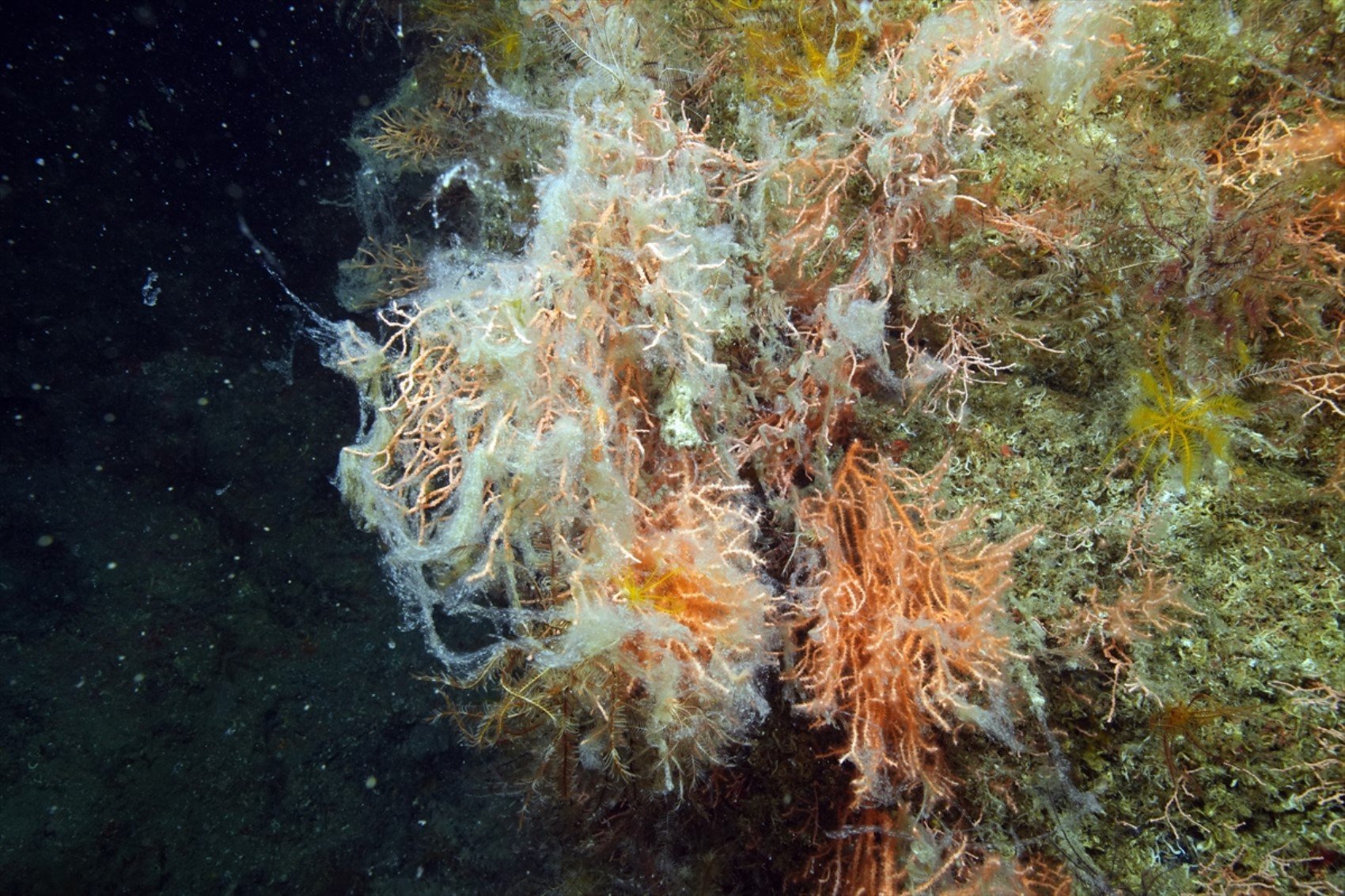
The footage showed that the mucilage was very dense in some areas and less so in others.
"ALMOST ALL OF THE CORALS ARE COVERED IN MUCILAGE"
Following the dive at Sivriada, Tahsin Ceylan stated that although it cannot be seen from the surface, a great tragedy is literally unfolding at the bottom, and continued his words as follows:
"This region of Sivriada is the area where the coral population is most dense in the Sea of Marmara. We specifically wanted to document the condition of the corals. But almost all of the corals are covered in mucilage; this region is completely covered in mucilage. Of course, when the corals cannot feed, they will lose their lives after a while."
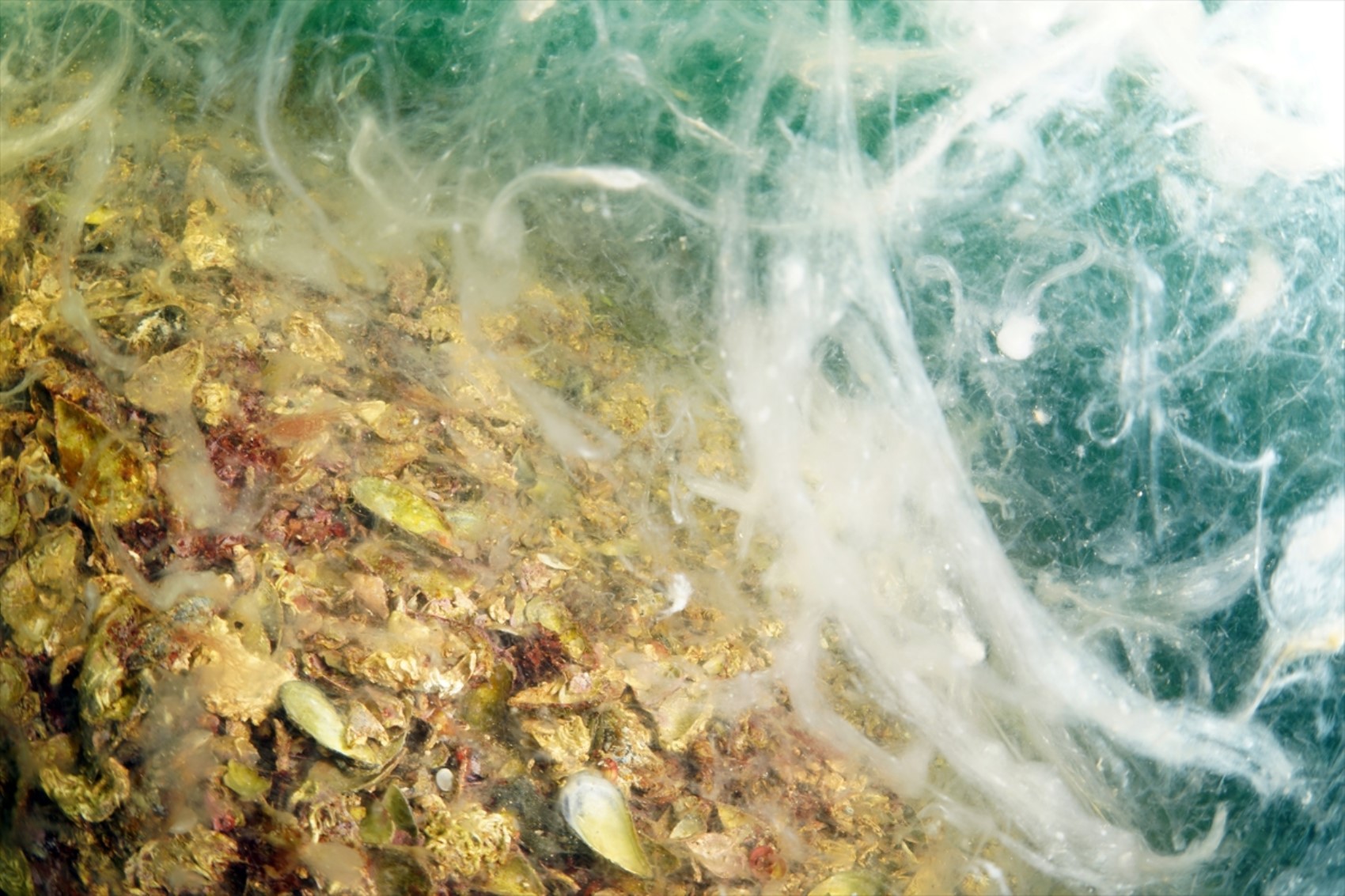
Evaluating the dive at Büyükada, Ceylan said, "In the dives we conducted, we saw an incredibly widespread presence of mucilage at the bottom. Sea urchins, corals, and many plants are covered. Their ability to photosynthesize is quite limited. Frankly, I want to say that I believe one needs to look at the Sea of Marmara from underwater to learn what is happening in it."
News Source : AA