The commission established in the Grand National Assembly of Turkey (TBMM) continues its work as part of the new opening process, which was architected by MHP leader Devlet Bahçeli and dubbed 'Terror-Free Turkey' by the government, involving the DEM Party and terrorist leader Abdullah Öcalan.
In her latest statement, Pervin Buldan, a member of the DEM Party's Imralı Delegation, said that terrorist organization PKK leader Abdullah Öcalan is very uncomfortable with the language used across the media.
Stating that the terrorist leader has serious criticisms, Buldan "It is in the government's hands to remove these" she said, making an implicit call for the government to intervene.
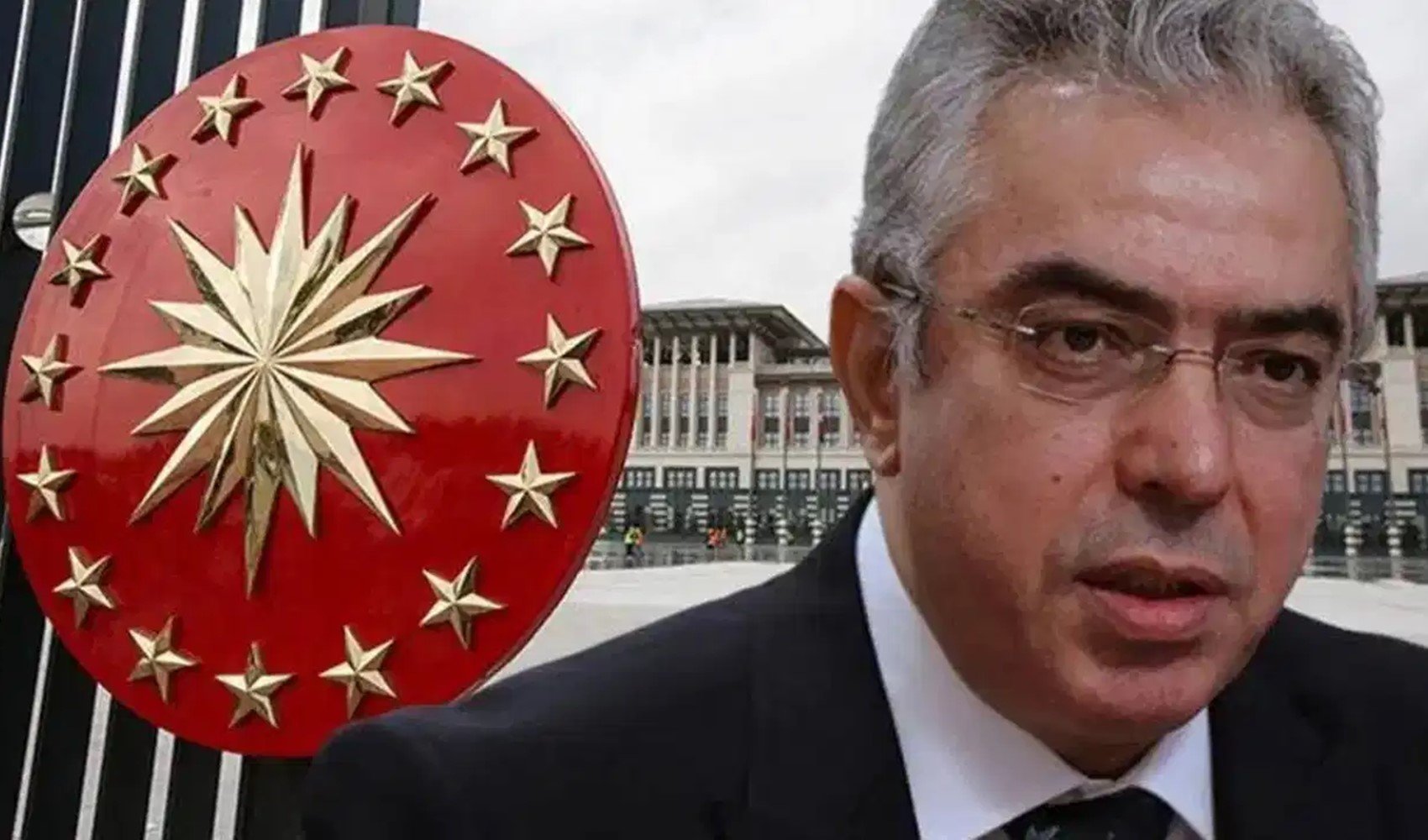
Mehmet Uçum, chief advisor to AKP Chairman and President Recep Tayyip Erdoğan, made remarkable evaluations in an article he penned following Buldan's statements.
Writing for AA, Uçum stated in his article While stating that "some circles are complaining about the language of the other side from their own front," he added: "Even when Öcalan himself does not put forward any conditions other than easing his own circumstances to make a more qualified contribution to the process, for some to push this further with more advanced demands will result in nothing but harm to the transition process" he said.
In his article, where he also drew attention to the 'subjects' of the process, Uçum noted the following:
"A PROCESS WITH CLEAR BOUNDARIES"
"Two main stages
The 'Terror-Free Turkey' march, which is accepted to have officially begun with President Recep Tayyip Erdoğan's opening speech at the Grand National Assembly of Turkey on October 1, 2024, and Mr. Devlet Bahçeli's handshake and dialogue initiative on the same day, has completed one year.
During this time, many steps have been taken and many issues have been clarified. Of course, there is still a long way to go and more goals to reach. However, what is clear is that this period, which will prepare Turkey's era of rise, has two main stages.
These are the processes of transition and the development (advancement) of democracy. These two main stages must never be intertwined. In other words, the 'Transition Process to a Terror-Free Turkey' and the 'Process of Developing Democracy' must be handled separately."
Indeed, it can be determined that these two processes are evaluated qualitatively differently in the work of the TBMM National Solidarity, Fraternity and Democracy Commission. It is stated that the report on the law of the transition process will be prepared upon the completion of the listening activity. However, it is understood that preparing a political and legal report on the perspective of developing democracy will be the final activity of the Commission after this.
- Topics and subjects
The two-main-stage approach is correct in terms of topics and subjects:
Topics:
Transition process;
- It is a process that begins with State Initiative,
- And proceeds as a State Policy.
- It has a temporary nature.
The process of developing democracy is;
- a process that has an eighty-year history despite interruptions,
- stands out with the demands and needs of the people,
- is advanced through democratic politics based on the people, and
- will move to a new stage after the transition process is completed,
- is a dynamic democracy program with public initiative.
- It has a permanent characteristic.
Therefore, it is necessary to take these qualitative differences into account when determining the subjects of both processes.
- The subject of the transition process
In terms of subject matter, the goal of the transition process is a 'Terror-Free Turkey'. It is the definitive and permanent end of terrorism. It is clear that this goal has been adopted by both Öcalan and the organization. The February 27 Declaration, the decision to dissolve, and the act of burning weapons are evidence of this. In this process, which has defined boundaries, it is not possible to consider every issue related to advancing democracy or every demand regarding implementation processes. Not all issues and demands brought to the agenda can be evaluated within the framework of transition process law. Such a forced interpretation would seriously harm efforts to correctly and clearly identify the elements of transition process law.
The needs of the transition process are the participation and integration of active and support elements of the defunct terrorist organization into social and economic life, excluding matters of punishment and execution, and those who must remain outside the country. It is extremely important that a law covering these issues be enacted urgently and with the broadest possible consensus.
At this point, the fact that this law, which we call the transition process law, possesses the stated qualities of 'singularity, specificity, inclusivity, and wholeness' can only be ensured by it being a single, temporary, and special law.
Of course, the inclusive and holistic approach here cannot be accepted as a wholesale method. Applying different rules to those in different situations is not only necessary to distinguish the defunct terrorist organization from other terrorist structures. It is an exceptional principle that also requires taking into account the differences within the defunct terrorist organization itself. Accordingly, the legal status of the members of the defunct terrorist organization (excluding those who must necessarily remain outside the country) cannot be handled with a single legal approach and a wholesale logic. The differences within these elements necessitate grading and criteria in terms of positive law. From the perspective of the constitutional framework, applying different rules to those in different situations is a necessity.
SUBJECTS OF THE TRANSITION PROCESS
- The subject of the process of developing democracy
Developing democracy, in the words of our President Erdoğan, is to implement 'a reform program that aims for more democracy, more freedom, and a more effective state.' In this context, comprehensive legal reforms and the goal of a new constitution are on the agenda.
All matters that will advance democracy and all developmental demands regarding implementation will be the subject of this process. The topics and demands of this process cannot be turned into conditions for the transition process, nor can they be placed in front of it. It should not be forgotten that the completion of the transition process will be a beginning, not an end.
- Subjects
There is never a monopoly in the political representation of Kurds, neither in Turkey nor in the region; on the contrary, there is a diversity of political representation. This reality is extremely important for correctly understanding the period we are living in and for clearly seeing the qualitative differences between the transition process and the process of developing democracy.
- Subjects of the transition process
Since the transition process aims to end terrorism and the politics of violence, the subjects here within the framework of the state's activity are;
- Öcalan, the founder of the dissolved organization,
- the administrative structure that ensures the decision of dissolution and definitive laying down of arms is made, depending on Öcalan's will, and
- the connected political and social channels inside and outside the country.
If one pays attention, the transition process carried out with the subjects here is not a process aimed at all Kurds in Turkey or in the region. Therefore, it is never a matter of these subjects being accepted as representatives of all Kurds and speaking on behalf of all Kurds. The opposite is also true. It is not possible for representatives of different political channels to be subjects in the process of ending terrorism and the politics of violence, other than Öcalan and those who are subject to his will.
In summary, diversity in the political representation of Kurds can only come into play during the process of developing democracy. It has no context in the transition process regarding the ending of terrorism and the politics of violence.
- Subjects of the process of developing democracy
The process of developing democracy relates to the demands and needs of the Turkish nation, the public, and all segments of society. Therefore, the subjects of the process of developing democracy are;
- all institutions of Turkey, primarily the Grand National Assembly of Turkey (TBMM),
- democratic political parties,
- all elements that see democratic politics as the only legitimate ground,
- formal structures,
- network organizations and
- all individual and collective persons.
Naturally, in the process of developing democracy, it should be anticipated that all issues of Turkey and the region will henceforth be addressed as Turkey's common issues. At that stage, the only correct approach will be to evaluate all issues through the lens of national politics rather than identity politics, and in an inclusive manner.
This process, which will proceed with the perspective of a major legal reform and a new constitution, highlights all democratic segments that provide constructive and effective support to the transition process. It also carries the subjects of the transition process to a very influential and inclusive point in the country's democratic politics.
"IT IS A CONTRADICTION TO BE IN FAVOR OF DEMOCRACY WHILE DEMANDING ANTIDEMOCRATIC PRACTICES"
- The issue of language
In particular, rhetoric that does not take into account the dynamics of the transition process and certain demonstrations that appear to be intellectual actions are being pushed to the forefront again in recent days. Regardless of intentions, these give the impression that intellectual sabotage is being carried out against the transition process.
Some circles are complaining from their own side about the language of the other side, lamenting why it is not being prevented. They may be right from their own perspective. However, a contradiction arises here: being in favor of democracy while simultaneously demanding antidemocratic practices. Attention must be paid to this. Furthermore, one must not allow the creation of impressions that would imply 'pressure those who are against the process, but do nothing to those who appear to be on the side of the process while engaging in intellectual and physical sabotage'.
"WHILE EVEN ÖCALAN DOES NOT SET ANY CONDITIONS OTHER THAN EASING HIS OWN CIRCUMSTANCES..."
Furthermore, one must not allow mistakes to occur despite constructive relations and negotiations. Otherwise, one might wonder why these meetings are being held. Especially those who adopt an approach of 'protecting Öcalan despite Öcalan' and invent subjective preconditions for the transition process, or engage in organizations in this direction, must evaluate the situation correctly. While even Öcalan himself does not put forward any conditions other than easing his own circumstances to make a more qualified contribution to the process, for some to push this further with more advanced demands will result in nothing but harm to the transition process. Öcalan's constructive role in the process must be better understood.
It is extremely important that all circles and individuals striving for the success of the transition process are very careful about the language used in this process. It is everyone's duty to take precautions against practical and intellectual sabotage.
News Source: 12punto