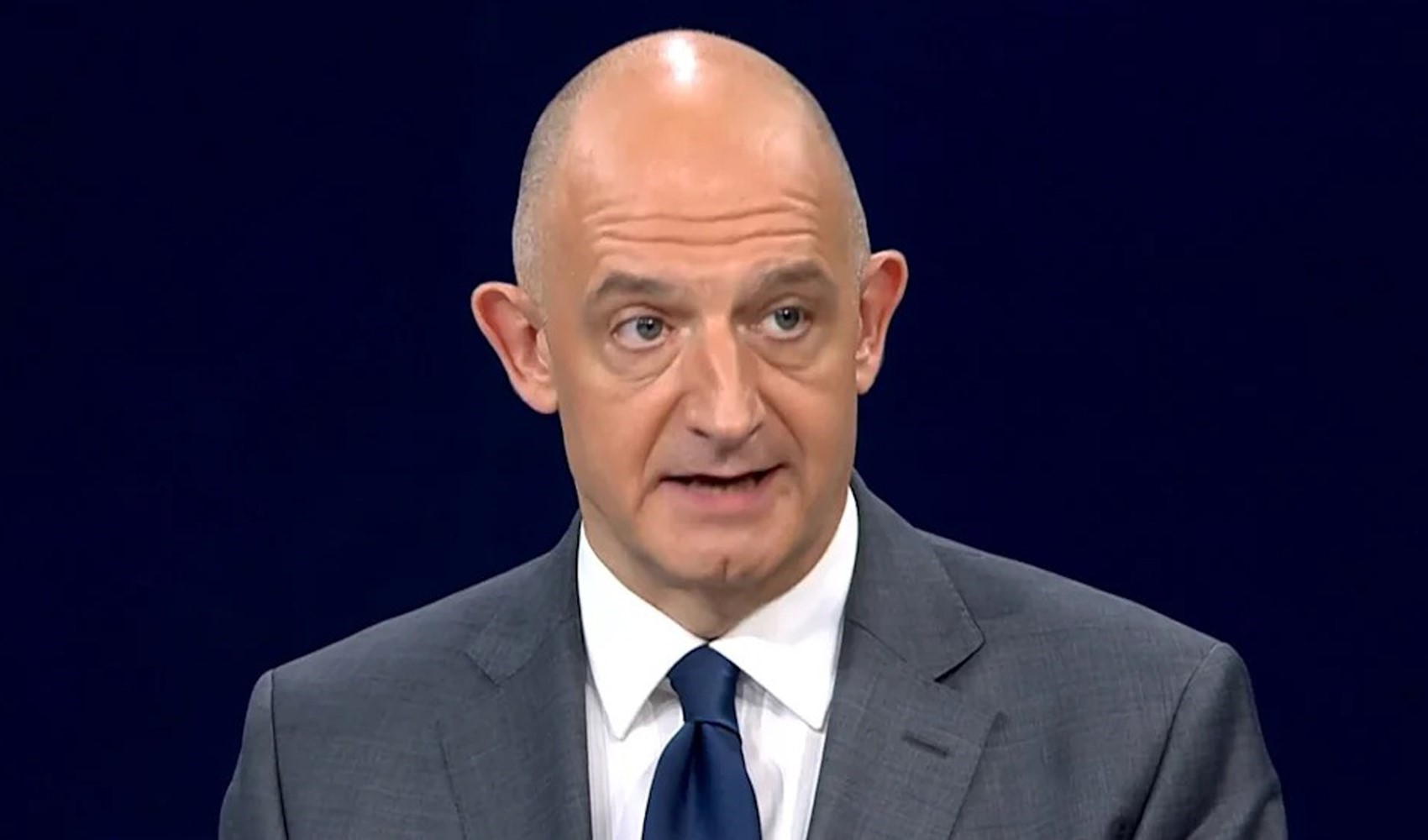
Hans-Jakob Schindler is an expert with extensive international experience in the fields of diplomacy, intelligence, and security.
Schindler is also the former coordinator of the United Nations Security Council's ISIS, Al-Qaeda, and Taliban Monitoring Team.
In this role, he both followed the ISIS (Da'esh) and Al-Qaeda files and managed and coordinated the global activities of the monitoring team working under the Security Council's 1988 sanctions committee.
In his assessments while connecting to German news channels, Hans-Jakob Schindler stated that there are different power centers in Iran, but among these centers, only elements close to Hezbollah and the Revolutionary Guards possess armed capacity.
According to Schindler, since the current opposition does not have armed force at its disposal, there is a very high probability that armed groups would take over the administration in the power vacuum that would arise in the country if the regime were to collapse.
This comment by Schindler inevitably brings the following questions to mind:
In such a scenario, could the Revolutionary Guards replace the “failed state” regime of Iran?
If the regime in Iran were to collapse, what is the reality of the “liberation scenario” that Donald Trump promised the public?
Could the unarmed public, whom Trump called to the streets, become targets of the Revolutionary Guards and similar armed groups, as has been seen recently?
Another important question that needs to be asked is this: What kind of Iran does the United States want to see in the region? A democratic, strong Iran with open paths for development; or an Iran that is more open to external negotiations and kept under pressure by the Revolutionary Guards?
Article: Reyhan Küçük
News Source: 12punto