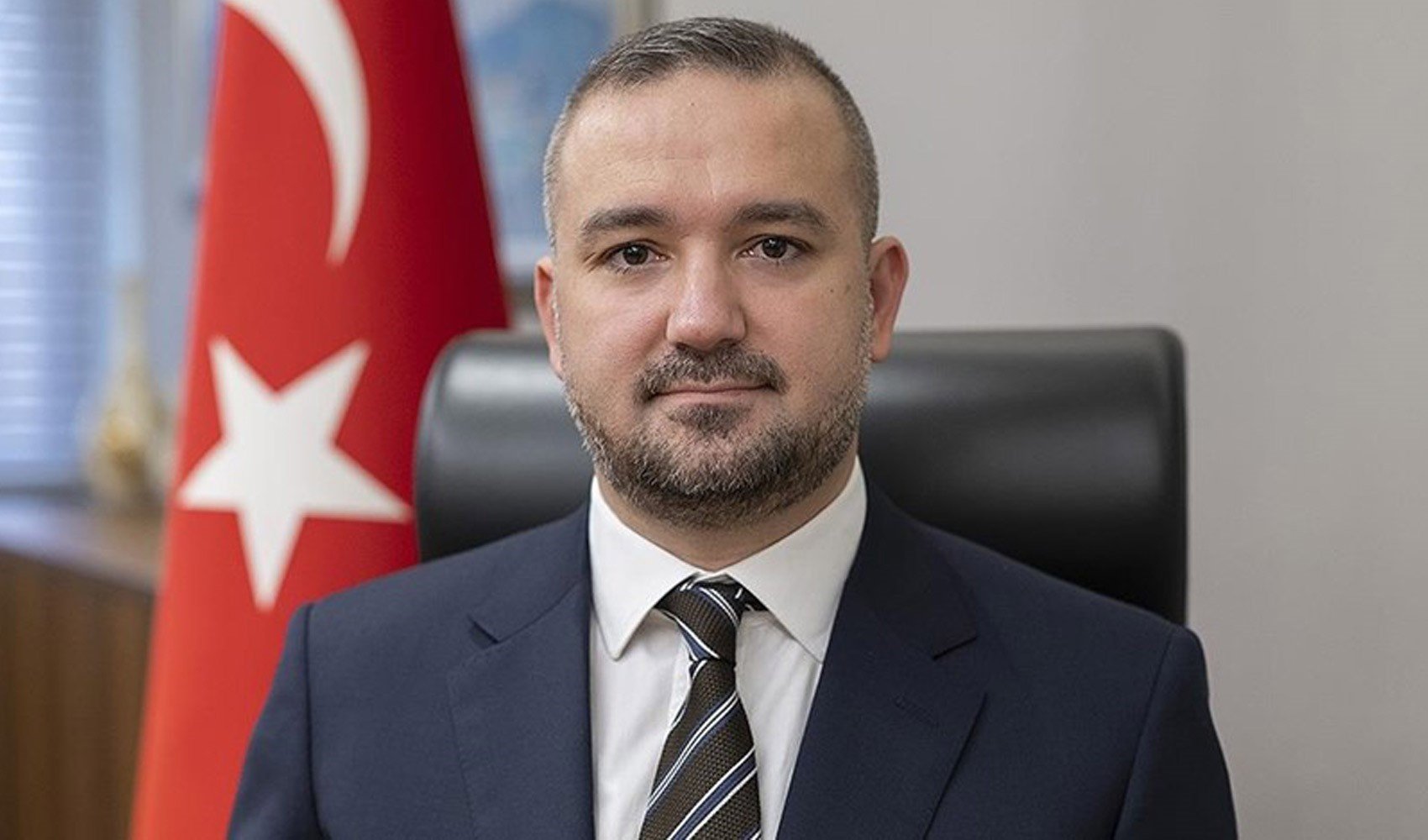
In his speech, Karahan responded to questions regarding whether the disinflation program is being carried out by 'attracting hot money,' stating, “Our anti-inflation program is not based on 'carry trade' or hot money, but on demand. It aims to reduce inflation by controlling demand.
Furthermore, it aims to correct inflation expectations and distortions in pricing behaviors. As these expectations and pricing behaviors improve, imports will also normalize.
We have seen leading signals of this with a quite significant recovery since last year. Along with this, there will be a permanent improvement in the current account deficit,” he said.
EFFECT OF INTEREST RATE HIKES ON CAPITAL
Karahan also noted that this is done with policy rates all over the world, stating, “As interest rates rise, it naturally becomes more attractive, and some capital flows can occur. Now, in this context, if we look at the improvement we have experienced in reserves over the last month and a half, we see that one-third of it is foreign-sourced. One-third is due to individuals converting foreign currency deposits into Turkish lira deposits. The remaining one-third is from legal entities, that is, institutions, stemming from export revenues and, similarly, our institutions converting to Turkish lira,” he stated.
"WE DO NOT NEED HOT MONEY"
Emphasizing that Turkey does not have a financing problem regarding the current account deficit, Karahan said, “We do not need hot money in this way, in this sense, but as we said, as a side effect of the interest rate hike we need to make to cool down demand, correct expectations, and fix the deterioration in pricing behaviors, capital inflow also comes.
When we look at the experiences of other countries, this is how it happens. At first, some money that comes from 'carry'—which we can describe as 'hot money'—later shifts more towards bonds as inflation falls and the belief that inflation will fall strengthens, and then, when inflation falls and predictability increases, it comes more as direct foreign investment,” he said.
SPOKE ABOUT INFLATION TARGETS
Karahan also responded to criticisms that year-end inflation targets are not reasonable, saying, “As you also praise, we have a very high-quality research department; I can proudly say that we truly have the best researchers in Turkey. Serious technical analyses are conducted here.”
Karahan stated that there is a model in which many assumptions are involved in the process of determining inflation targets, and that the inflation outlook emerges in this framework, adding, “It is not a single number, which is why we say 38, but there is a band around it.
Because there are certain assumptions, and if these assumptions materialize differently, it can go to different places within that band. If it turns out very differently from our assumptions, it could be higher, and when we look at the risks right now, to be clear, we see that upside risks are more dominant; we have used this in our communication several times and explained it clearly.
Therefore, we think our target is realistic at the moment; however, we review it with every incoming data. Since we are far from 5 percent, we need to set an intermediate target, and we determine our policy stance within the framework of an intermediate target,” he said.
"WE SEE THAT TURKSTAT'S DATA IS HIGHER THAN THE DATA WE COLLECT OURSELVES"
Responding to questions about TurkStat data, Karahan said, “TurkStat acts in accordance with international standards set by EUROSTAT.
For one thing, its methodology is very clear. It is no different from other international institutions; it is very comprehensive, collects very detailed prices for many products, and truly announces data in a way that is internationally consistent with many institutions. We also collect prices from the market within the CBRT and make certain forecasts by combining them with other assumptions. TurkStat is more reliable in our opinion, but this gives us an opportunity to get an idea within the month as a leading indicator.
In general, we think that our data and TurkStat's data are consistent during our period. In fact, when there is a difference, it is usually an upward difference; that is, we see more often that the monthly data announced by TurkStat is higher than the data we collect ourselves,” he assessed.
PERFORMANCE BONUS EXPLANATION
Regarding questions from MPs about performance bonuses, Karahan said, “The Governor, Deputy Governors, members of the Auditing Committee, members of the Bank Council, and members of the Monetary Policy Committee do not receive performance bonus payments; there is no such thing.
This performance payment is a system used to encourage the individual performance of employees. It has been applied since the 1980s; it is not a new practice, meaning it has a history of more than forty years. You also had a question regarding 2023. First of all, we did not give it to every employee, you asked that, let me state it clearly. Payments were made according to performance and percentile brackets.
Compensation payments between 1 and 2 salaries were made, let me explain this as well. This is consistent with international practices; in other central banks, and I also worked at the FED, performance targets are determined at the beginning of the year in a similar way, and this is applied according to performance at the end of the year,” he said.
"FOREIGN CURRENCY INCREASES LOAN APPETITE"
Reminding that they recently restricted banks from providing foreign currency loans, Karahan noted that they raised interest rates and took additional steps to support the transmission mechanism. Reminding that there is a growth limit on Turkish lira loans, Karahan said, “Foreign currency loans had increased a lot recently, and I think it was around 4 percent.
When we took measures in the last month, it was around 3.5 percent, but it finished the month at 4 percent. This is a problem in terms of the inflation program, after all. Credit growth is something that supports demand. Of course, there are many reasons for this. The fact that the exchange rate is more stable increases the appetite for foreign currency loans, and the fact that the interest rate on Turkish Lira loans has increased increases the appetite.
We introduced a 2 percent limit to restrict this. Banks that exceed the 2 percent limit are required to maintain required reserves,” he stated.
To the criticism that the Central Bank does not play an active role in crypto regulation, Karahan replied, "As the Central Bank, we have made our contributions to the payments ecosystem, and we will continue to do so during the studies."
"OUR FORECASTS ARE MADE IN THE DIRECTION OF A SINGLE MINIMUM WAGE INCREASE"
Karahan also responded to questions about the minimum wage, stating that they are not the decision-making party regarding the minimum wage. Karahan made the following statements:
“When we do inflation targeting, when we determine forecasts and targets, we naturally have to make certain assumptions. What will happen regarding wages, the minimum wage is one of them, but we need to think more generally. While doing this, we based it on previous statements. That is, our expressions here are not in the nature of a recommendation; only the previous statements were in the direction that there would be a single increase. We also made our forecasts by taking these into account. We shared this with the public within the framework of transparency; this is what happened, it is not beyond that.”
"WE FIND AUSTERITY MEASURES IMPORTANT"
Stating that they find the austerity measures announced by the government important, Karahan said, "It is not just the Central Bank that is fighting inflation. Our government also has statements made through various channels. We find this quite important in terms of balancing domestic demand,” he stated.
"LOSS FROM KKM IS 833 BILLION LIRA"
Stating that they foresee a gradual decrease in the Currency Protected Deposit (KKM) scheme, Karahan stated that the loss from KKM is also written in the Central Bank's annual report and that this amount is not implicit. Karahan said, "The loss from KKM is 833 billion lira. Recently, as the exchange rate has been at a reasonable level and there has been real appreciation, KKM does not have a burden.
That is, no exchange rate payment is made. We think that there will be no exchange rate-based payment for KKM accounts opened recently, that is, in 2024 or in the few months before that. However, for example, some accounts opened last year in May have long maturities; for example, some of them mature in May, and due to the exchange rate increase experienced last summer, their payments are being made now.
Therefore, there are some payments made in the first 3-4 months of the year stemming from that. But as I said, these stem from accounts opened in June of last year and before,” he explained.
"RESERVE PROBLEM WILL DISAPPEAR"
Emphasizing that the Central Bank does not have a target regarding reserves and exchange rates, Karahan said, "When managing reserves, the first goal is to reduce inflation. This is the most important goal. Because if we can do this permanently, the reserve problem will also disappear. Because the demand for Turkish lira will increase, imports will come to reasonable levels, the current account deficit will come to more reasonable levels, and maybe we will even give a current account surplus,” he stated.
500 AND 1000 LIRA BANKNOTE EXPLANATION
Regarding the question about whether there will be a need for 500 and 1000 lira banknotes, Karahan said, “In this context, we are closely following the denomination composition as you mentioned and with different indicators. Whether there is a need for a higher banknote emerges as a result of technical analyses; our units are working on this, and our examinations continue. When a decision is made, it will be shared with the public within the framework of transparency,” he said.
News Source: İHA