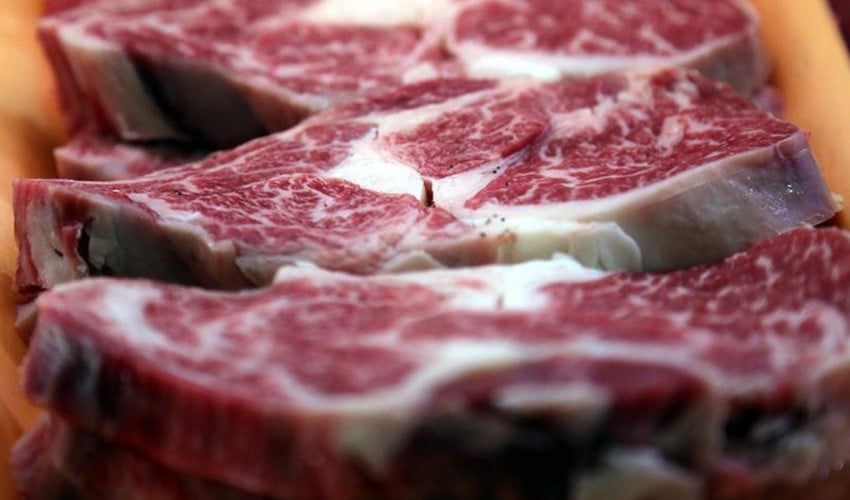
Competition Authority President Birol Küle made statements regarding the investigation launched into the red meat sector.
Stating that red meat is one of the sectors regularly monitored by the Authority due to its important role in nutrition, Küle said, "We completed our first sector inquiry on this subject in 2011 and published our report, but many changes have occurred in the sector and across the world since that time."
RISING PRICES IN RED MEAT
Stating that they have received numerous complaints regarding price increases in the red meat sector recently, Küle said, "In an investigation we opened ex officio and concluded through a settlement procedure this year, an administrative fine was imposed on a leading enterprise in the market, which operates in the production and sale of meat and meat products as well as animal husbandry, as a result of the determination that it set the shelf prices for retailers."
On the other hand, emphasizing that they have examined whether the price increases in the sector over the last two years were caused by agreements between enterprises or decisions of associations of enterprises that restrict competition through two separate preliminary investigations, Küle continued as follows:
"The most fundamental fact seen in these examinations is the determination that there are some structural problems behind the price increases in the sector. For this reason, we wanted to examine the market dynamics related to the sector in depth and identify the structural problems faced by the players operating in the market in detail. With this determination, we aimed to provide solution proposals for these problems and to develop competition policy recommendations for improving competition conditions in the market. Ultimately, for these reasons, we have launched a sector inquiry into the red meat market."
PANDEMIC AND WAR
Pointing out that the red meat market is directly affected by the prices of raw materials used in livestock farming, Küle reminded that serious increases in raw material and energy prices and supply problems were encountered in the process that started with the COVID-19 pandemic and continued with the Ukraine-Russia War.
Küle stated that these problems brought about price increases in the red meat sector as in many other areas, and mentioned that the feed industry currently uses 45 percent imported feed raw materials.
Drawing attention to the fact that the Ukraine-Russia War has made access to this source difficult, leading to a significant rise in final prices through a chain reaction, Küle made the following assessment:
"When looking at TUIK data, the increase in red meat prices, especially in 2020-2021, was lower compared to other food products. The course of raw milk prices at that time was similar to the course of red meat prices. The fact that raw milk prices could not increase sufficiently in the face of rising feed costs resulted in the slaughter of breeding animals in some enterprises in cattle farming. We can observe that this situation created pressure on red meat prices at that time due to the increase in supply, but the slaughter of breeding animals led to a decrease in the cattle population in Turkey in 2022, creating supply-side problems in the red meat market and causing sudden spikes in the face of increasing demand for red meat."
DOES THE PRODUCER HAVE AN EFFECT ON PRICES?
Competition Authority President Birol Küle reported that they will work on these issues in more detail in the sector inquiry, but according to their findings at this stage, it has been determined that there are approximately 200 thousand enterprises operating in the field of cattle and small ruminant livestock farming in the current situation.
Stating that the total number of livestock enterprises, including the number of raw milk production enterprises in Turkey, is approximately 1 million and that most of these enterprises are small-scale family businesses, Küle said, "In other words, because enterprises cannot reach a sufficient scale and biological factors are valid in terms of food and livestock, the producer is in a weak position when marketing their products and is not the party that determines the price when selling to an intermediary or slaughterhouse. We also observed that producer organizations are not sufficiently effective in the market."
PRICE INCREASES AND STRUCTURAL PROBLEMS
Küle also said the following regarding the investigations they are conducting into the sector:
"We have determined that the recent price increases in red meat prices in our country stem from structural problems encountered in the livestock sector and the development of the sector, and from cost increases, rather than anti-competitive actions. In addition to this, we also had findings that many of the enterprises currently operating in the field of cattle and small ruminant livestock farming consist of small-scale family businesses, that the number of cattle and small ruminants per enterprise remains quite low, and that both the number of enterprises engaged in livestock activities and the cattle population in the face of the increasing population are decreasing day by day due to the problems experienced in the sector."
Pointing out that barn farming is mostly practiced due to the poor quality of pastures in Turkey, Küle said, "The fact that these situations significantly increase feed costs and that the sector has become quite fragile against negative developments at the global level and fluctuations in foreign exchange due to the fact that a large part of the inputs used in the sector are imported were also among our findings."
Drawing attention to the fact that they will conduct more detailed examinations regarding the problems and their solutions, Küle said:
"We will hold meetings with all stakeholders in the sector, but at this stage, we think that it would be beneficial to implement practices that will contribute to reducing production costs and enabling small-scale enterprises to reach an effective scale in production. In this framework, it is important for producer organizations and cooperatives to play an effective role in the market. We believe that producers being able to access inputs at more advantageous prices through cooperatives will directly contribute to consumers accessing products at more affordable prices."
News Source: 12punto