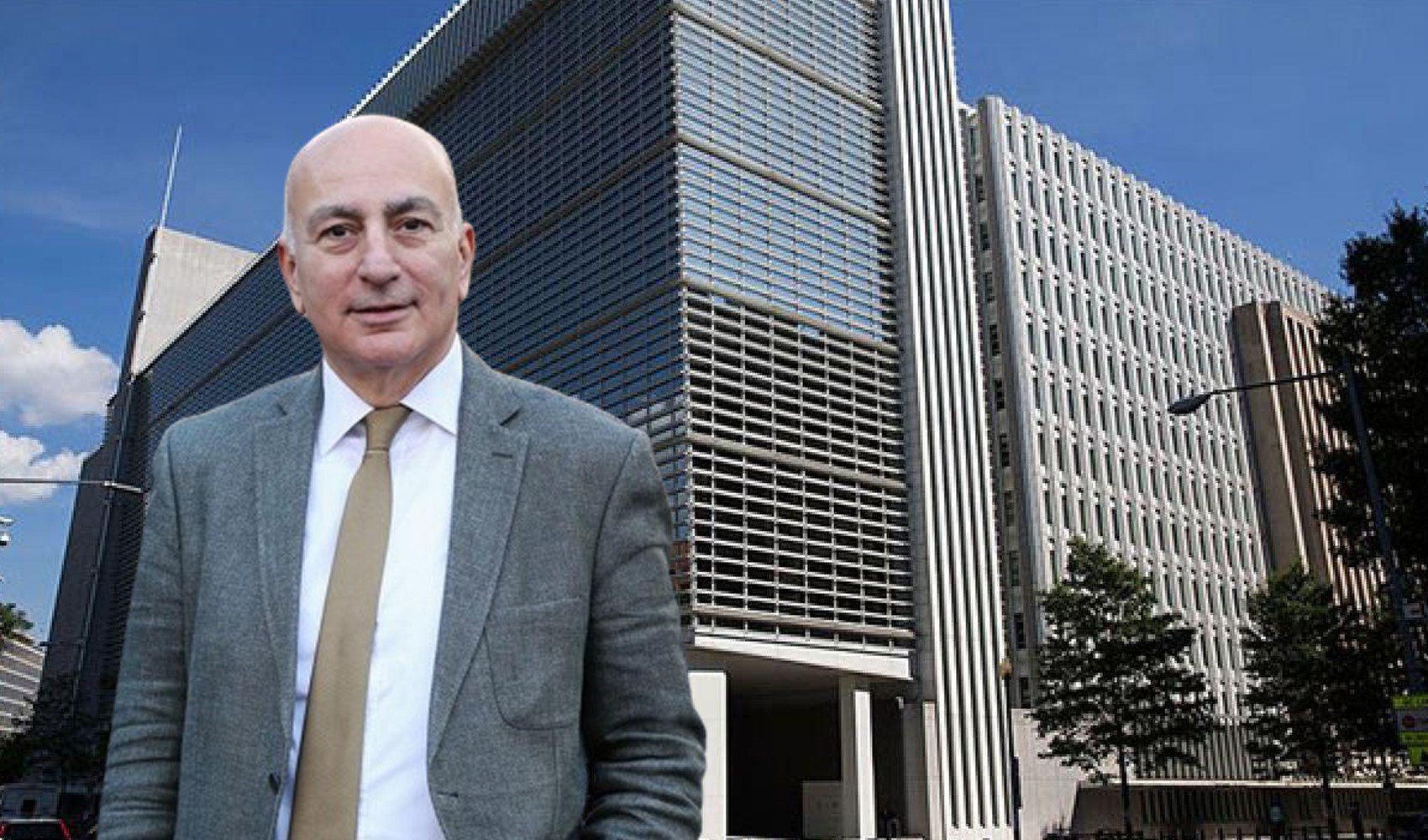
Renowned economist Mahfi Eğilmez shared a post on his X account regarding the 18 billion dollars in additional support received from the World Bank.
Mahfi Eğilmez stated the following:
"THE USE OF WORLD BANK LOANS IS FOR THE RELEVANT PROJECT"
"Many questions are coming in regarding the 18 billion dollars in additional support announced to be received from the World Bank (WB). While most of the questions reflect the skepticism people have felt toward projects recently, some focus on the differences between this and IMF support. Let me try to explain briefly.
The WB provides loans for investment projects. The IMF, on the other hand, provides general loans. In other words, if a port is to be built, for example, the WB finances it. While doing so, it stipulates that its own tender methods be applied and that purchases be made from around the world, excluding a certain ratio of domestic goods. Since the IMF provides loans for balance of payments financing, it looks at whether the conditions it sets (such as reducing the budget deficit to a certain ratio) are met.
"THE COST OF SUPPORT PROVIDED BY BOTH INSTITUTIONS IS LOWER THAN THE MARKET"
The place where WB loans are used is the relevant project; you can use an IMF loan wherever you want. Therefore, an inference such as 'money is coming from the WB, we can spend it wherever we want' is not correct.
The WB audits whether the expenditures made are related to the project and whether they comply with its own specifications, and only then releases the loan tranche. The IMF, however, only looks at whether the conditions it has set (performance criteria) are met, and then releases the relevant tranche of the loan.
The cost (interest) of the support provided by both institutions is lower than the market. In IMF loans, as the amount increases, the cost also increases. In contrast, a country either cannot obtain that increasing amount of debt from the market or would have to pay astronomical interest rates.
The repayment period for WB loans is long (average 10 - 15 years), while the IMF's is medium-term (average 3 - 5 years from the final date of the loan's use)."
Dünya Bankasından (DB) alınacağı açıklanan ek 18 milyar dolarlık ek destek için pek çok soru geliyor. Soruların çoğu insanların son dönemde projelere karşı duyduğu kuşkuları yansıtırken bazıları da IMF destekleriyle olan farkları üzerine yoğunlaşıyor. Kısaca açıklamaya çalışayım.…
— Mahfi Eğilmez (@mahfiegilmez) April 11, 2024
News Source: 12punto