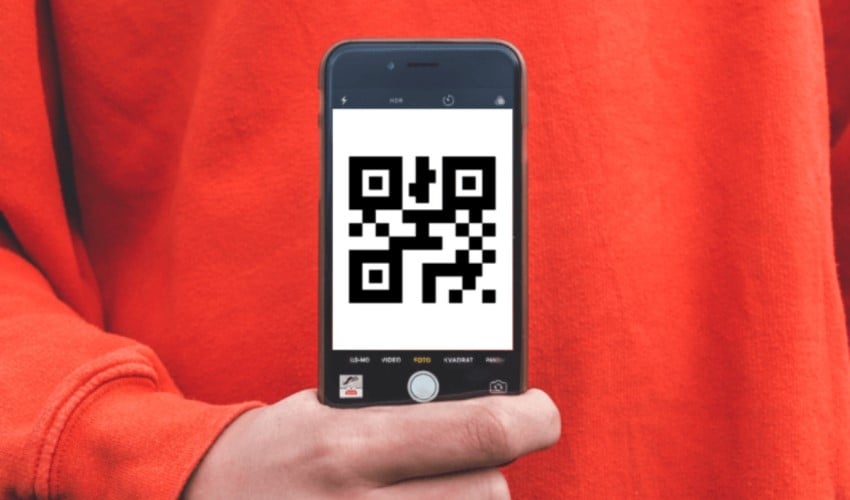
Scammers, who conduct transactions using QR codes that began to be used in various places to minimize contact during the Covid-19 pandemic, are victimizing citizens by accessing private information and credit card details through codes with altered content.
The "Quick Response (QR) code," which was frequently used during the pandemic to minimize the spread of the virus through contactless bank cards, has over time become one of the most preferred methods for fast payment and obtaining information.
Cyber scammers, who resort to new methods every day, have also started to target users through QR codes that have entered daily life in many areas, from restaurant menus to bus stops.
VICTIMIZATIONS HAVE INCREASED
Global Informatics Association (BİDER) President Şenol Vatansever said that victimizations due to QR code fraud have increased recently.
Stating that scammers try to mislead people by creating fake QR codes, informatics expert Vatansever said, "For example, they can prepare a fake code that mimics a restaurant's real QR code. When you scan this fake QR code, it can redirect you to a fake website. This site can collect your personal or credit card information. Additionally, malicious software can also infect your phone," he said.
"USE STRONG PASSWORDS AND UPDATE YOUR PASSWORDS REGULARLY"
Pointing out that scammers try to gain trust by using a corporate identity, Vatansever continued as follows:
"Get information by using the official websites of the relevant institutions. Before scanning QR codes, make sure the labels are reliable, and when you scan the code, ensure that the connection is secure and starts with 'https'. Before sharing your credit card or other sensitive information, make sure the page is reliable. Be careful against suspicious messages and calls. Increase the security of your phone by performing software updates regularly. Use strong passwords and update your passwords regularly. Protect your phone by using antivirus programs. Report suspicious incidents to the authorities."
"CONSUMERS WHO ARE DEFRAUDED HAVE LEGAL RIGHTS"
Informatics Law Association President lawyer Kürşat Ergün explained what the legal rights of users are when they are exposed to QR code fraud and the legal process that will follow for the scammers.
Pointing out that the number of applications due to QR code fraud has increased recently, Ergün said, "Technically, scammers act by saying 'What else can we do to trap people?' every day. In this sense, they do not miss opportunities," he said.
Stating that victims have lost significant amounts of money due to the QR code trap, Ergün said, "The most prominent places are restaurants. Because menus no longer come to us in paper format; we choose the food we want by scanning a QR code. Even while we think we are choosing this, perhaps someone with malicious intent who came before us has stuck another code there, and we fall into this person's trap. It is clear that firms in the private sector must also constantly audit these QR codes," he expressed.
FIRMS WHOSE QR CODES ARE CHANGED WITHOUT THEIR KNOWLEDGE ARE ALSO HELD RESPONSIBLE
Touching on the importance of strictly auditing QR codes in places frequently used by the public, Ergün assessed, "Firms cannot say, 'The QR code was changed without our knowledge; we have nothing to do with the victimization resulting from this. We do not accept responsibility.' The restaurant that provides this cyber system is also responsible for the security of this system. It can be held legally directly responsible for some violations that may occur within this security," he evaluated.
Ergün explained that users should ask the bank to cancel transactions without delay if a credit card transaction or withdrawal occurred when they were redirected to payment systems with fake codes, and that they could request a refund if a payment had been made.
Underlining that cyber scammers are processed under the Turkish Penal Code for the crime of "fraud by using informatics systems" with a request for 4 to 10 years of imprisonment, Ergün emphasized that this is not among the crimes subject to deferral.
News Source: 12punto