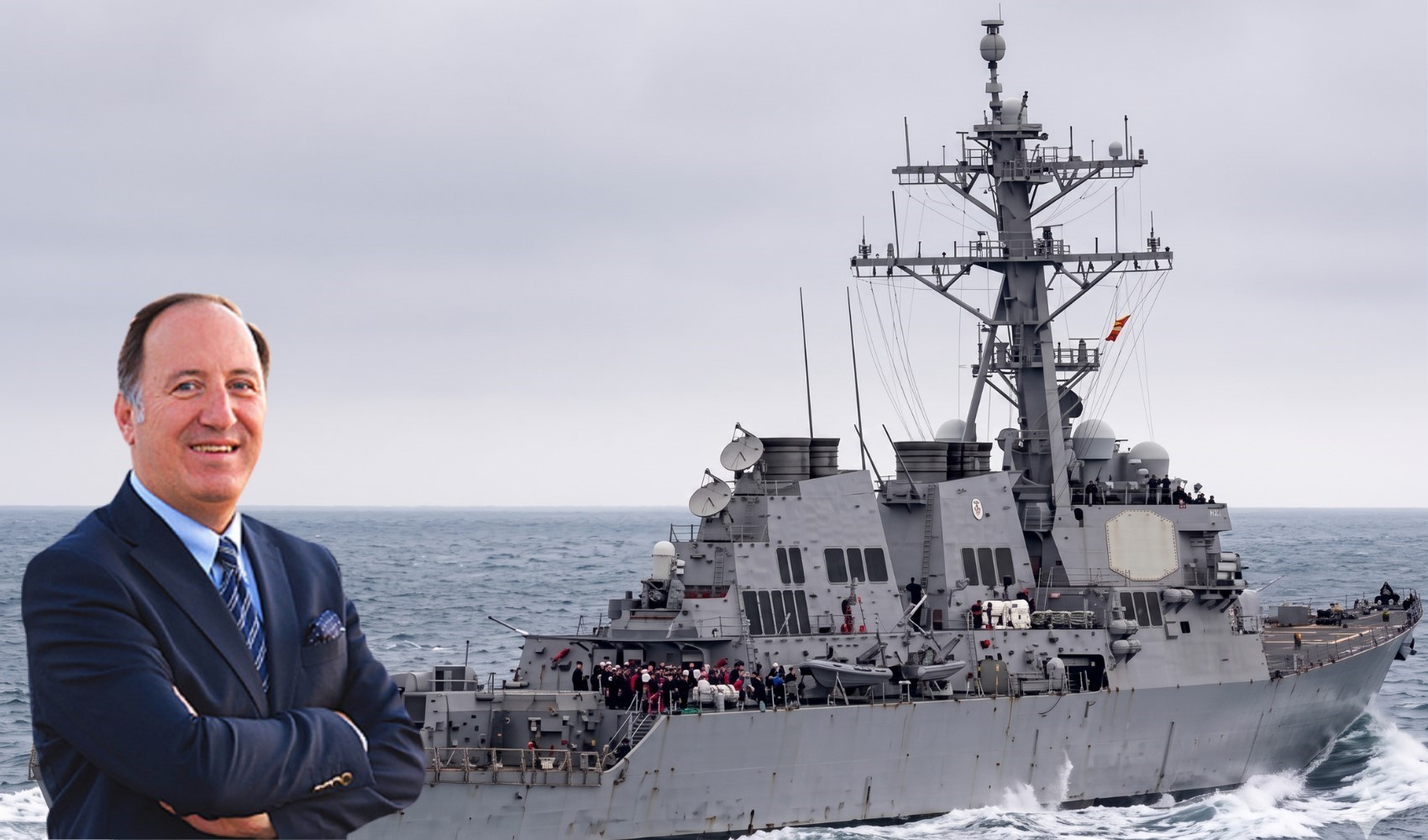
NEWS DESK – On April 30, 2026, a fire broke out on the US Navy destroyer USS Higgins (DDG 76) while it was underway. The fact that the fire on the ship, which lost its mobility and sustained serious damage, could not be brought under control quickly even while all personnel were on duty has opened the operational readiness level of the US Navy, considered the world's most advanced, to debate.
The USS Higgins incident is the latest link in a chain that includes the aircraft carrier USS Gerald R. Ford, which previously experienced waste system and fire issues in the Red Sea; the USS Bonhomme Richard, which was scrapped after burning in port in 2020; and the destroyers that collided with commercial vessels in 2017. Analysts emphasize that the increased mission load despite the number of ships falling from 600 to 292 since the Cold War, combined with insufficient shipyard capacity, delayed maintenance, and excessive pressure on personnel, has turned into a "systemic failure."
Retired Rear Admiral Cem Gürdeniz evaluated this latest development and the picture of weakness displayed by the US Navy on a global scale in a striking article he penned.
HERE IS THAT ARTICLE BY RETIRED REAR ADMIRAL CEM GÜRDENİZ:
"On April 30, 2026, a fire broke out on the US Navy's Arleigh Burke-class destroyer USS Higgins. The ship, which was rendered immobile, sustained serious damage. The ship is an asset operating in the Indo-Pacific theater. According to open-source information, it is not part of any carrier strike group or amphibious task group.
Despite this, the fact that a fire that broke out inside the ship while underway—meaning when all ship personnel were on board and conditions were ready for transitioning to a combat state—could not be brought under control in a short time is a serious problem.
This situation, regardless of the scale of the incident, points to the general wear and tear of the system.
Viewed in this context, the USS Higgins incident should not be read in isolation. The fact that the same navy's most advanced and youngest platform, the nuclear-powered aircraft carrier USS Gerald R. Ford—which is currently in the Red Sea and received orders to return to Norfolk in 10 months—experienced repeated clogging of its waste system in recent months, followed by a major electrical fire on board, did not just create a crisis affecting the daily lives of hundreds of personnel; it also caused the ship to be diverted for repairs, first to Crete and then to Split, Croatia.
A more severe example is the fire on the amphibious assault ship USS Bonhomme Richard at a shipyard in the US in 2020. The ship, which was undergoing maintenance at a shipyard in San Diego, burned for five days in a process that started with a simple fire, could not be extinguished, and ultimately the 1.3 billion dollar platform was scrapped. Investigation reports revealed fundamental weaknesses such as fire systems not working, the inability to perform initial intervention, the collapse of command and control, and a lack of integration with shore support elements. The concept that stands out in this incident is a chain of recurring errors.
Similarly, the accidents involving two large Arleigh Burke-class destroyers in the Pacific theater in the summer of 2017 pointed to the fact that the problem is not only technical but also human and training-related. The USS Fitzgerald collided with a container ship off the coast of Japan, leading to the deaths of 7 sailors; two months later, the USS John S. McCain collided with a tanker near Singapore, causing the loss of 10 sailors' lives. The collision of these ships, which possess the world's most advanced sensor and radar systems, with commercial vessels was likened in maritime circles to a Formula 1 race car colliding with a truck, and at that time, the US Navy had to temporarily halt its operations worldwide.
When all these events are evaluated together, the fire that occurred yesterday on the USS Higgins is not an isolated failure, but a current reflection of a broader structural problem.
The American Navy has shrunk numerically since the Cold War (from 600 ships to 292 ships), but its mission load has increased exponentially. Especially in high-tempo theaters like the Indo-Pacific and the Arabian Sea, ships are kept on duty longer than planned, maintenance and repair processes are disrupted, and there is serious attrition among personnel. Shipyard capacity remains insufficient, training periods are shortened, and weaknesses emerge in the command and control chain.
As a result, the world's most advanced navy is drifting toward a structure that cannot even extinguish a fire in port, collides with commercial ships while underway, and experiences a fire on a destroyer performing routine duties during wartime.
The truth is that the American Navy is now small, has too many tasks, lacks planned maintenance and repair, has insufficient shipyards, and the system is generally exhausted.
The fact that a navy that has reached this level cannot open the Strait of Hormuz, and cannot safely pass even aircraft carriers, let alone merchant ships, through the Bab el-Mandeb is not a result, but the structural collapse itself. This picture is not an operational failure, but a systemic breakdown. The fact that a naval power consuming approximately 30% of the defense budget—that is, 300 billion dollars—has fallen to this point clearly reveals the bankruptcy of the order established within the country, which is disconnected from production, drains resources, and operates with a kind of Ponzi scheme logic."
News Source: 12punto