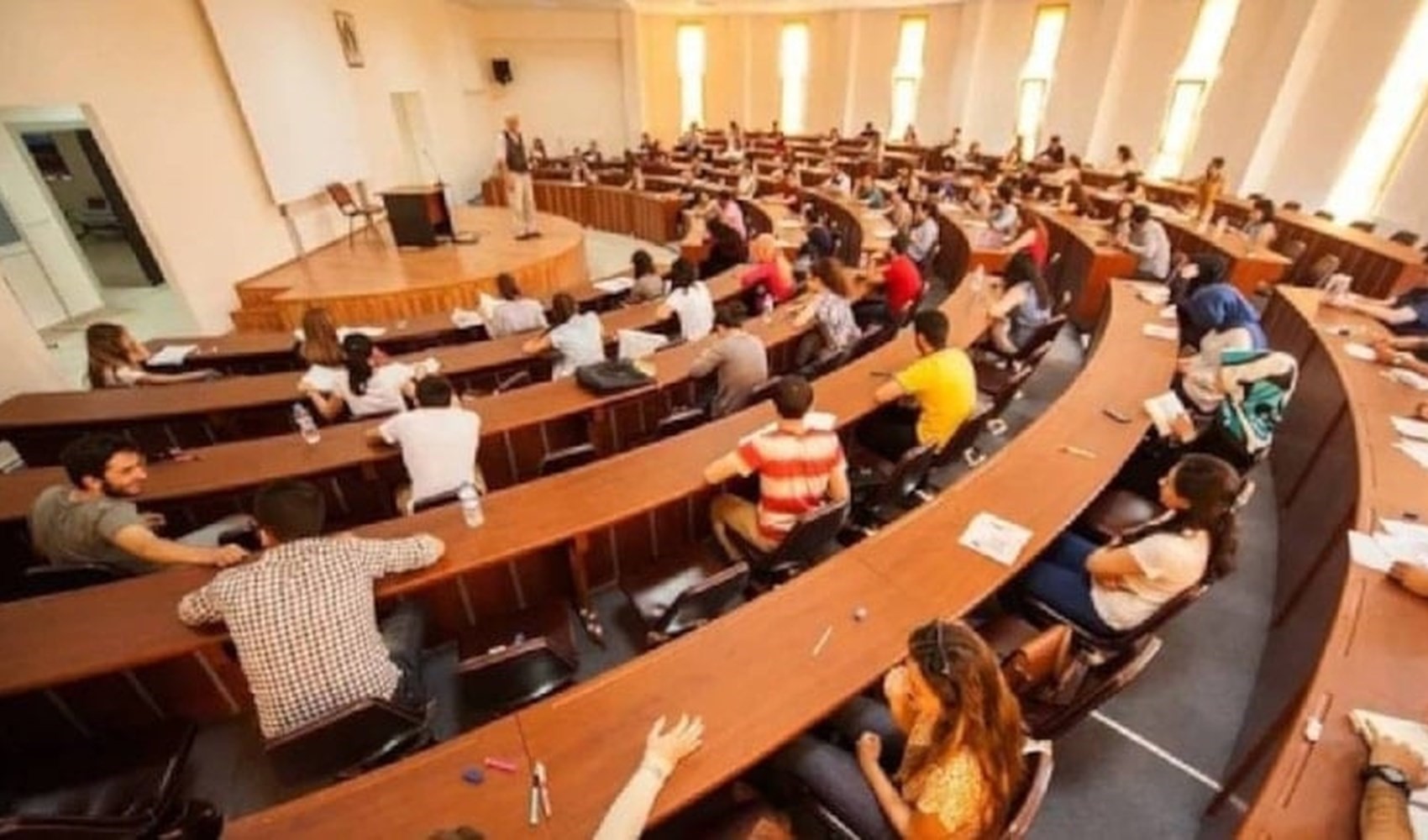
The Draft Law on Amendments to the Higher Education Law and Certain Other Laws, which includes numerous regulations regarding student amnesty and the higher education sector, has been accepted by the Turkish Grand National Assembly (TBMM) Committee on National Education, Culture, Youth and Sports.
If the proposal is enacted, individuals who were dismissed while studying at various levels in higher education institutions, including preparatory programs, and who have not previously benefited from a student amnesty within this scope, will be able to return to their studies in the 2026-2027 academic year, provided they meet the specified conditions.
The regulation covers those who were dismissed, including those who left of their own volition while studying in adaptation, associate degree, degree completion, undergraduate, and graduate programs. A path for application is also being opened for those who were admitted to a program but did not register.
WHO CAN APPLY, AND WHO WILL REMAIN OUTSIDE THE SCOPE?
Those wishing to benefit from the amnesty will be required to apply to the higher education institution from which they were dismissed or where they earned the right to register within 4 months from the date the regulation enters into force. Having previously benefited from this right at a different level of study will not be considered an obstacle to applying at another level of study.
Those convicted of crimes such as terrorism, intentional killing, torture, torment, sexual assault, child sexual abuse, or the production and trafficking of drugs or stimulants will be kept outside the scope. Those whose registration was canceled due to forged documents, those who provided forged documents during registration, and those dismissed due to connections with certain intellectual property rights violations or structures and formations determined to be operating against the national security of the state will also not be able to benefit from the regulation.
With a motion accepted in the commission, educational institutions in the military and security fields were also excluded from the student amnesty. These provisions will not apply to students who were dismissed while studying at the Police Academy and its affiliated institutions, the Gendarmerie and Coast Guard Academy, military academies affiliated with the National Defense University, vocational schools for non-commissioned officers, and institutes, or while studying at other universities on behalf of relevant institutions.
ADDITIONAL RIGHTS FOR STUDENTS WHO HAVE EXCEEDED THE MAXIMUM DURATION
The proposal also includes additional rights for students who have exceeded the maximum duration of study. Those in their final year, excluding the internship training period, will be granted two additional exams or the right to repeat for theoretical and applied courses they failed or did not take in order to graduate. Those who cannot complete their applied training or internship training will also be given the opportunity to complete them; however, no additional exam right is foreseen for intermediate-year students.
PENALTIES FOR ACADEMIC IRREGULARITIES ARE BEING STIFFENED
There are also changes in other areas related to the higher education system. Adding teaching staff to the list of persons subject to security investigations and archive research, re-regulating the rights to statement and defense in disciplinary investigation processes, and increasing penalties for having academic work such as theses, articles, books, or projects written by others are among the prominent articles of the proposal.
According to the proposal, degrees or academic titles obtained through work not based on personal effort and academic background may be revoked; judicial fines may be brought to the agenda for those who commit, commission, or mediate these acts.
FOUNDATION UNIVERSITIES AND STAFFING REGULATIONS
Administrative sanctions and measures for foundation higher education institutions are also being brought into a legal framework. The proposal includes provisions such as the revocation of operating licenses for foundation universities whose financial structures have deteriorated to the extent that they cannot continue their educational activities, and the transfer of their students to a state university in the same province deemed appropriate by the guarantor or the Council of Higher Education (YÖK).
The regulation also includes transitional provisions regarding the creation of professor, associate professor, assistant professor, and research assistant positions for 48 universities; changing the name of Kahramanmaraş İstiklal University to "İstiklal University of Science and Technology"; and the transfer of some academic units to Kahramanmaraş Sütçü İmam University.
News Source: 12punto