



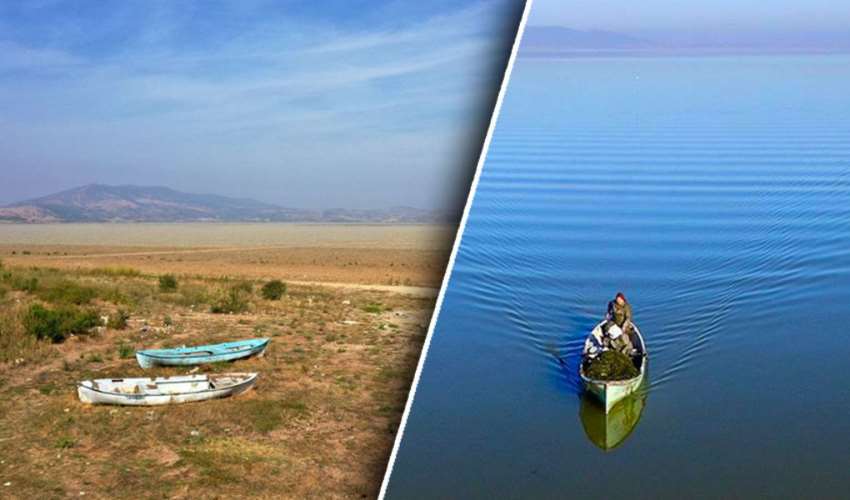
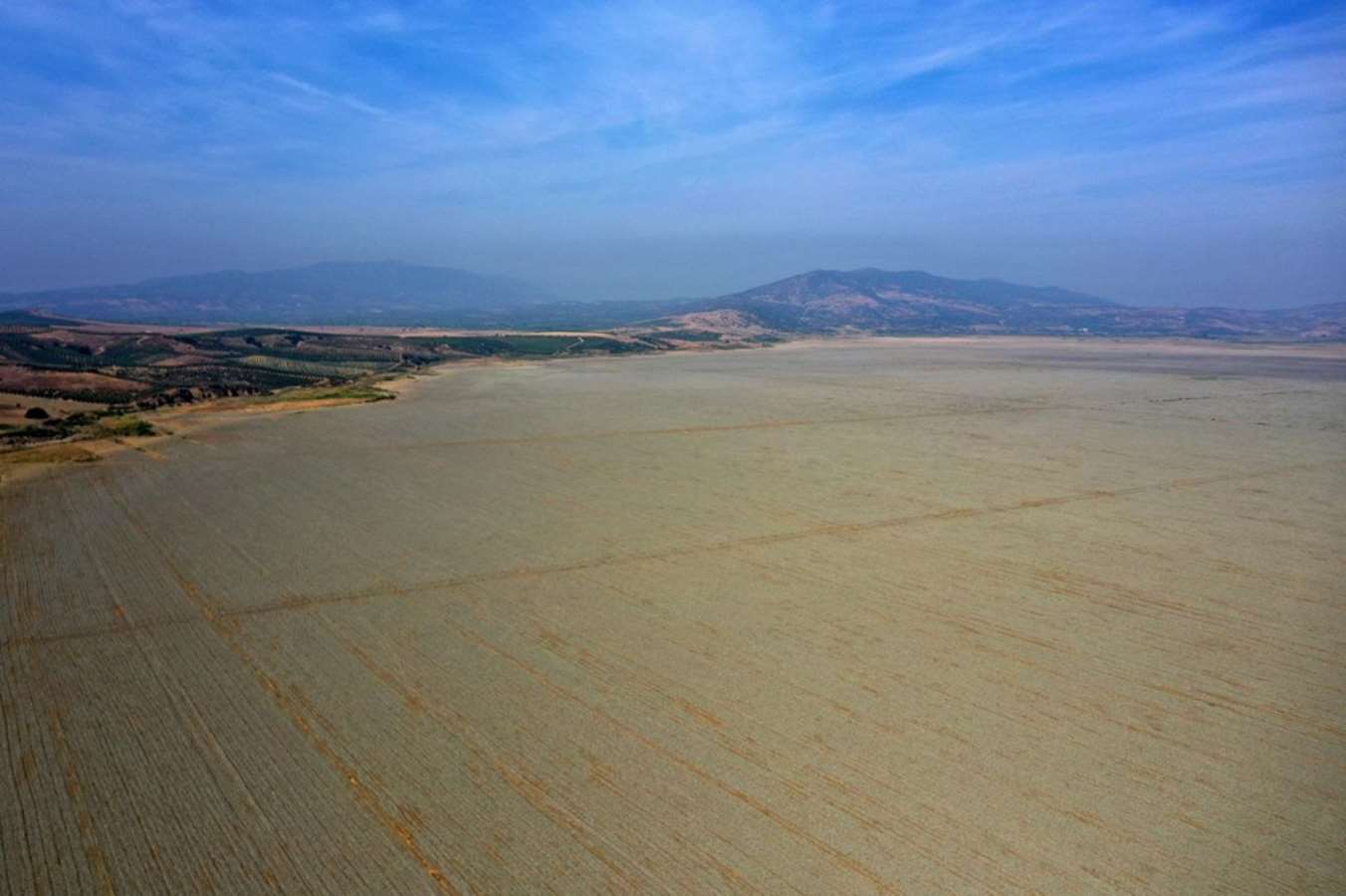
Marmara Lake in Manisa, which dried up due to both natural and human-induced factors, has left behind only signs and wrecked fishing boats.
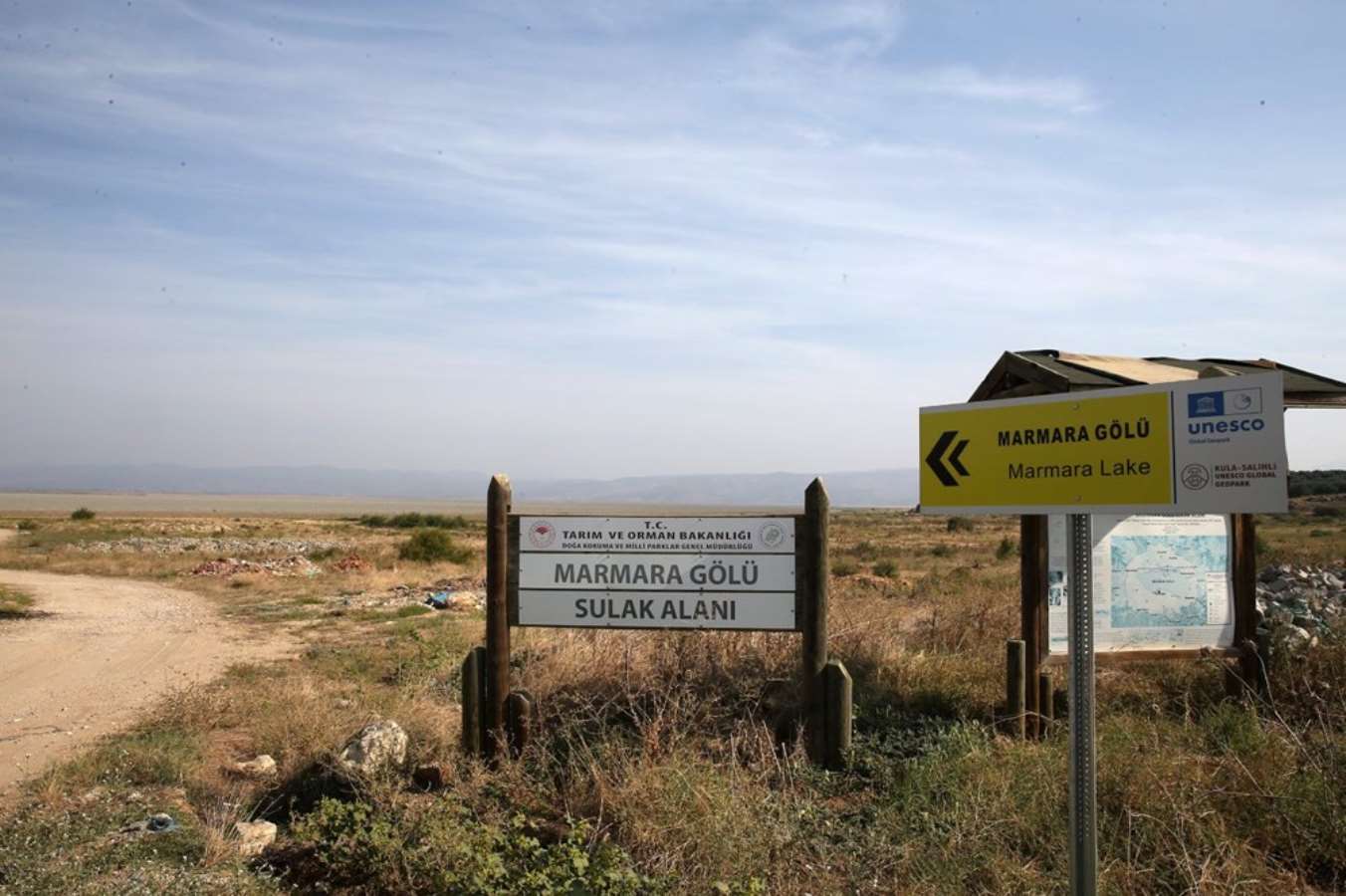
The lake, located between the Saruhanlı, Salihli, and Gölmarmara districts, was originally an alluvial dam lake before being converted into a reservoir area by the State Hydraulic Works (DSİ) in 1945, eventually reaching a water capacity of 320 million cubic meters.
In the lake, which provided an average of 150 million cubic meters of water to the Gediz Plain annually when full, the water level decreased every year due to the impact of drought and illegal irrigation.
IT WAS HOME TO MANY BIRD SPECIES
The lake, which was home to approximately 20 thousand water birds, including endangered species such as the Dalmatian pelican and the pygmy cormorant, and where local residents fished for carp—a feature that led to it being declared a "Wetland of National Importance" in 2017—dried up completely last year.
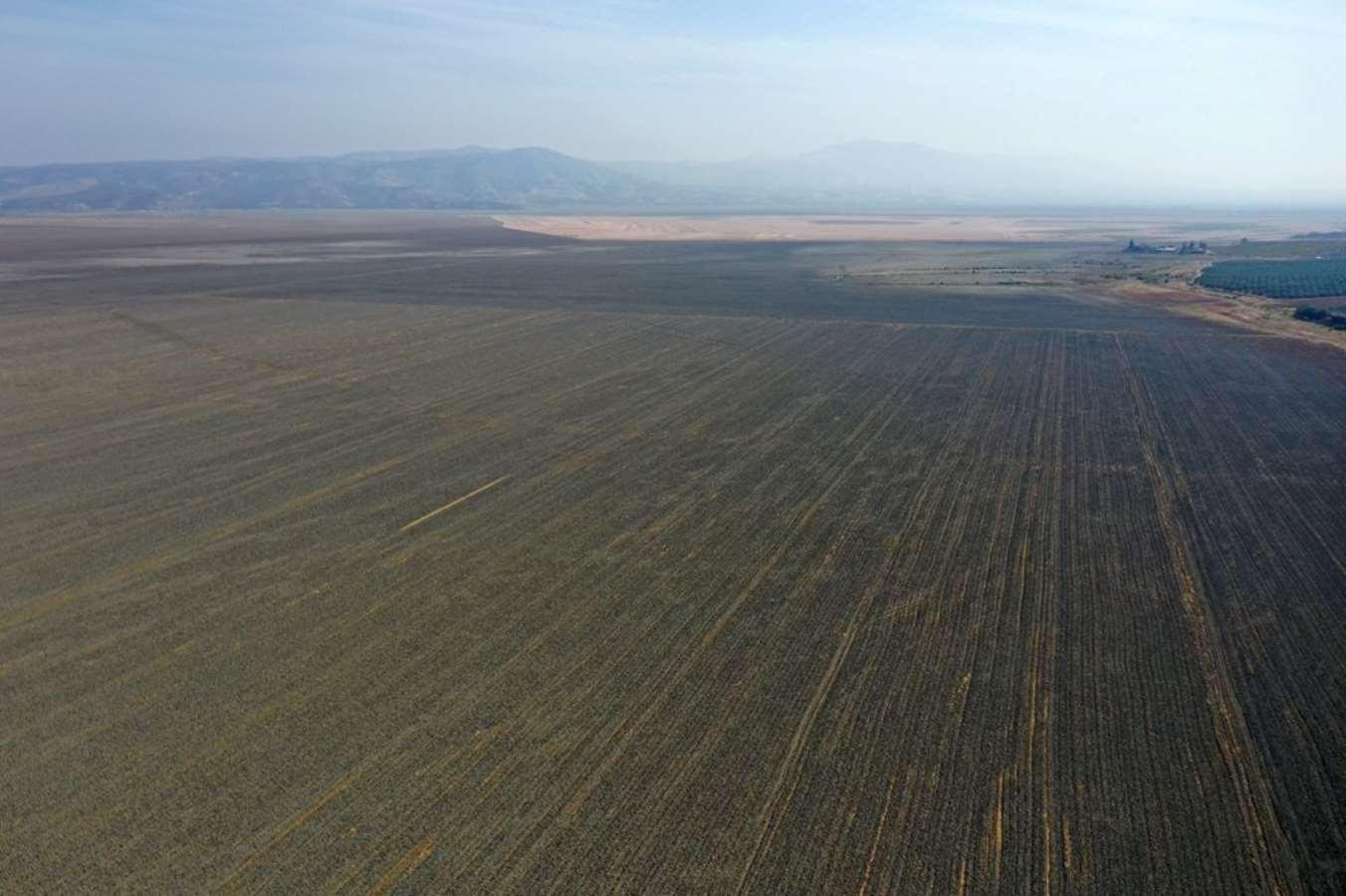
Following the illegal use of the dried-up areas as farmland, the Manisa Governor's Office, the DSİ General Directorate, the General Directorate of Nature Conservation and National Parks, and the General Directorate of Agricultural Enterprises (TİGEM) launched an initiative.
As a result of a cooperation protocol signed last year, a 35 thousand decare section of the lake land was allocated to TİGEM for the production of organic wheat and sunflowers.
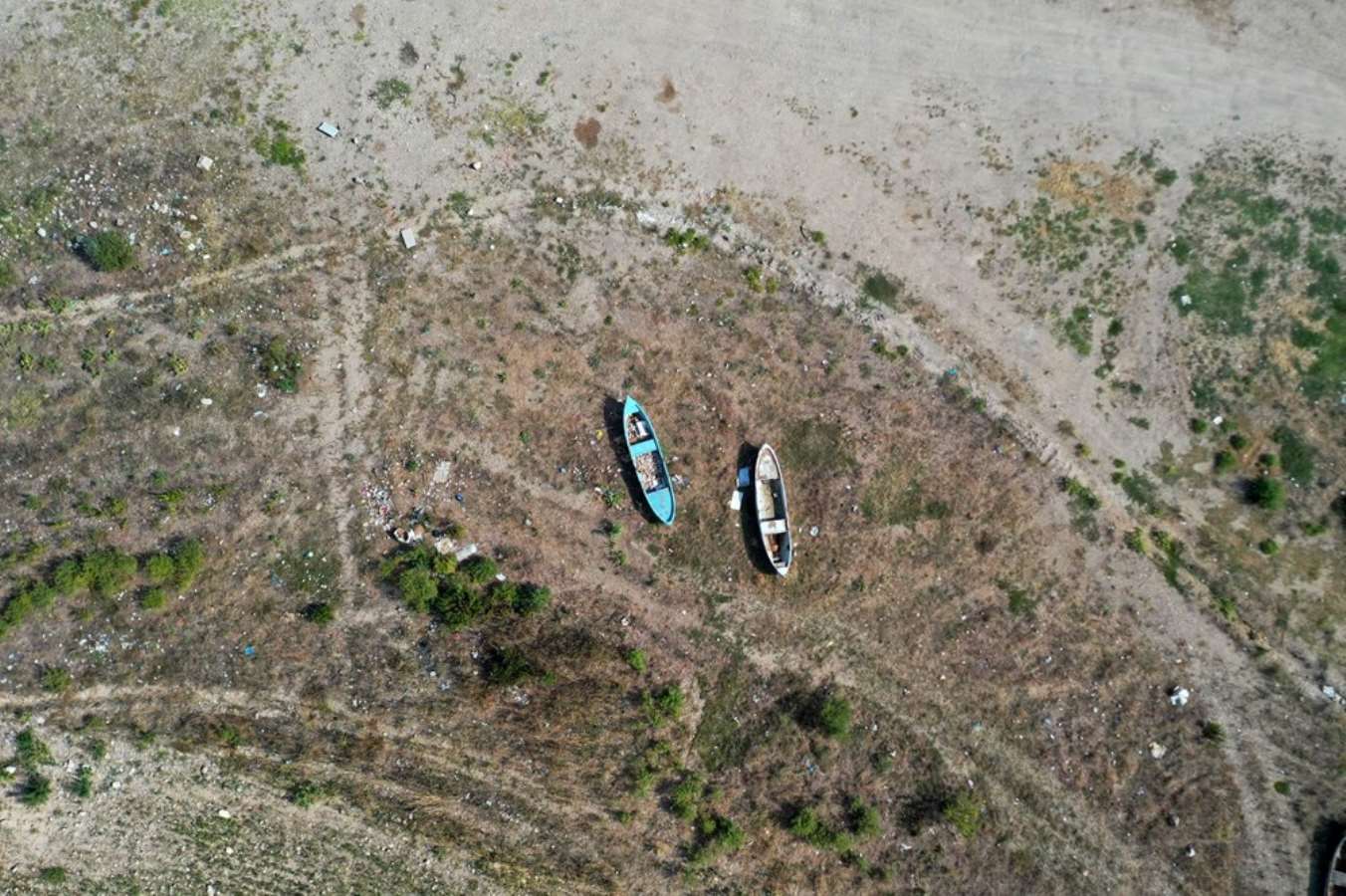
In the region, only signs and fishing boats remain to remind one of the former state of Marmara Lake.
Prof. Dr. Nüket Tirtom, Director of the Manisa Celal Bayar University Environmental Problems Research and Application Center, emphasized that the lake dried up due to human factors in addition to issues such as global warming and climate change.
"ITS DRYING WAS INEVITABLE AS A RESULT OF NATURAL AND HUMAN FACTORS"
Stating that human factors include "incorrect irrigation methods," "the increasing number of wells opened for agricultural irrigation," and "inter-basin water transfer based on the Gördes Dam," Tirtom said, "As a result of these natural and human factors, it became inevitable for the lake, which was fed by small streams and groundwater, to dry up."
Noting that eutrophication (the excessive proliferation of plankton and algae) can also be counted as a factor in the lake's drying, Tirtom added, "Large amounts of nitrogen and phosphorus from agricultural fertilizers mix into the lake, and this nitrogen and phosphorus causes the plants on the lake bed to multiply. As these plants multiply, this means the lake turns into a swamp and loses its water."
"IT WILL CAUSE MANY SERIOUS PROBLEMS"
Regarding the consequences of the lake drying up, Tirtom made the following assessment:
"The drying of the lake has negatively affected both biodiversity and the socioeconomic life on the lakeshore. The decrease in groundwater levels resulting from the drought will cause many serious problems such as damage to ecosystems, a decrease in biodiversity, and food insecurity. Furthermore, the drying of the soil will lead to agricultural drought."
News Source: AA









