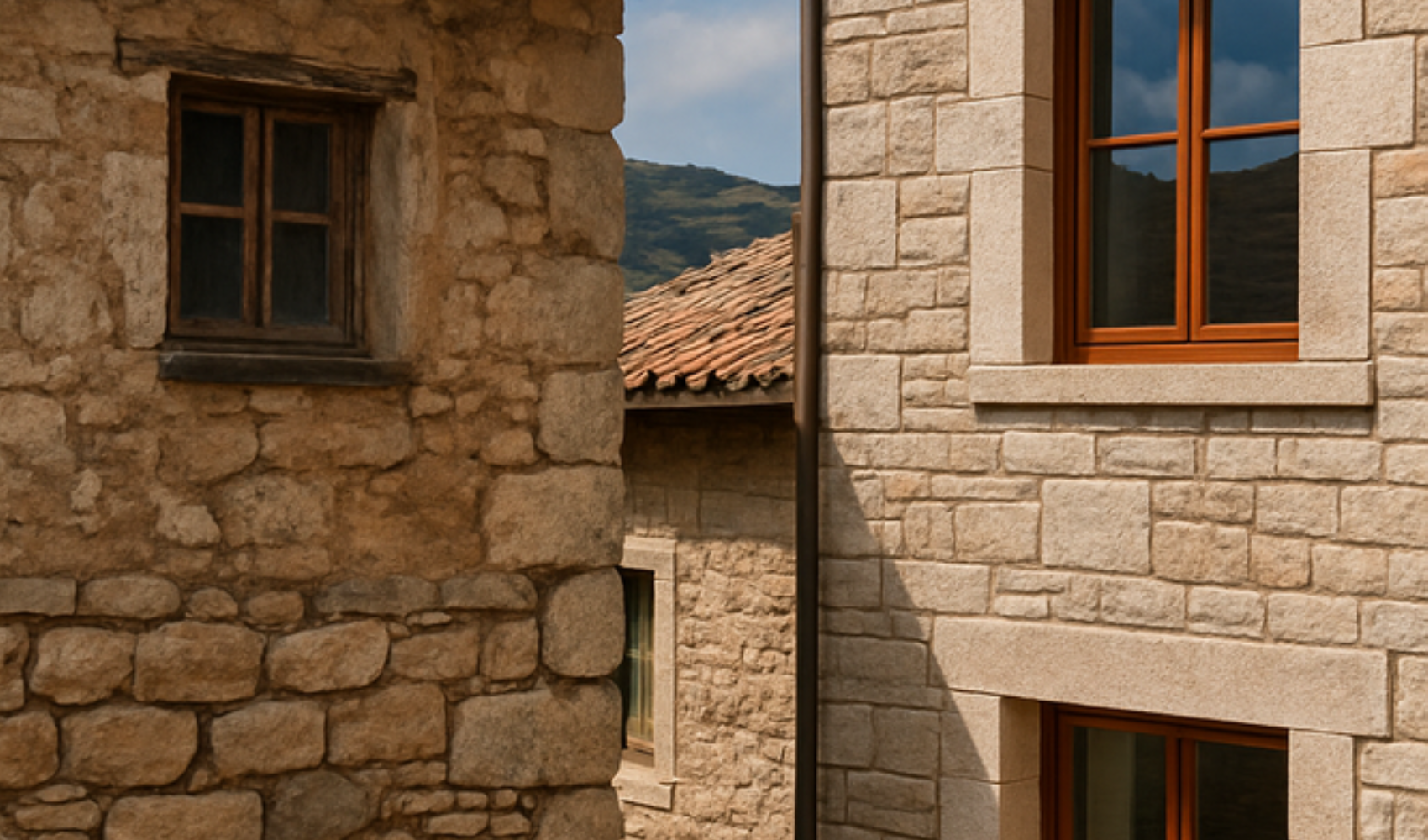
Stone houses, which are indispensable to architectural traditions in Turkey, have recently become a focus of interest once again. As a natural material, stone offers not only aesthetic but also functional advantages due to its physical properties. Stone houses, which are a subject of curiosity especially for their resistance to earthquakes, have been preferred by many civilizations throughout history. So, are stone houses really more durable, or is this an urban legend? Here is the information obtained from experts and sectoral analyses…
THE SECRET TO THE DURABILITY OF STONE HOUSES
Stone is a natural building material known for its density and hardness. Thanks to these features, the walls of stone houses are generally thick, and they have high sound and heat insulation. Historical stone houses in Anatolia, which have remained standing for centuries, serve as examples with the resistance they show against natural disasters. Stone walls help keep the interior cool in summer and warm in winter by retaining heat for a long time.
Furthermore, stone is quite resistant to risks such as infestation, decay, or fire. With modern technologies, both traditional techniques and structural supports that comply with earthquake regulations are now used together in the construction of stone houses.
COST: IS BUILDING A STONE HOUSE REALLY EXPENSIVE?
Although it is traditionally thought that building a stone house is more costly compared to reinforced concrete and wooden structures, the procurement and workmanship of stone can vary depending on the region today. In Turkey, especially in regions close to stone quarries, the cost of stone can be more affordable. Another prominent factor is the long-term maintenance advantage of stone houses: the need for paint, insulation, or renovation is often less, which provides an economic benefit in total.
Workmanship can create differences in terms of time and cost as it requires stone masonry. However, in recent years, with modular and stone cladding technologies, safe stone houses can be built with more reasonable budgets.
EARTHQUAKE: ARE STONE HOUSES EARTHQUAKE-RESISTANT?
The fact that Turkey is an earthquake country makes the issue of the durability of stone houses even more important. Traditional stone structures can pose risks in an earthquake if appropriate techniques are not used. However, in stone houses built in accordance with earthquake regulations today, safe housing can be provided by strengthening the load-bearing elements. In modern construction, by using load-bearing columns, steel reinforcements, and flexible foundation systems, earthquake risks are minimized while preserving the advantages of stone.
Experts draw attention to the importance of performing engineering calculations correctly and implementing building inspections completely, especially in newly built stone houses. It is emphasized that the most reliable stone houses against earthquakes are those built in accordance with engineering principles and that meet earthquake regulations.
WHICH TYPES OF STONE ARE USED?
Basalt, granite, travertine, and local rubble stones are the most preferred materials when building stone houses in Turkey. Basalt stands out with its durability; granite provides advantages in terms of both aesthetics and longevity. Travertine stones are frequently used in various projects due to their lightness and ease of processing. While limestone and local rubble stones are generally preferred in the Aegean and Mediterranean regions, volcanic stones stand out in Eastern Anatolia. Each type of stone has its own suitable usage areas and advantages for its region.
IS LIVING IN A STONE HOUSE THE RIGHT CHOICE IN TURKEY?
In Turkey, where the earthquake risk is high, choosing a stone house offers a safe alternative when built with the right techniques. The fact that the cost can vary depending on the type of stone and the region where it is procured can make these structures more attractive regionally. Experts give the following warnings to those who want to have a stone house built: The quality of the stone used, the level of craftsmanship, and the compliance of the project with engineering standards are of great importance. Architectural and building inspections should not be neglected in stone house projects.
In stone house projects that have increased across Turkey in recent years, both traditional lines and modern technologies are used together. It is known that century-old stone houses are still standing firmly in some villages. These examples show that stone houses stand out with their longevity and durability if they are built with the right techniques.
Whether in terms of cost, durability, or natural aesthetics, stone houses continue to be one of the prominent alternatives in today's search for safe and long-lasting structures.
News Source: 12punto