 1 / 12
PİAR Research shared its political agenda survey for Turkey, conducted in November, with the public.
 2 / 12
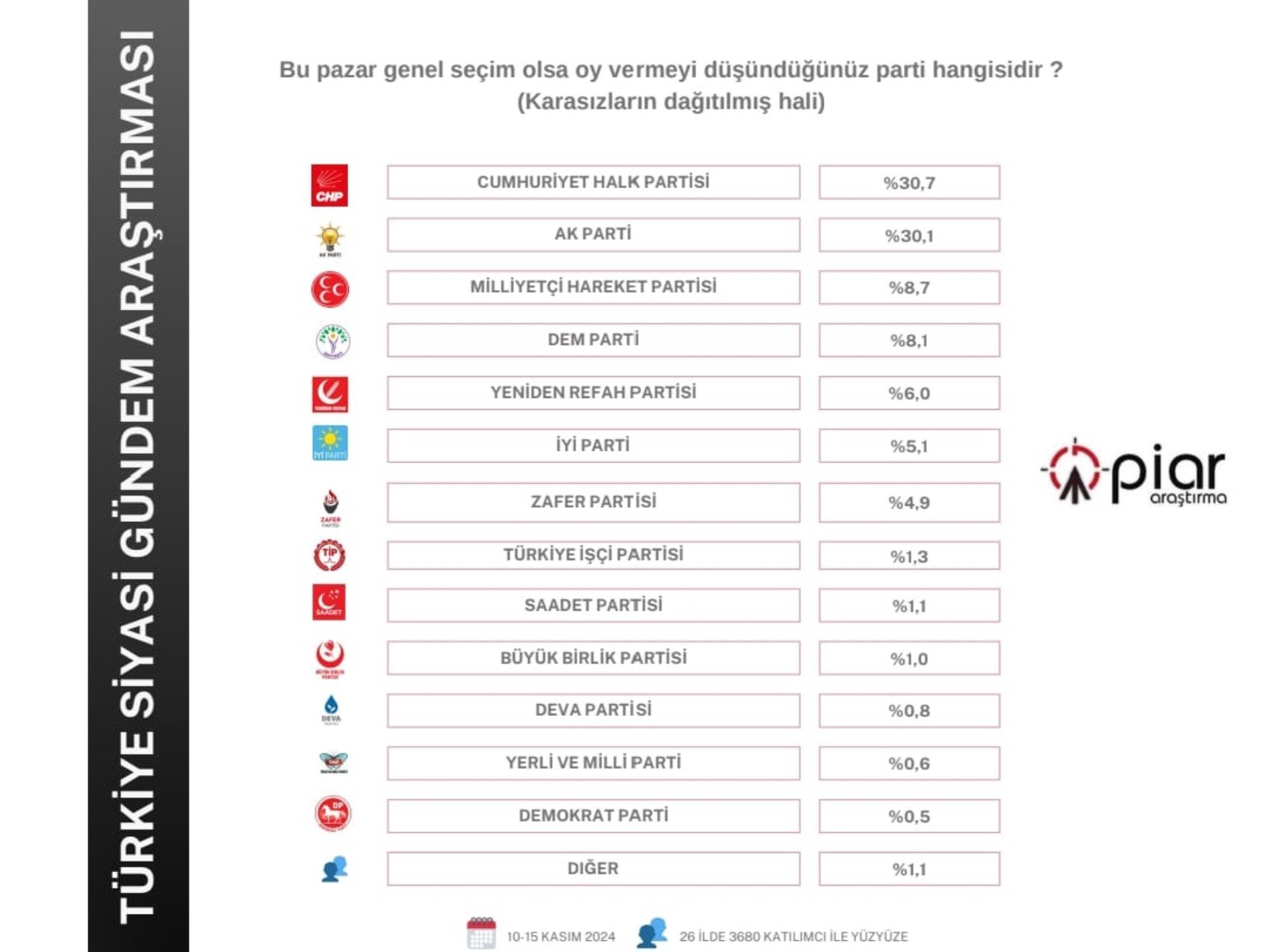
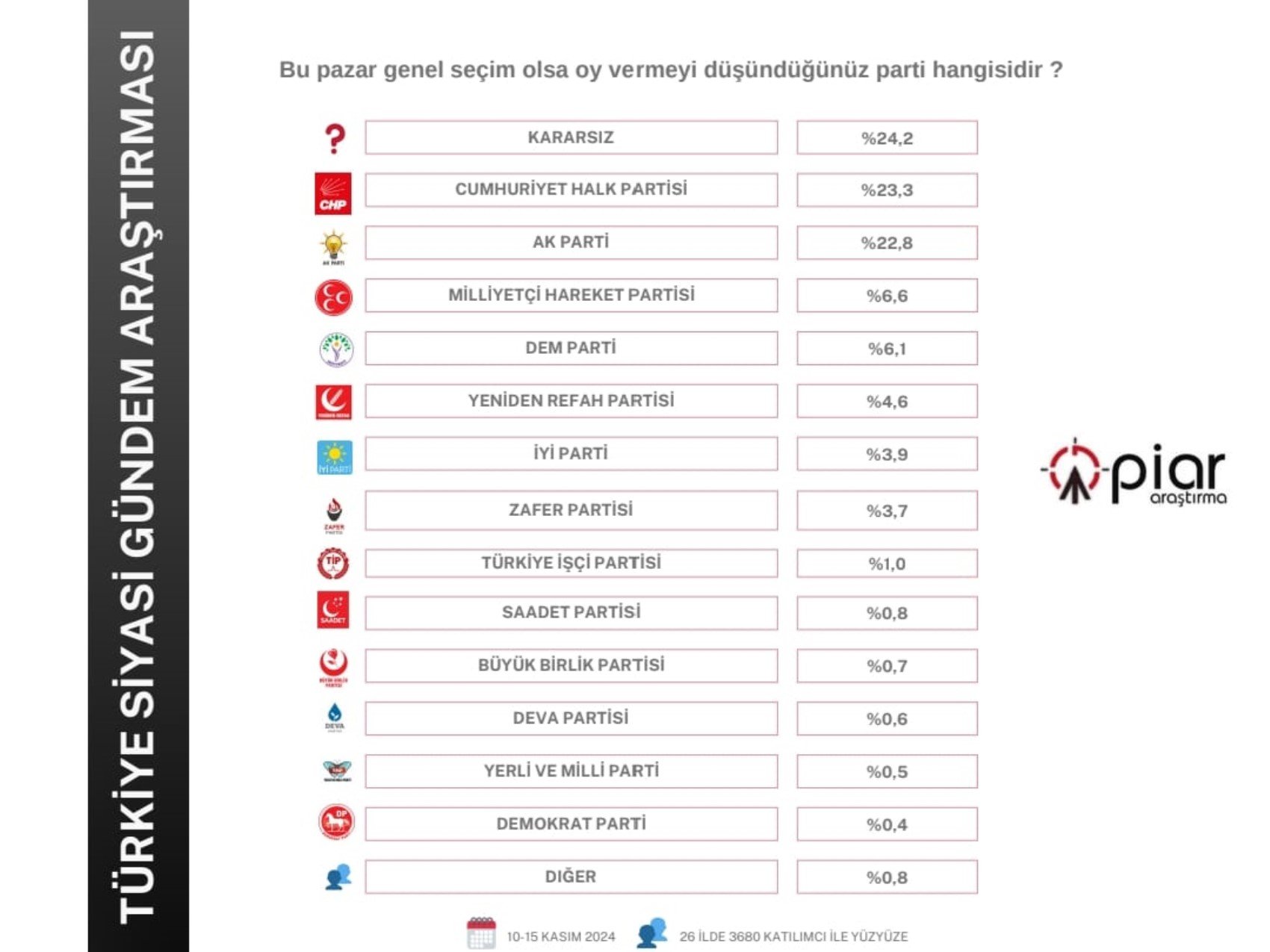
In the survey, which was carried out between November 10-15 with 3,680 participants across 26 provinces, the question "If a general election were held this Sunday, which party would you consider voting for?" was asked.
 3 / 12
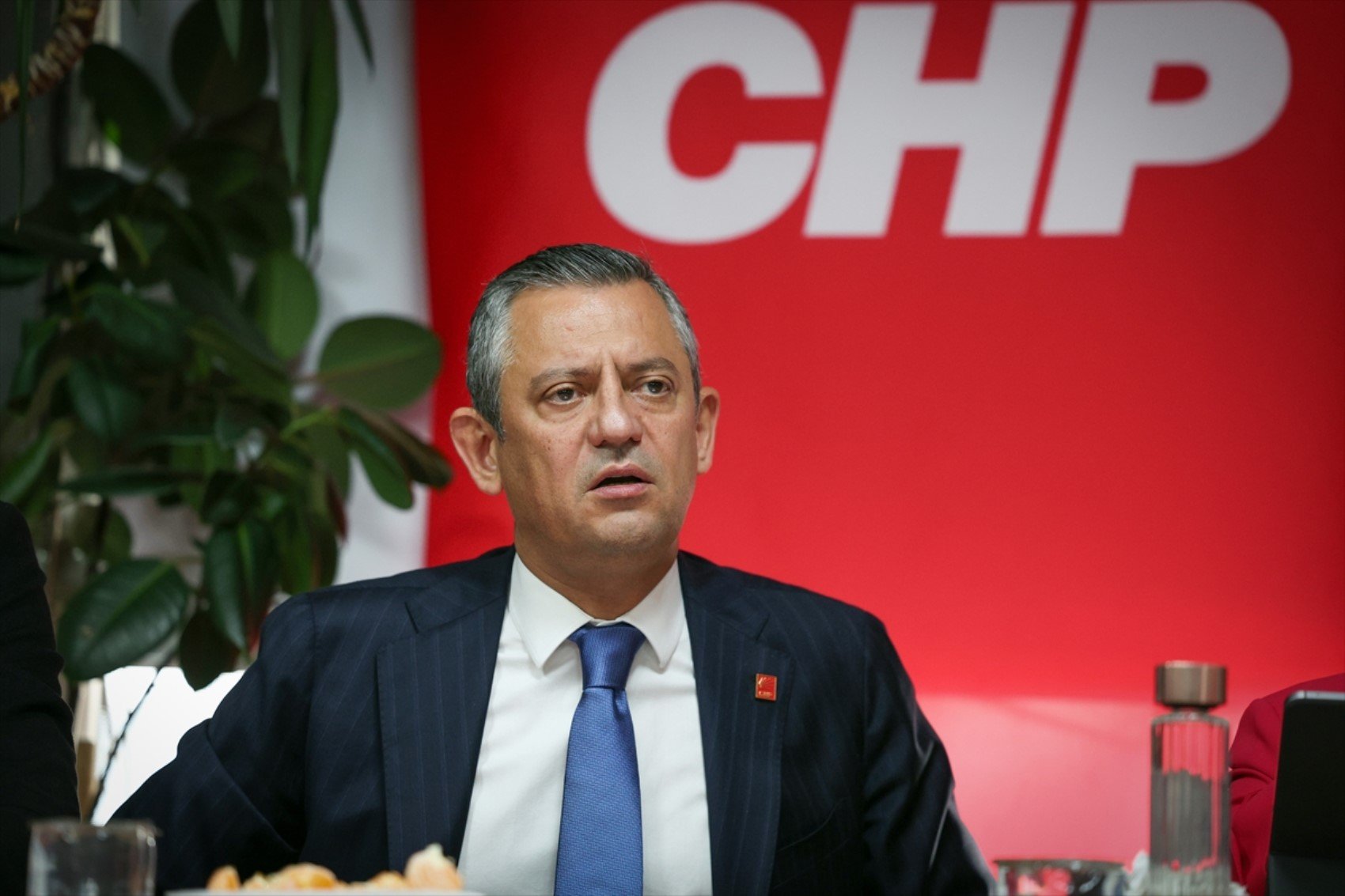
As a result of the survey, the Republican People's Party (CHP) became the leading party with 23.3 percent of the vote.
 4 / 12
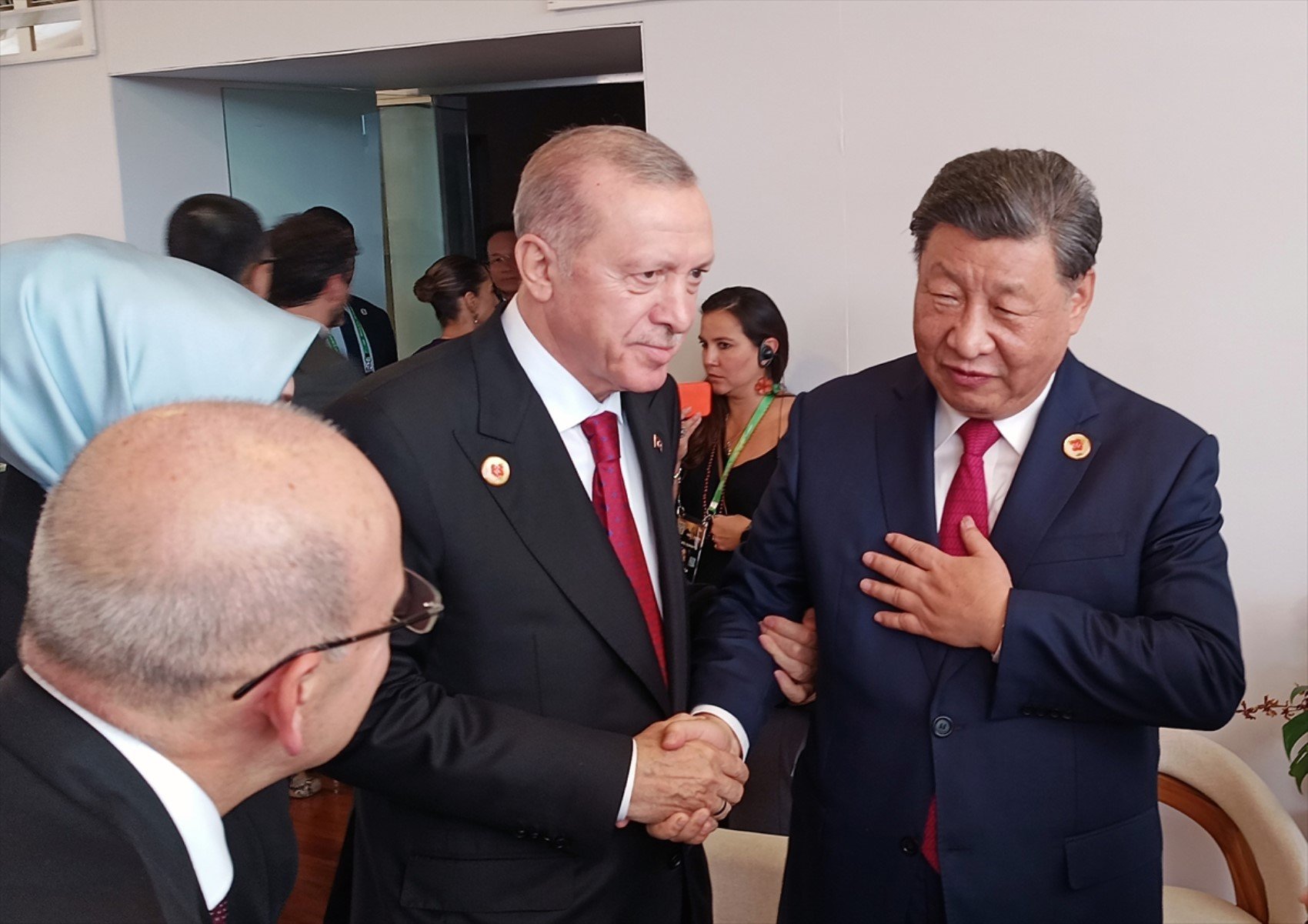
The AKP, meanwhile, placed second in the poll with 22.8 percent of the vote.
 5 / 12
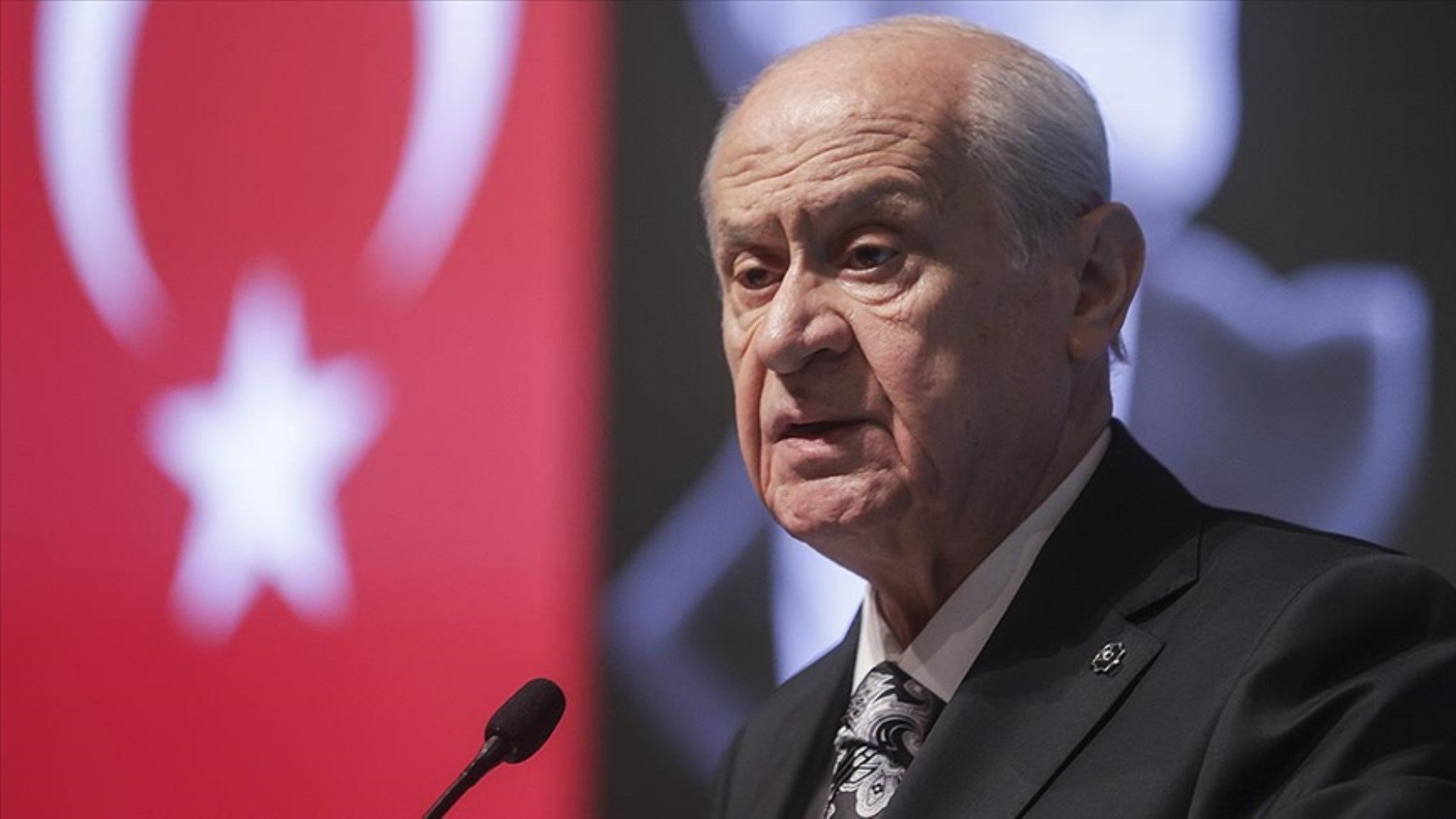
In the survey, the MHP drew attention with 6.6 percent and the DEM Party with 6.1 percent of the vote.
 6 / 12
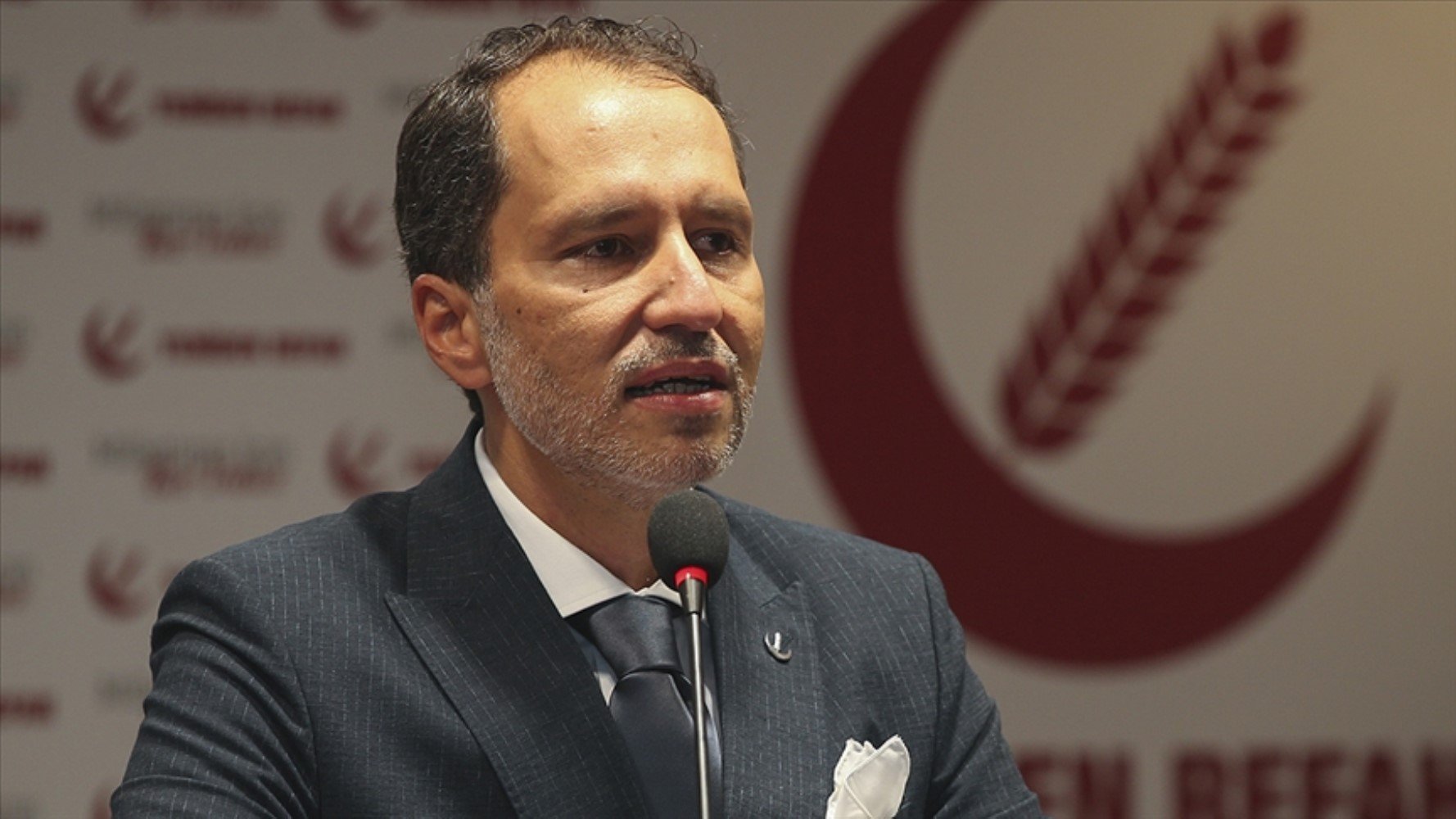
The New Welfare Party (Yeniden Refah Partisi), which drew attention with the vote share it received in the last local elections, was seen to have received 4.6 percent of the vote.
 7 / 12
The İYİ Party received 3.9 percent of the vote in the poll.
 8 / 12
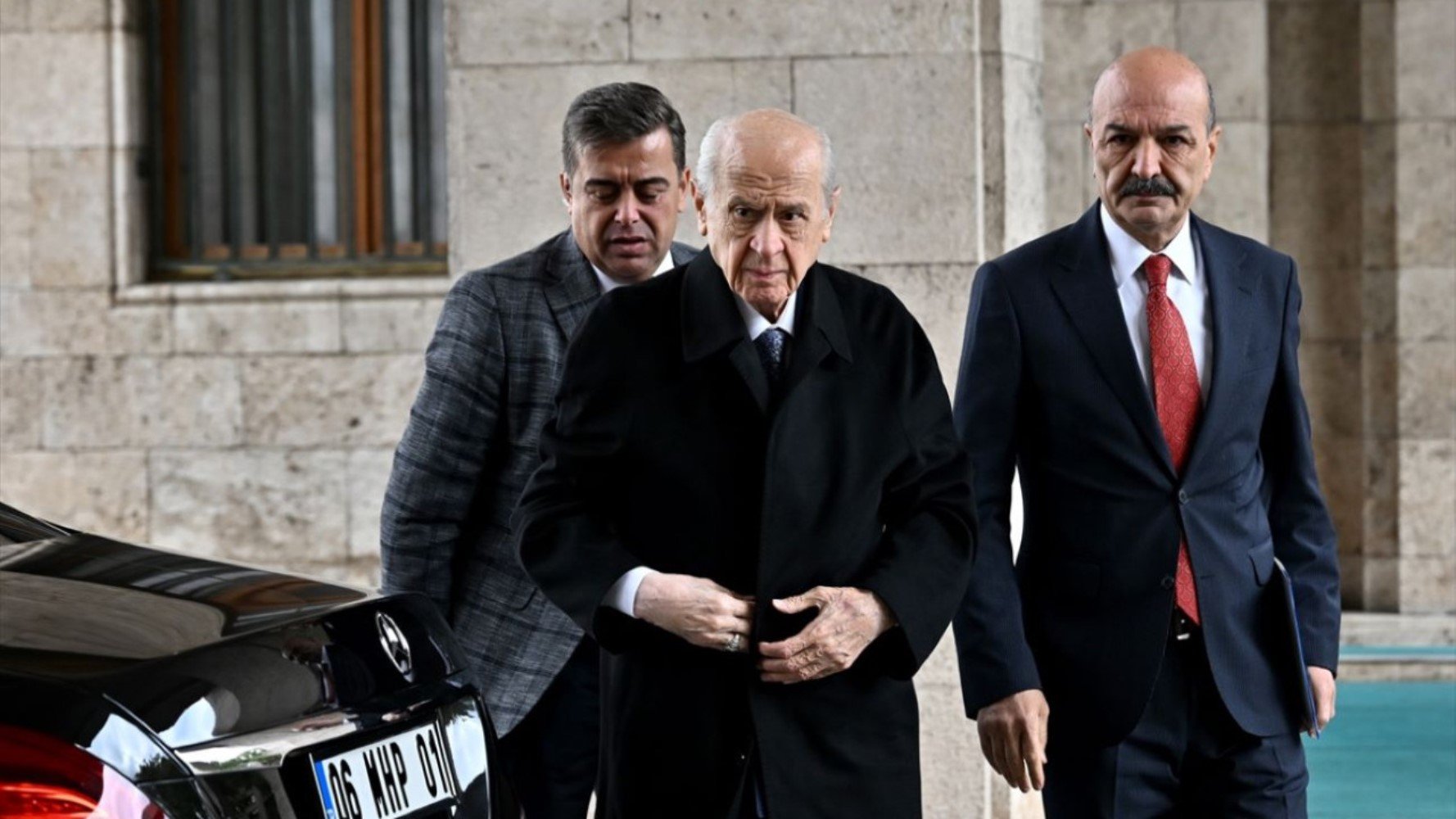
PİAR Research shared an analysis stating that after Bahçeli's call regarding Öcalan, his party lost 1.5 points and the AKP lost 2 points in the polls.
 9 / 12
The rate of undecided voters in the survey conducted by Piar Research drew attention. According to the survey, 24.2 percent of voters in Turkey are undecided.
 10 / 12
When undecided voters are distributed, the CHP's vote share rose to 30.7 percent, while the AKP's vote share rose to 30.1 percent.
 11 / 12
 12 / 12
News Source : 12punto