 1 / 4
1 / 4
Human fossils from the Late Quaternary period in East Asia show much more morphological diversity than previously thought.
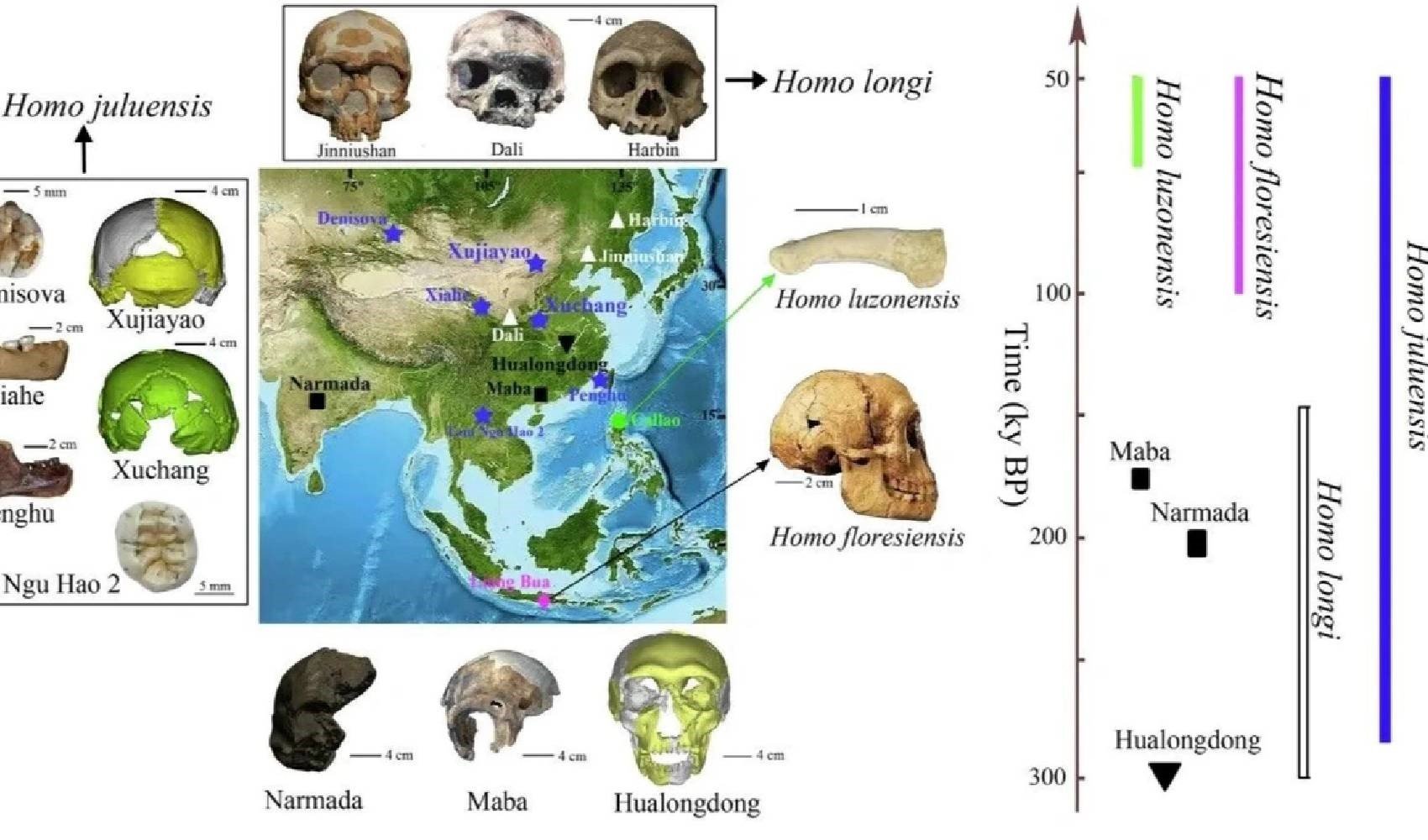
Recent research shows that fossils in this region reveal the existence of not just one, but multiple different human species. These new species include Homo floresiensis, Homo luzonensis, Homo longi, and the newest, Homo juluensis.
Archaeological excavations and detailed fossil analyses conducted over the last two decades have significantly increased our knowledge of human evolution in East Asia.
"THE FOURTH DISCOVERED HUMAN SPECIES"
Homo floresiensis, discovered on the island of Flores in Indonesia in 2004, is called a 'hobbit' due to its small size. Homo luzonensis was found on the island of Luzon in the Philippines in 2019. Homo longi, based on a fossil discovered in the city of Harbin, China, was defined in 2021.
 2 / 4
2 / 4
Homo juluensis, defined through the Xujiayao and Xuchang fossils in China, is found to be linked to Denisovans and other fossil groups.
"HOMO JULUENSIS: NEW HUMAN SPECIES DISCOVERED IN CHINA"
Archaeological researchers have defined a new human species they named Homo juluensis based on fossils found in the Xujiayao and Xuchang regions of northern China.
This discovery deepens our current knowledge of human evolution while allowing for a better definition of hominin diversity during the Middle Pleistocene period, approximately 300,000 to 50,000 years ago.
"THE MUDDLE IN THE MIDDLE AND THE DISCOVERY OF THE NEW SPECIES"
Homo sapiens evolved approximately 300,000 years ago and spread from Africa to Europe and Asia. However, the evolution of hominin species before modern humans still remains a mystery.
 3 / 4
3 / 4
In particular, debates continue regarding the classification of hominin species that existed between 700,000 and 300,000 years ago. These debates are referred to in the scientific world as 'The Muddle in the Middle.'
"NEW SPECIES DRAWS ATTENTION WITH ITS LARGE SKULL"
In 2023, Christopher Bae from the University of Hawaii and Xiujie Wu from the Chinese Academy of Sciences examined the hominin fossils found in Xujiayao and requested that these individuals be named Homo juluensis.
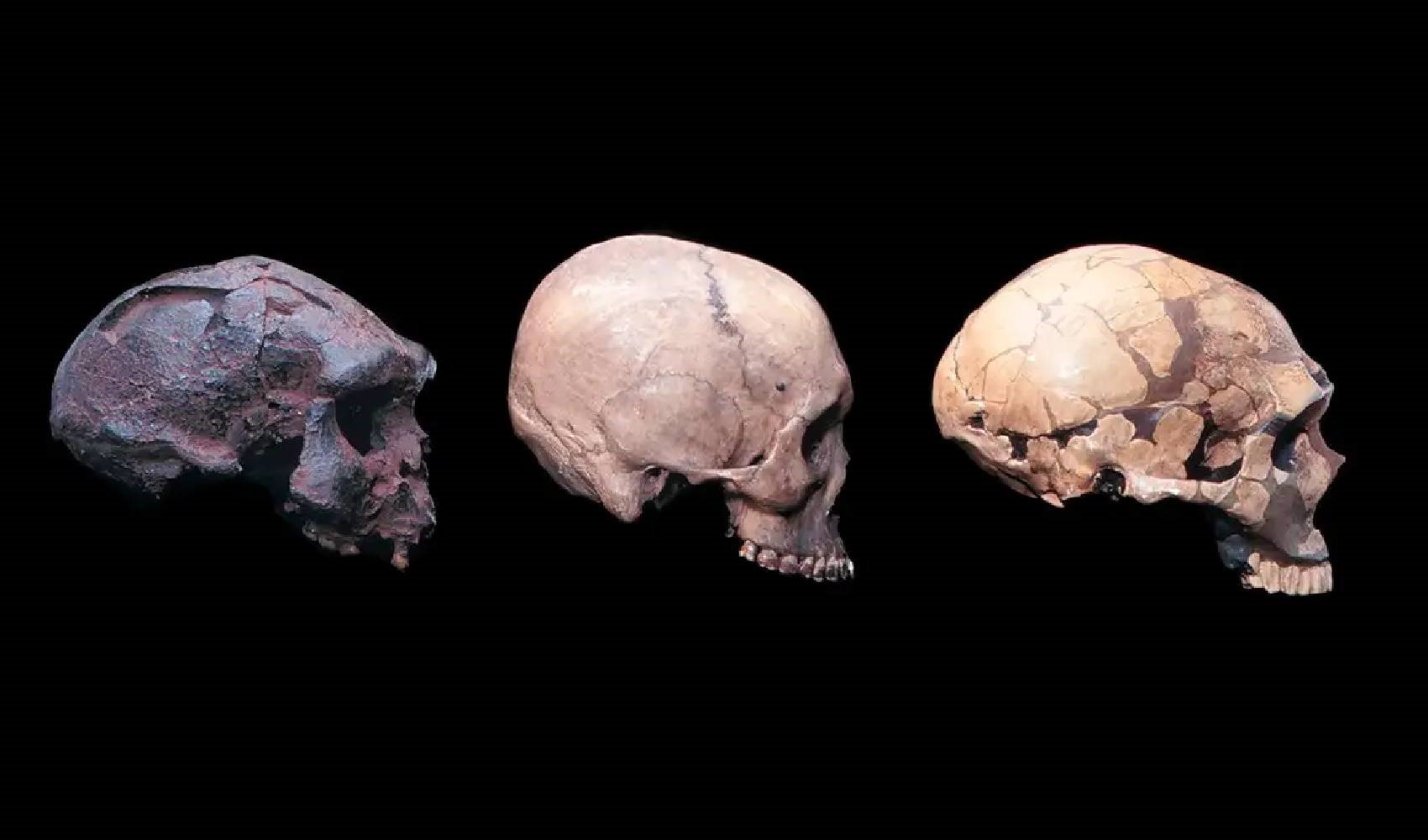
These fossils stand out with their large skulls, which carry features unique to modern humans, Denisovans, and Neanderthals.
"WHAT ARE THE CHARACTERISTICS OF HOMO JULUENSIS?"
The newly discovered species lived approximately 220,000 to 100,000 years ago and stands out with its large brain volume and thick bone structures. Excavations at Xujiayao yielded fossils belonging to 10 individuals and more than 10,000 stone tools.
 4 / 4
4 / 4
"EMERGED AS A RESULT OF GENETIC EXCHANGE BETWEEN DIFFERENT HUMAN SPECIES"
The characteristics of the fossils show that this population emerged as a result of genetic exchange between different hominin species and that hybridization played an important role in human evolution in Asia.
"THE SCIENTIFIC WORLD HAS NOT YET ACCEPTED IT"
Homo juluensis has not yet been accepted by the entire scientific world.
While Chris Stringer from the Natural History Museum in London states that this species could overlap with Homo longi, paleoanthropologist John Hawks from the University of Wisconsin argues that this naming will help better classify the fossil records.
Xiujie Wu, on the other hand, states that this new species naming clarifies the fossil records in Asia and facilitates scientific communication.
News Source : 12punto