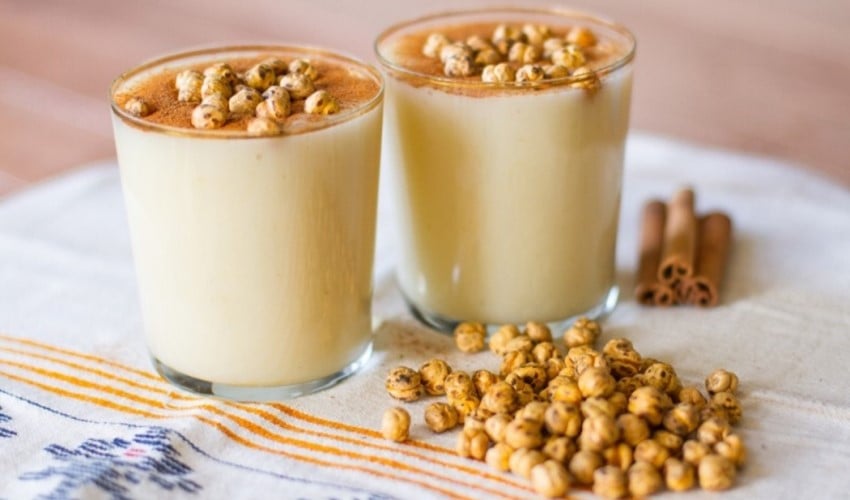
Boza first emerged 8-9 thousand years ago in Mesopotamia. The word originates from the Persian term “bûza/bûze”, and today, boza appears under similar names in many different languages.
The Greek historian Xenophon stated that at the end of 401 BC, boza was being made in Eastern Anatolia and, after being prepared, was buried in the ground in vessels made of potter's clay.
The Arab traveler Ibn Battuta, in his travelogue written in the early 14th century, describes boza as a fermented beverage consumed by Turks while recounting his time in the Desht-i Kipchak region where Turks resided.
THE HISTORY OF BOZA
- Evliya Çelebi reported that in the mid-17th century, there were more than 300 boza shops in Istanbul, employing around 1,100 boza makers.
- It is known that boza shops in the Ottoman Empire that fermented the drink excessively and added opium disappeared toward the 19th century.
- Today, boza is known and consumed as “Boza” or under names very similar to Boza in countries where Turks live or where they once held dominion. It is consumed under the name “Buha-merissa” in Crimea, the Volga region, the Caucasus, Turkestan, Hungary, the Balkans, Arab countries, and among many Black African tribes.
- It is made from millet or wheat flour in Crimea, millet in Kazan, coarsely ground rice flour in Turkestan, wheat groats among the Kyrgyz, millet among the Circassians, barley among the Yobol Turks, corn in Yugoslavia, and millet flour in Egypt.
- The beverage consumed by Romanians and Russians as “braga” can be defined as a type of boza made from yellow wheat, barley, or millet. Similarly, the drink Russians call “kvass,” made from barley or rye, is also very similar to boza.
News Source: 12punto