Assoc. Prof. Dr. Gökhan Alıcı, a Cardiology Specialist at the University of Health Sciences Adana City Training and Research Hospital, stated that the disease caused by a blockage in the carotid artery, commonly known as a "stroke," has become a significant health problem and is increasing every year alongside the aging population.
Alıcı stated that a stroke, defined as "a condition where brain cells in a region are destroyed after the circulation to that area of the brain is cut off for more than a few minutes, resulting in loss of vision, speech, or movement or sensation in certain parts of the body," is seen in approximately 200,000 people every year.
Emphasizing that the vast majority of risk factors for stroke, apart from genetic factors and advancing age, are preventable, Assoc. Prof. Dr. Gökhan Alıcı said, "Harmful habits such as tobacco products and alcohol are among the top risk factors for stroke as they increase plaque formation in the arteries."
Underlining that hypertension, diabetes (commonly known as sugar disease), high cholesterol, lack of physical activity, a sedentary lifestyle, and obesity—a natural consequence of the latter—constitute other risk factors, Assoc. Prof. Dr. Alıcı stated that dietary habits high in fat, sugar, and salt also increase the risk of stroke.
Stating that stroke is the most feared condition when it comes to carotid artery blockage, Alıcı warned, "Carotid artery blockage is the most important cause of permanent or temporary functional impairment in the neurological system of brain tissue. Out of our country's population of approximately 85 million, 200,000 stroke cases are seen every year," and continued as follows:
"Ischemic stroke is a condition that develops primarily due to the blockage of an artery or insufficient blood flow. Approximately 80 percent of strokes in the community are due to ischemia, and approximately 20 percent are due to bleeding caused by various reasons, primarily hypertension. The condition referred to as a blood clot to the brain stems from a blockage in the carotid artery."
Stating that everything that causes vascular occlusion also blocks the carotid artery, Alıcı said, "The vessels are the same everywhere, meaning the same risk factors apply. Advancing age, diabetes, hypertension, smoking, being male, a family predisposition to vascular disease, and high cholesterol. We modify these in treatment. That is, we try to eliminate the causes that lead to the blockage. The treatment we provide varies according to the accompanying risk factors."
Assoc. Prof. Dr. Gökhan Alıcı recalled that in the past, if there was a blockage above a certain percentage and it had left the patient paralyzed, the only treatment method was surgery, and continued:
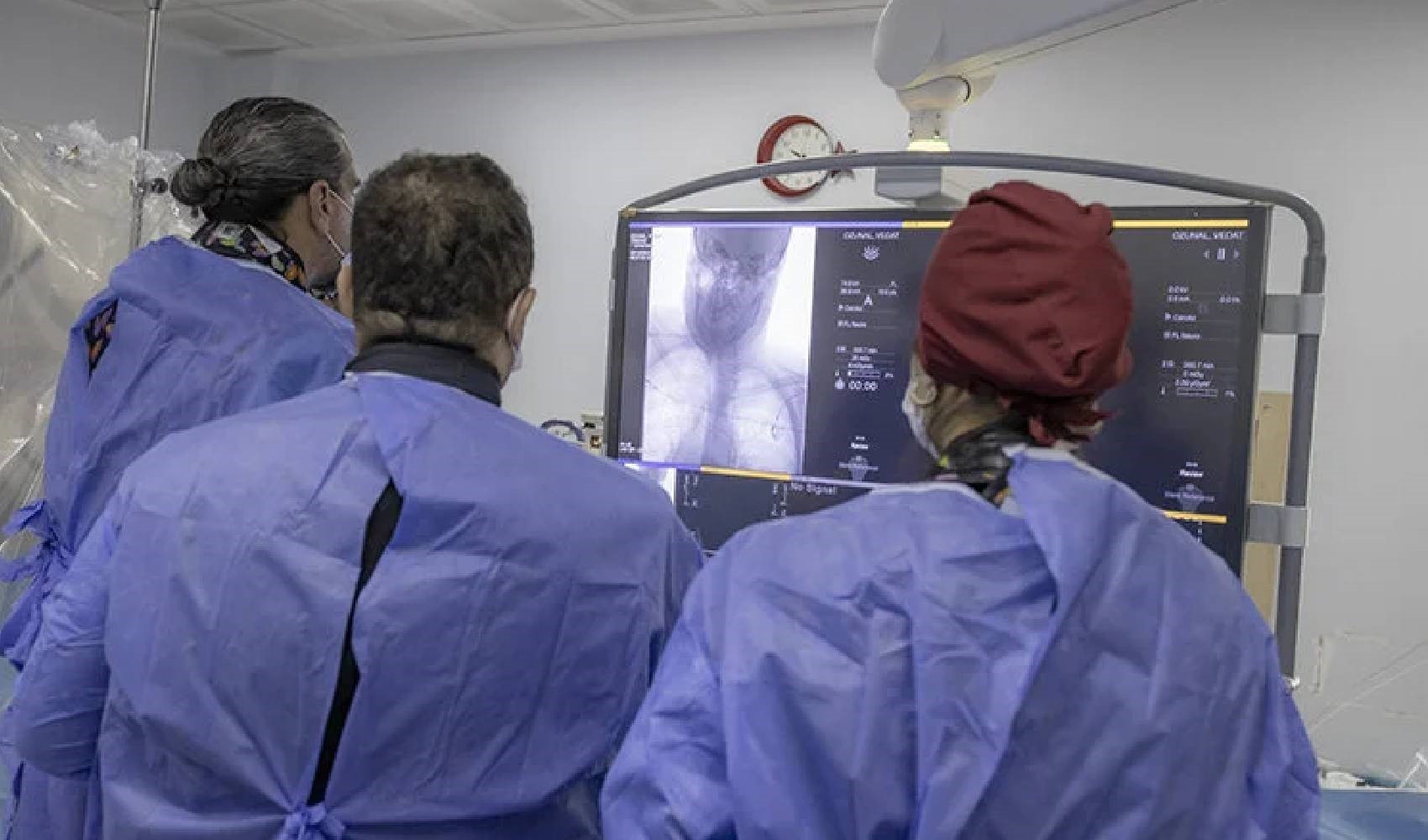
"However, we now perform stenting procedures. We place a stent in the blocked area and stabilize it to prevent clots from traveling. If the stenosis in the patient is not above 60 percent, we eliminate the risk factors. We do not recommend routine screening for everyone, but if the patient has many risk factors combined, we can measure the level of stenosis there with angiography or CT angiography."
Assoc. Prof. Dr. Alıcı also drew attention to the symptoms of sudden stroke cases and gave the following warnings:
"Loss of sensation and strength on one side of the body in the face, arm, or leg, confusion, difficulty speaking or inability to speak, unsteady walking, difficulty swallowing, vision loss that can develop in one or both eyes, and sudden onset of headache and dizziness can be signs of a stroke. For this reason, we advise patients to apply to the nearest health institution without delay when such symptoms occur."
Stating that whether full recovery is possible after a stroke is one of the most frequently asked questions by the public, Assoc. Prof. Dr. Alıcı said, "While there are many patients who receive stroke treatment and return to their normal lives, the determining factor here is the degree of damage to the brain. With early diagnosis and rapid intervention, we can prevent the progression of cell damage in the brain."
According to data released by the Turkish Statistical Institute (TÜİK) in 2023, 507,938 people lost their lives in 2020.
183,109 (36%) of these deaths were caused by cardiovascular system diseases.
In the same year, the number of recorded deaths from stroke was 35,880, which corresponds to 7.2% of all deaths and 19.6% of deaths caused by cardiovascular diseases.
According to this data, in 2020, one Turkish person was lost to stroke every fifteen minutes.
News Source: İHA