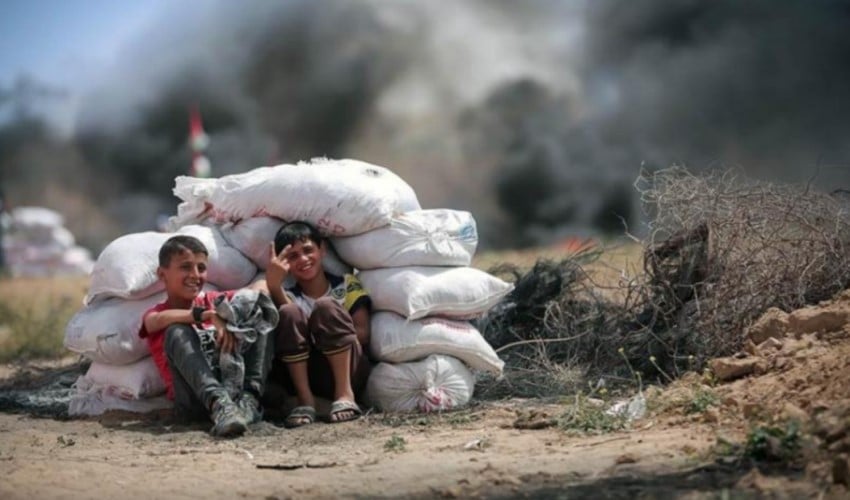
Hamas-Israel conflict continues, and the death toll in the region keeps rising. While the entire world reacts to the attack on the Al-Ahli Baptist Hospital in Gaza, which resulted in the deaths of many people, experts have drawn attention to the problems that may arise in the areas bombed by Israel in Palestine.
In addition to humanitarian losses and injuries in the region, it is pointed out that infectious diseases may break out due to many reasons such as the destruction of sewage systems and sewage flowing into the streets, problems caused by electricity and water cuts, the inability to collect garbage, and the inability to intervene for citizens with wounds.
The Ministry of Health in the Gaza Strip had also announced that they were concerned about the spread of epidemic diseases in the region, which Israel has been bombing since October 7. Dr. Fatma Çuhadar, an Infectious Diseases and Clinical Microbiology Specialist from Beykent University Hospital, and Internal Medicine Specialist Emel Yiğit Karakaş provided information regarding the health problems that may occur in the region.
'MAY LEAD TO INFECTIOUS DISEASES'
Stating that citizens in the region may face many health problems, Infectious Diseases and Clinical Microbiology Specialist Dr. Fatma Çuhadar said, “There is no water or electricity in the region, and buildings are destroyed. People are having difficulty accessing food under hygienic conditions; this situation may lead to various infectious diseases. Especially waterborne dysentery, amoebic dysentery, bacillary dysentery, cholera, various parasitic infections, giardiasis, and Hepatitis A and E infections may be seen.
It is highly likely that people cannot access vaccines for injuries; tetanus infections, wound infections, and related deaths will be seen because I do not think they have enough antibiotics on hand. Communal living conditions cause many infections to emerge; especially scabies outbreaks may be seen because people cannot wash themselves. Epidemics such as measles and chickenpox may emerge.
Meningitis, flu infections, and pneumonia outbreaks may occur. It will especially affect children under 5, the elderly, those with chronic diseases, and pregnant women. They cannot access their medication, they cannot have their examinations, and their follow-ups cannot be performed; these are also a problem. Access to clean water sources must be provided for these individuals. Crush syndrome is a separate issue; kidney disorders are already emerging, and its treatment is quite difficult even under normal conditions; we experience this in earthquakes and accidents. Ultimately, it will lead to sepsis and the person's death.
This is condemning those people there to death; in the long run, a person who cannot access anything, who cannot maintain their hygiene, and who cannot access food cannot live for a very long time. We are talking about a destroyed geography; houses are demolished, there is no water, no food. How long can they endure this life? They need to be moved to a safe zone as soon as possible,” she said.
'RESPIRATORY PROBLEMS ARE AT STAKE'
Stating that situations where hygiene conditions cannot be observed will cause many problems, Internal Medicine Specialist Emel Yiğit Karakaş said, “There is a very bad, heartbreaking conflict; one of the parties in the conflict, the people of Gaza, has no access to water or electricity, and they have no chance to escape. A person can survive dehydration for 3-5 days, and that is under the best conditions. Dehydration is a big problem for them; again, because there are no hygiene conditions where there is no water, the increase in infectious diseases is also a problem. It is said that water is obtained from wells, which creates a tendency for infectious diseases, and this is a very serious problem. Not only water, but they also have no access to food.
First aid and medical aid cannot reach Gaza; it is very difficult for them to struggle with these situations with their own means. Even if they survive the bullets and attacks, they will most likely be lost to septic shock within 3-5 days because open wounds are not intervened in a timely and sufficient manner. There is an increase in chemical gas levels in the air, which causes serious respiratory problems for them. Especially if there are children here, or those with asthma or chronic lung diseases, this means they will die from severe suffocation.”
'A LARGE POPULATION OF DISABLED PEOPLE AWAITS THE PALESTINIAN PEOPLE'
Continuing her words, Specialist Dr. Karakaş said, “We see that phosphorus bombs are being used. When war victims inhale this, an internal-to-external burning occurs, which absolutely cannot be stopped. If they survive the burning, they face liver and kidney failure. The situation they are in is very dramatic.
The World Health Organization and all people and physicians need to do something about this; we need to say stop to this war. This means that after their own stored water and food sources run out, a mass death will occur within at most 1 week. Even if we assume the war ended, a very large population of disabled people awaits the Palestinian people due to what has been experienced and physical injuries.
There will be organ injuries, some of which will be permanent. A community of disabled citizens will be in their lives. Similarly, there will be disabled citizens who will need lifelong health and medication support, perhaps due to the chemicals they were exposed to. Most importantly, considering that 40 percent of the population is under the age of 16, they will have children who have been exposed to a very large and very serious trauma," she said.
News Source: İHA