Obstetricians and gynecologists, along with physicians working at the Cancer Early Diagnosis, Screening and Training Center (KETEM), have made statements regarding prevention methods and screening programs for cervical cancer, one of the most common types of cancer in women worldwide.
Assoc. Prof. Dr. Erhan Aktürk, an obstetrician and gynecologist at Prof. Dr. Cemil Taşcıoğlu City Hospital, stated that cervical cancer, which is common among women and ranks among the preventable causes of death globally, is a significant public health issue.
Explaining that the incidence and mortality rates of this type of cancer in Turkey have decreased over the years thanks to cancer screening programs organized by the Ministry of Health, Aktürk noted that the World Health Organization (WHO) aims to eradicate cervical cancer by the year 2120.
Assoc. Prof. Dr. Aktürk stated that 99 percent of cervical cancer cases are caused by the sexually transmitted HPV virus and that this virus can be detected through certain screening methods, saying, "We can check for the presence of this virus in cells we collect from the cervix. A second method is the smear test. With a smear test, we can detect lesions before they progress to cancer or while the cancer is in a very early stage and easily treatable. If all women have these tests done at regular intervals, we can further reduce mortality rates."
Emphasizing that awareness must be raised and early precautions taken to protect women's health and quality of life, Aktürk stated that the number one precaution against this type of cancer is for women to know what cervical cancer is, how it is transmitted, to obtain information from reliable sources, and to inform those around them.
"THE EARLIER THE VACCINE IS ADMINISTERED, THE BETTER ITS PROTECTIVE EFFICACY"
Assoc. Prof. Dr. Aktürk pointed out that the second line of defense is vaccines, and continued as follows:
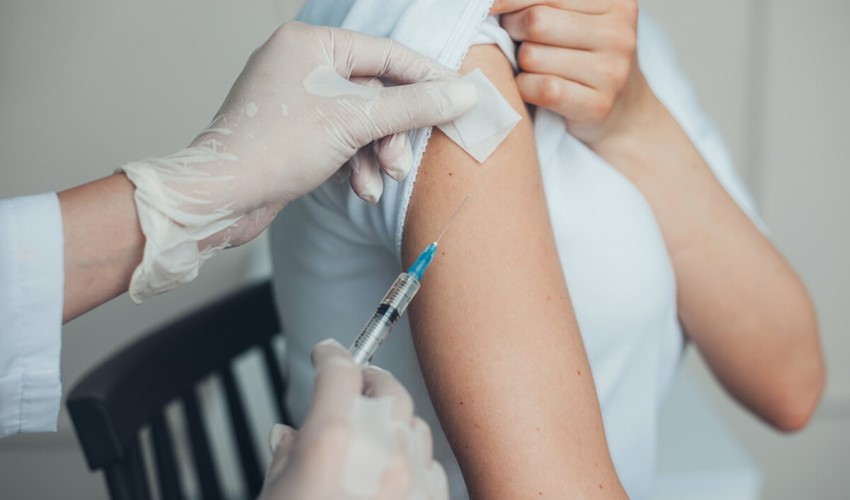
"These vaccines were created to prevent the HPV virus from progressing to cancer. The 9-valent vaccine is also available in Turkey. Seven types of HPV are responsible for 93 percent of cervical cancers. The vaccine contains these 7 types. There are also 2 types of HPV that cause what we call 'warts,' which are not cancerous but are uncomfortable. The vaccine also covers these. It is recommended for all women between the ages of 9 and 46. The target group is especially children between the ages of 9 and 14. The earlier it is administered, the better its protective efficacy, but this vaccine can be given up to the age of 46. It is administered in three doses."
Stating that there are some misconceptions among the public regarding the HPV vaccine, such as that it "causes infertility" or "kills," Aktürk said, "When you get this vaccine, you prevent 90 percent of (genital) warts and are 93 percent less likely to develop cervical cancer. The WHO aims for 90 percent of girls aged 15 worldwide to be vaccinated by 2030. This is a very important and highly emphasized issue."
Explaining that within the scope of the screening program in Turkey, a smear test is performed every 3 years and an HPV test every 5 years, which allows for early diagnosis and early initiation of treatment, Aktürk underlined that screening tests should not be neglected even if one has been vaccinated.
"CERVICAL CANCER SCREENING IS METICULOUSLY EMPHASIZED IN TURKEY"
Assoc. Prof. Dr. Aktürk pointed out that when HPV turns into cancer, it can lead to unfavorable outcomes, and listed the symptoms of the cancer as "increased heavy discharge, spotting or heavy bleeding depending on the stage of the disease, groin pain, and problems related to urination or bowel movements."
Explaining that there are treatment methods such as chemotherapy, radiotherapy, and surgery for cervical cancer depending on the stage of the disease, Aktürk noted that the risk of death is high in advanced stages of this type of cancer.
Assoc. Prof. Dr. Aktürk stated, "According to 2021 data for Turkey, among a female population of 43 million, there are 4-5 new cases per 100,000 annually. Globally, there are 600,000 new cases and 350,000 deaths per year. In Turkey, 1,300 deaths occurred in 2021 among a female population of 43 million. This is quite low compared to global figures. This is because cervical cancer screening is meticulously emphasized in Turkey within the framework of the National Cancer Screening Program, and the results are being achieved, with mortality rates decreasing."
Stating that screenings for cervical cancer can be performed free of charge at state institutions, Aktürk added that smear tests are taken in all public hospitals, and HPV screenings can be performed regularly every 5 years at Cancer Early Diagnosis, Screening and Training Centers (KETEM) and Family Health Centers (ASM).
THOSE WITH DETECTED HPV RISK DURING SCREENINGS AT KETEMS ARE REFERRED TO HOSPITALS
Dr. Ayşe Keleş, the physician in charge at the Dudullu KETEM (Cancer Early Diagnosis, Screening and Training Center) affiliated with the Ümraniye District Health Directorate, stated that screenings for cervical, breast, and colorectal cancers, as recommended by the WHO, are conducted at these centers within the scope of the National Cancer Screening Program.
Stating that they implement the HPV screening program for women aged 30-65 every 5 years against cervical cancer, Keleş expressed that by including individuals in this age range in the screening program, the development of cancer is prevented at an early stage and treatment is provided.
Regarding the participation rate in the screening program in Istanbul last year, Dr. Ayşe Keleş said, "Approximately 81,000 screenings were performed for cervical cancer in primary healthcare facilities in Istanbul. We need to reach more people who are in the early stages or have no symptoms at all."
Explaining that they do not make diagnoses at the center but rather determine whether a person is at risk, Keleş noted that if HPV positivity is detected in the cervical discharge sample they collect, the person is referred to a hospital for further examination and treatment.
Dr. Keleş noted that those who want to make an appointment at KETEM for screening can find information about the nearest center on the Ministry of Health's website and apply there directly, or they can create an appointment by phone or through the "Cancer Appointment System."
News Source: AA