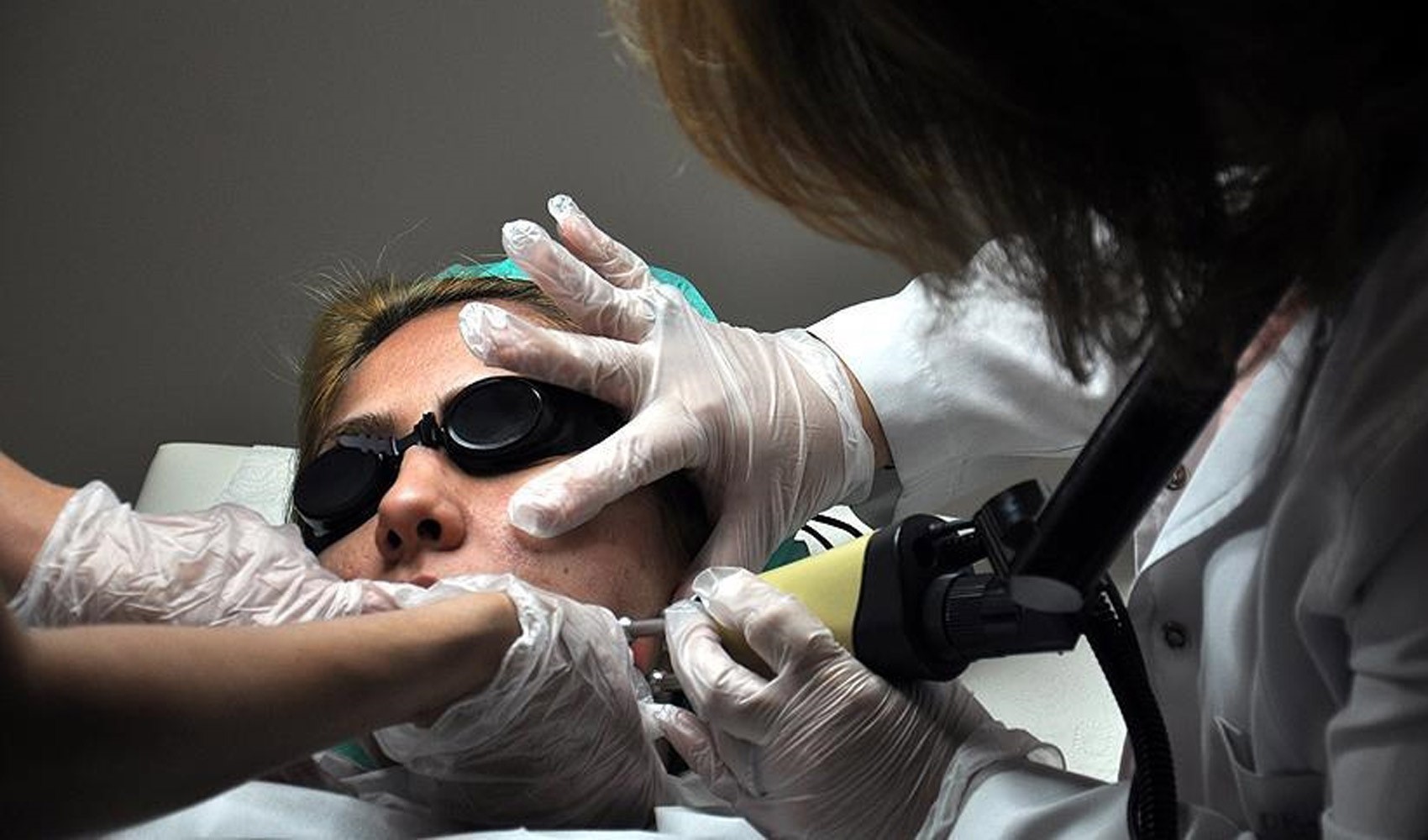
The importance of using sunscreen at every opportunity is emphasized to prevent skin damage and ensure proper protection from sun rays. Dermatologists, stating that the skin surface is sensitive, emphasize the importance of individuals checking their bodies from time to time.
Prof. Dr. Ayşe Esra Koku Aksu also stated that individuals should entrust their skin to experts. She said that moles on the body must be removed by surgical methods in capable hands and that practices such as mole removal in inappropriate locations should be avoided.
Prof. Dr. Aksu also provided information about melanoma, which is described as a malignant skin cancer that can be life-threatening. Stating that there is an increase in the incidence of melanoma, which occurs as a result of the uncontrolled proliferation of cells called melanocytes that give color to the skin, Prof. Dr. Aksu issued important warnings.
NON-PHYSICIAN INDIVIDUALS...
Dermatology Specialist Prof. Dr. Ayşe Esra Koku Aksu said, “Moles are usually small brown spots seen on our skin. We have cells called melanocytes that give color to our skin; moles form as these cells increase in number.
What causes them; for example, excessive exposure to the sun, genetic reasons. Mostly these moles are harmless, but rarely malignant transformation, the development of cancer called melanoma, can occur.
Moles can be confused with cancer, so after the age of 30-40, when a new mole appears or there is a change in an existing mole; in cases such as growth, change in diameter, darkening in color, or bleeding, it is necessary to consult a dermatology specialist.
Recently, we are encountering an increasing frequency of mole removal or non-physician individuals erasing moles. Unfortunately, this can lead to bad results. Before having a procedure done on a mole, it is necessary to consult a dermatology specialist because it can be confused with a malignant mole called melanoma. If we have a removal procedure done on a malignant cancer, it can spread to our body, so we must show it to a physician; it needs to be removed with a surgical procedure. Let's not say 'a mole has been on me for a long time, this is not bad'; there may be changes or deterioration in a mole that has been there for a long time.
Without understanding what the mole is, let's not apply any of these procedures such as removing moles at home with natural methods or laser removal without showing it to a physician; let's stay away from them. We see moles being tied with thread or pulled off; there can be risks such as catching an infection or irritating the skin, we definitely do not recommend it.
Everyone who has moles needs to check their body once a month. We need to look at our whole body with the help of a mirror, including places we cannot see like our back and buttocks. Making it a habit and applying our sunscreen 10-15 minutes before going out is very important. Using sunscreen regularly in summer and winter is important in preventing the development of melanoma," she said.
"THE RATE OF MELANOMA IS INCREASING GRADUALLY"
Stating that melanoma is a type of skin cancer that develops with the uncontrolled proliferation of cells that give color to the skin, Prof. Dr. Aksu continued her words as follows:
“The rate of melanoma is increasing gradually; it has started to appear among the most common cancers in recent times. While melanoma can be resolved with a surgical procedure when caught at an early stage, it may have spread to other organs if caught at a late stage. Catching it early is important; it can lead to more serious life-threatening results. Recently, many reasons such as the damage of ultraviolet rays and excessive exposure to the sun have caused an increase in the frequency of malignant melanoma. Therefore, these precautions are very important. We do not traumatize our moles in any way, we do not pull them off.
We act as sensitively as possible. Those with fair skin, colored eyes, red hair, those with a family history of skin cancer, and patients who have had sunburns or blistering burns in childhood are at higher risk for the development of malignant melanoma.
There is a belief among the public that 'if a knife touches it, it will get worse and spread'; in fact, when we remove a mole surgically, we are removing cells that are bad or have the potential to turn bad. Therefore, we prevent it from spreading. When a physician says it needs to be removed, they should have it removed without any worries. When we say malignant melanoma, these are formations that can develop from moles or can be confused with a mole when they first appear. It is actually malignant melanoma, but we might think it is a mole, or there may be a change in a mole we have had for years, it may start to grow, and malignant cells we call melanoma may have developed on it. We see an increase in its frequency; it is important to increase the level of public awareness here."
News Source: İHA