The Turkish Medical Association’s journal Toplum ve Hekim (Society and Physician) has once again shed light on the dire situation regarding measles in a review titled 'Measles Outbreaks in the World and in Turkey, Current Status of Vaccination,' written by Dr. Özgür Satılmış, Dr. Adem Albayrak, and Prof. Dr. Meltem Çöl.
VACCINE HESITANCY AND MIGRATION ARE CAUSING OUTBREAKS
Measles is a highly contagious childhood viral disease that can cause outbreaks. With the discovery of the vaccine in 1963, outbreaks and deaths decreased. Vaccinations have been administered in our country since 1970. However, outbreaks are occurring globally and in our country due to reasons such as vaccine refusal and migration. When the increasing measles cases in Turkey in recent years are examined, it is observed that the individuals are incompletely vaccinated.
CASE STATISTICS
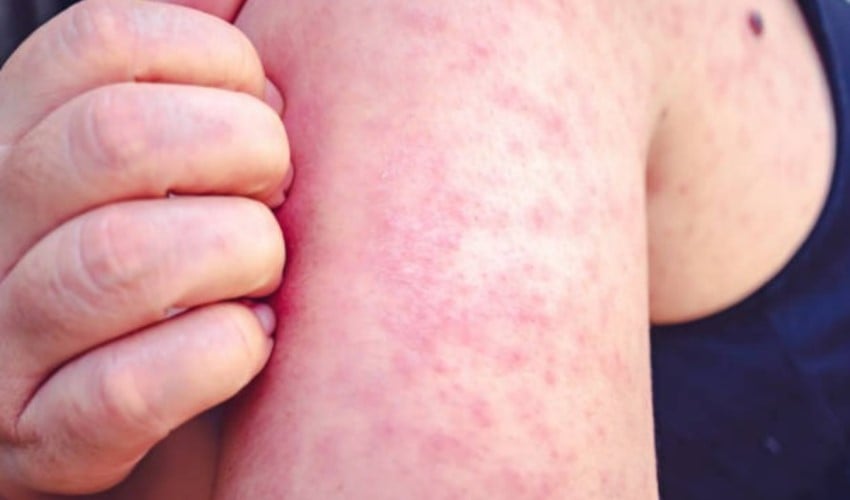
Measles presents with fever, cough, runny nose, conjunctivitis, and rash. The virus is transmitted through direct contact, droplets, droplet nuclei, and the airway. A measles patient can transmit the disease to 16-18 people. In unvaccinated populations, it causes outbreaks every 2-5 years. Measles has complications such as diarrhea, life-threatening pneumonia, middle ear infection, brain inflammation, and progressive chronic subacute sclerosing panencephalitis (SSPE). 1-5 percent of children who contract measles without being vaccinated die. It ranks first among the causes of childhood death, especially in countries with poor health conditions. It accounts for 7-10 percent of deaths under the age of five. Measles causes more deaths and illness in children under one year old and those over 20.
Measles cases globally and in our country were on a downward trend thanks to widespread vaccination. However, in recent years, factors such as deficiencies in vaccination services and the pandemic have reduced vaccination rates, leading to an increase in cases.
Furthermore, the reduced visibility of the risks of measles due to vaccination increases vaccine complacency. Increased human mobility due to migration also paves the way for outbreaks. For these reasons, measles vaccination remains important. Measles cases began to rise again in 2018. It peaked in 2019 with 2,892 cases.
VACCINATION RATES
Ongoing challenges such as irregular migration movements globally and in Turkey, the excessive burden placed on health services by the COVID-19 pandemic, lockdowns, travel restrictions, and the limitation of financial and human resources in addition to access to health products due to emergency response, as well as vaccine hesitancy and refusal, have led to a decline in vaccine coverage and basic vaccination rates.
To stop the circulation of the virus, community immunity (vaccination) must be above 95 percent. In 2022, the number of provinces with a first-dose measles vaccination rate above 95 percent declined to 40 (49 percent), reaching the lowest level in recent years.
The review listed the causes of the measles outbreak in our country one by one. To achieve measles elimination, it is necessary to achieve and maintain a high level of community immunity through routine immunization. Since the protective efficacy of the vaccine is at the 95 percent level, even if the entire population is vaccinated, the virus causes an outbreak if 5 percent of susceptible individuals are added to the population each year. For this reason, especially in countries where high and homogeneous vaccination cannot be achieved through routine immunization systems, additional vaccinations must be performed every two to four years depending on the quality of routine immunization.
Turkey has transformed from being a transit country from Asia to Europe into a permanent settlement region. The number of refugees and migrants in the world has increased from approximately 40 million to 108 million in the last 10 years. 52 percent of all migrants and refugees originate from Syria, Ukraine, and Afghanistan. According to official records, Turkey is the country hosting the most refugees in the world with 3.6 million. Sudden population movements due to reasons such as regional wars, terrorism, hunger, religious-ethnic-political oppression, poor economic conditions of countries, and climate change also cause problems in the field of health in geographies along migration routes.
Travel and sudden migration movements are also among the reasons for the spread of measles. Outbreaks occur and spread more easily because unvaccinated susceptible individuals coming from endemic regions stay together in areas without sufficient infrastructure and health facilities. Measles cases, which had been seen in small numbers for a long time in Turkey, appeared as outbreaks in 2013 and 2019 following the Syrian civil war that began in 2011, with the arrival of refugees and, after 2019, migrants from Afghanistan and Pakistan.
Another important reason is vaccine hesitancy and refusal. In a study examining vaccine hesitancy among WHO member countries, the risk/benefit dilemma linked to concerns about vaccine safety and side effects was identified as the most frequent reason. The second reason is the lack of information and awareness about vaccination and its importance. The third is cultural, religious, and socioeconomic reasons related to vaccines. As in the world, vaccine refusal is increasing in Turkey. The number of families who do not want to vaccinate their children rose from 183 in 2011 to 980 in 2013, 5,400 in 2015, and 12,000 in 2016. As of 2018, it reached 23,000. It was determined that 2 percent of children aged 12-23 months were never vaccinated, and only 50 percent of children aged 24-35 months had age-appropriate vaccinations. If vaccine refusals continue in our country, it is predicted that when vaccine refusal reaches 50,000 in about 5 years, the immunization rate will drop to 80 percent, and there will be increases in the frequency of vaccine-preventable diseases and outbreaks will occur.
In our country, while successes were achieved in vaccination rates, with the implementation of the Health Transformation Program under the AKP government, the rate of fully vaccinated children declined from 80.5 percent in 2008 to 74.1 percent in 2014. This shows that the effectiveness of primary health care services has decreased. The number of children who are not fully vaccinated increased by 77,694. Again, with the decrease in the public nature and quality of health services, the commercialization of health, and the replacement of scientific knowledge and value systems with personal opinions and beliefs, a decline in vaccination services occurred. This situation led to a problem of trust in health services in society and an increase in vaccine hesitancy and refusal.
The review made recommendations to improve the situation:
• Monitoring and evaluations of measles vaccine coverage surveillance should be carried out regularly.
• Children who are not registered in the family medicine information system, who have not been vaccinated on time, or who are incompletely vaccinated should be identified and their vaccinations should be completed.
• In regions where no cases are seen, the missing vaccinations of children should be rapidly completed starting from the 6th or 9th month.
• Routine measles vaccination should be continued, and additional doses of vaccines should be given to infants between 9-12 months.
• In places where outbreaks are seen, outbreak control vaccination should be carried out in light of epidemiological data, especially for children under 15 years of age.
• According to the measles elimination program and by launching vaccination campaigns, the vaccine coverage rate should be increased to over 95 percent in all provinces.
• An effective struggle should be waged to prevent vaccine refusal/hesitancy.
• Public authorities and officials should regularly share the vaccination rate data of the regions with the public.
• Refugee entry should be brought under control, and health checks, measles, and other missing vaccinations of identified migrants should be carried out as soon as possible.
News Source: 12punto