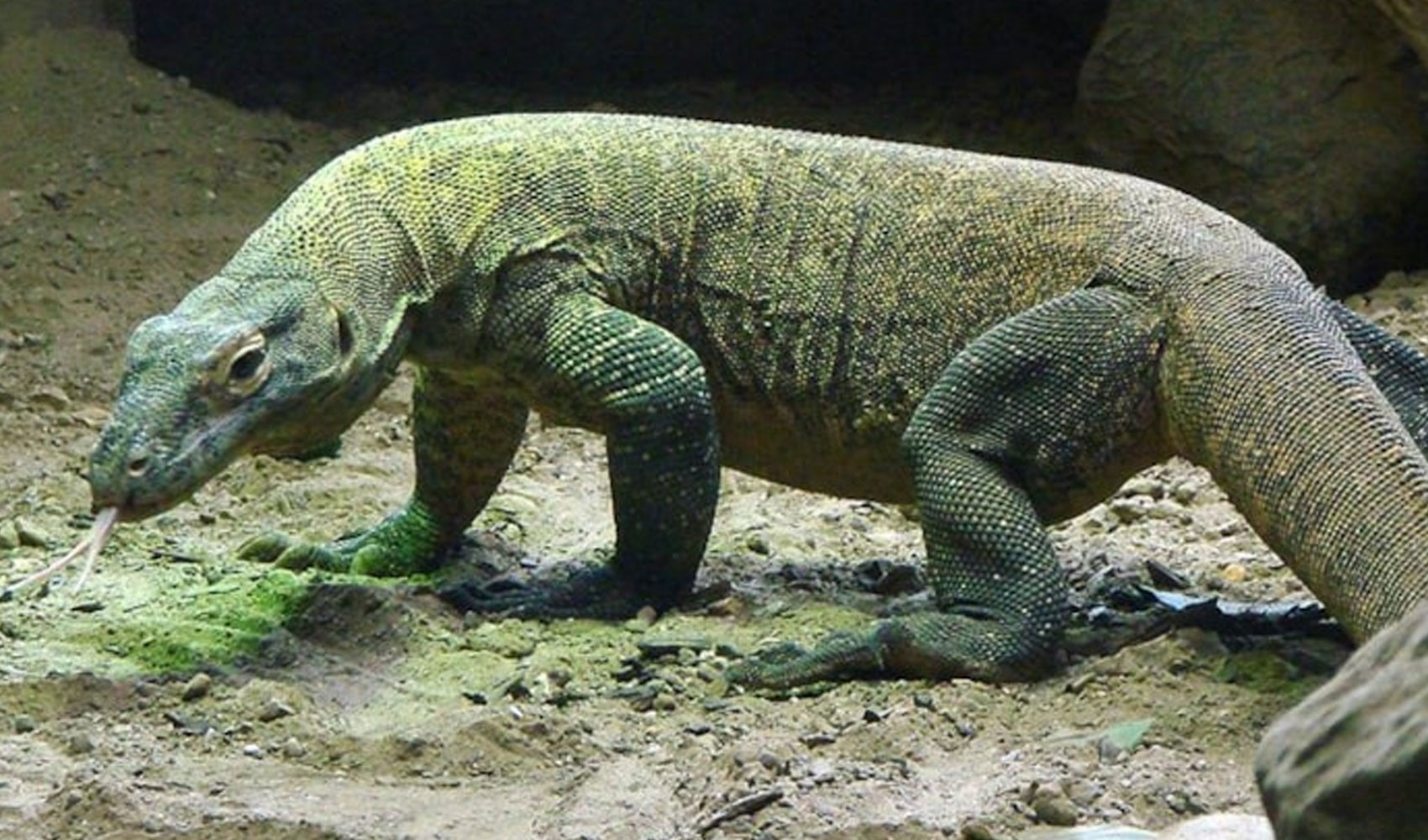
Scientists have determined that the serrated tips of Komodo dragon teeth are coated with a layer of iron that helps them easily tear apart their prey.
Researchers from King's College London in the UK have reached new findings regarding the teeth of the Komodo dragon, which is considered the world's largest lizard, using advanced chemical and structural imaging techniques.
As a result of their examinations, scientists revealed that the serrated parts located at the tips of the species' teeth are covered with a layer that is quite rich in iron.
Stating that a certain amount of iron is also found in the teeth of many reptiles, including monitor lizards and some crocodile species, the researchers noted that this layer is concentrated at the tips of the Komodo dragon's teeth—unlike other reptiles—which stains the teeth orange and helps maintain their sharpness.
Scientists pointed out that this feature helps the Komodo dragon easily tear apart its prey, emphasizing that this has not been detected in any other carnivorous reptile before.
Komodo dragons are found in the world only in the national park in Indonesia that bears the same name as the species, as well as on Flores and some other islands.
According to data from the International Union for Conservation of Nature, only 3,458 Komodo dragons remain in the wild.
The reptiles, which can reach lengths of 3 meters and weights of up to 90 kilograms, are under threat due to human activities and climate change destroying their habitats.
The details of the study were published in the journal "Nature Ecology & Evolution".
News Source: AA