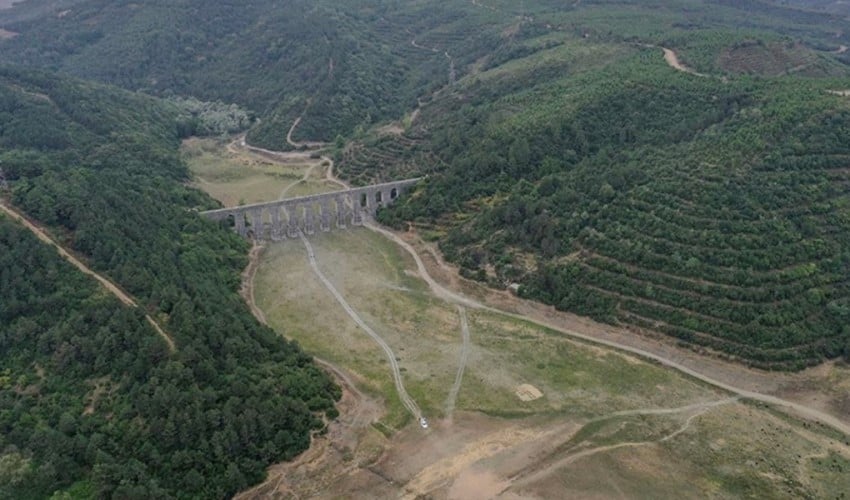
It is reported that the occupancy rate in Istanbul's dams is around 70 percent and the average daily water consumption is approximately 3 million cubic meters. This high water demand is causing Istanbul's groundwater resources to sound the alarm.
CONSIDERED WATER-POOR
According to the report by Ceyda Ulukaya from Milliyet, Prof. Dr. İrfan Yolcubal from Istanbul Technical University Geological Engineering stated that there are 25 water basins across Turkey, and the Marmara Water Basin, which includes Istanbul, is currently considered water-poor.
Yolcubal emphasized that groundwater plays a critical role and that backup systems must be in place in the event of a possible major disaster or drought. "The safe water source we can use in the first instance is groundwater. Therefore, we must not disrupt the groundwater reserve areas in the city, and we must not open them to urbanization and industrialization. The majority of the resources are located in the north of Bakırköy, Büyükçekmece, and Silivri, and on the Şile side," he said.
Yolcubal also stated that illegal wells consuming groundwater must be combated and that water should be collected through rainwater harvesting on roofs and used in areas such as garden irrigation. "Water recovery and its use for recharging groundwater by being purified repeatedly must be ensured," he added.
Cüneyt Gerek, a former DSI executive from the Water Policy Association, stated that groundwater cannot be recharged due to the increase in concrete structures in Istanbul linked to urbanization. "On average, 25 percent of precipitation needs to seep underground. However, precipitation that meets concrete and asphalt on the surface unfortunately has no chance of seeping underground. We need to plan sponge cities to benefit from precipitation at the maximum level. A second alternative is underground dams," he said.
News Source: 12punto