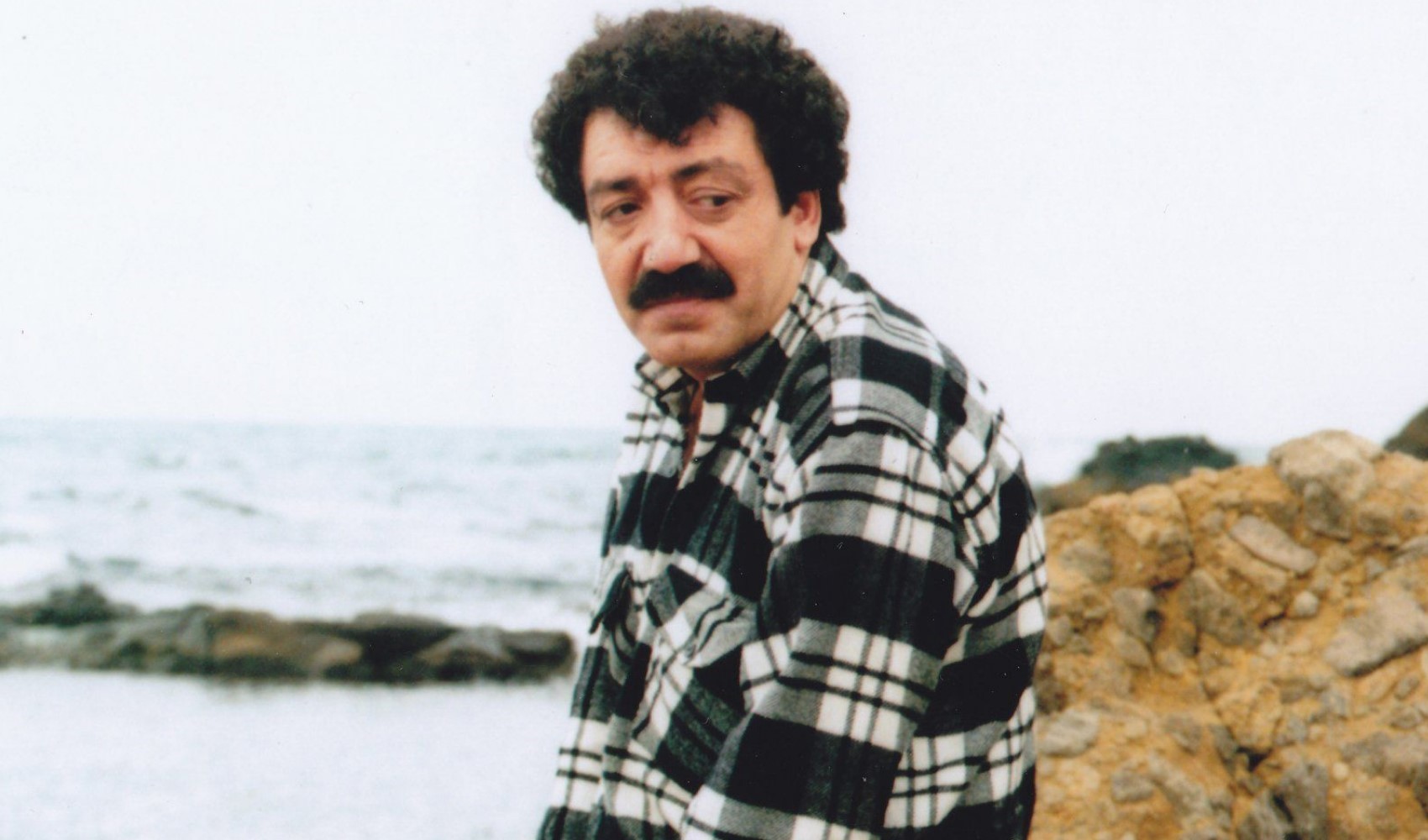
It has been 11 years since the passing of the arabesque and folk music artist known as the 'Father of Arabesque' or 'Müslüm Baba', Müslüm Gürses.
The artist, whose real name was Müslüm Akbaş, was born on May 7, 1953, in the village of Fıstıközü in the Halfeti district of Şanlıurfa, as the first child of agricultural workers Mehmet and Emine Akbaş.
Gürses, who had two siblings named Zeyno and Ahmet, saw his family migrate to Adana
when he was 3 years old due to economic hardships. After primary school, Müslüm Gürses could not continue his education and worked for a time as a shoe repairman and in a tailor shop.
HE ENTERED A COMPETITION AT AGE 14
Despite his father's opposition, with his mother's support, he participated in a singing competition held at a tea garden in Adana in 1967 at the age of 14, where he drew attention by winning first place.
The master artist began using the surname "Gürses" after the competition while also starting to take music lessons at a public education center.
After receiving an offer, he sang folk songs at a tea garden for a short time, but had to return to tailoring when business did not go well.
In a statement regarding his early years in music, Gürses said, "I finished primary school. There is nothing more. I sang 'uzun hava' (a type of folk song) while sleeping on the roof in Adana. My friend was going to the community center. I went too. Then I became an artist at Çukurova Radio." he had stated.
HIS FIRST RECORD: EMMİOĞLU / OVADA TAŞA BASMA
After the headliner Sadık Altınmeşe, who performed at a casino in Adana, fell ill, the artist took the stage in his place, received great interest, and never let go of the microphone again.
While giving concerts at various venues in Adana, Müslüm Gürses also sang folk songs live on TRT Çukurova Radio every Saturday starting in 1967.
The artist, who released his first 45-rpm record "Emmioğlu/Ovada Taşa Basma" in 1968, began to rise rapidly on the career ladder.
The artist experienced a great shock on May 29, 1969, when his father killed his mother. According to one claim, his father, who also killed Gürses' sister Zeyno Akbaş on the same day, was sent to prison.
The famous artist, who never wanted to talk about this point in his life, recorded two 45-rpm records in Istanbul, where he came after his mother's passing: "Giyin Kuşan Selvi Boylum/Hayatımı Sen Mahvettin" and "Gitme Gel Gel/Haram Aşk".
Gürses managed to reach large audiences with his song "Sevda Yüklü Kervanlar," and his 45-rpm record "Sevda Yüklü Kervanlar/Vurma Güzel Vurma" broke the record of the era with 300,000 copies pressed.
The artist, who completed his military service in Mamak, brought many records featuring compositions by Burhan Bayar to his fans after finishing his national duty.
HE ACHIEVED HIS SECOND BREAKTHROUGH IN THE 1990S
Müslüm Gürses had a traffic accident in 1978 while returning from Tarsus to Adana for an Anatolian tour. In the accident where the driver lost his life, Gürses, who was taken to the morgue after being presumed dead, was discovered to be alive at the last moment and was taken into surgery.
In the accident, the artist's forehead was seriously damaged, and a plate was inserted into his head to protect his brain. Gürses lost his sense of smell due to the accident. His hearing was also seriously damaged, and the artist began to speak slowly.
The master artist achieved his second major breakthrough in the music world in the early 1990s with the albums "Özür Diliyorum Senden," "İsyankar," and "Ben İnsan Değil miyim?"
Gürses, who kneaded his art with the pain he experienced, tried to be the voice for the feelings of those who felt hopeless and helpless in his songs. In an interview, he expressed the difference between himself and Orhan Gencebay by saying, "Orhan brother is our master. Orhan Gencebay says, 'It has come this way, it will not go this way.' We, on the other hand, say, 'It has come this way, it will go this way.'"
HE CROSSED HIS BOUNDARIES WITH 'AŞK TESADÜFLERİ SEVER'
In addition to his album "Gönül Teknem," Müslüm Gürses released his collaborative project with author Murathan Mungan, the album "Aşk Tesadüfleri Sever," in 2006 and presented it to music lovers.
The artist, who interpreted lyrics written by Mungan to compositions by many foreign musicians including David Bowie, Bjork, Bob Dylan, and Leonard Cohen, sang a Haris Alexiou song with Sezen Aksu on the album.
The unforgettable name added some pop and rock style songs to his repertoire in the final years of his life, performing works such as Bülent Ortaçgil's "Sensiz Olmaz," Nilüfer's "Olmadı Yar," Teoman's "Paramparça," Tarkan's "İkimizin Yerine," Şebnem Ferah's "Sigara," and Kenan Doğulu's "Tutamıyorum Zamanı," and signed off on the albums "Sandık" in 2009 and "Yalan Dünya" in 2010.
HE MADE DOZENS OF ALBUMS AND RECORDS
While four different albums titled "Müslüm Gürses" were released between 1975-1978, he released "Öldürdüğün Yetmedi mi" in 1976, "Gazla Şoför" and "Bağrıyanık" in 1979, "Umutsuz Hayat" and "Esrarlı Gözler" in 1980, "Mutlu Ol Yeter" in 1981, "Müzik Ziyafeti" and "Tanrı İstemezse" in 1982, "Anlatamadım" and "Dertliler Meyhanesi" in 1983, "Yaranamadım" in 1984, "Güldür Yüzümü" and "Gitme" in 1985, "Sevda Yolu," "Yıkıla Yıkıla," "Küskünüm," "İlk Aşkım Son Sevgilim," and "Hayatımı Sen Mahvettin" in 1986, "Farketmez" and "Talihsizler" in 1987, "Aldatılanlar," "Dertler İnsanı," "Vefasız Alem," and "Maziden Bir Demet" in 1988, "Arabeskin Devleri," "Bir Fırtına Kopacak," "Bir Kadeh Daha Ver," "Mahsun Kul," and the "Müslüm Gürses Concert" album in 1989, "Meyhaneci / Kırık Sazım," "Hüzünlü Günler," "Arkadaş Kurbanıyım," and "Güle Güle Git" in 1990, "Bir Bilebilsen / Zalim," "Sen Nerdesin Ben Nerdeyim," "Yüreğimden Vurdun Beni," "Bir de Benden Dinleyin," "Her Şey Yalan," and "Yaşamalısın" in 1991, "Müslümce 92" in 1992, "Ah Gülüm," "Dağlarda Kar Olsaydım," and "Kralların Müzik Şöleni" in 1993, "Senden Vazgeçmem" and "İnsaf - Kahire Resitali" in 1994, "Benim Meselem" and "Bir Avuç Gözyaşı" in 1995, "Topraktan Bedene" and "Şiirlerim Şarkılarım" in 1996, "Sultanım," "Usta - Ne Yazar," and "Nerelerdesin" in 1997, and "Müslüm Gürses Klasikleri" in 1998.
The artist, whose albums "Arkadaşım," "Garipler," and "Vay Canım" met with music lovers in 1999, also released "Biz Babadan Böyle Gördük" and "Zavallım" in 2000, "Müslümce Türküler," "Sadece," "Yanlış Yaptım," and "Dünya Yalan" in 2001, Open Air Concert albums 1, 2, 3, "Müslüm Baba ile Yolculuk," and "Paramparça" in 2002, "Yanarım" and "İkimizin Yerine" in 2003, "Uyanma Zamanı" in 2004, "Ayrılık Acı Bir Şey" and "Bakma" in 2005, "Gönül Teknem" and "Aşk Tesadüfleri Sever" in 2006, "Sandık" in 2009, "Yalan Dünya" in 2010, "Veda - Ervah-ı Ezelde" in 2013, and "Baba Şarkılar 1-2" in 2013 and 2014.
HE ACTED IN 38 FILMS
Müslüm Gürses also stepped into Yeşilçam during the period when the arabesque craze was rising. Gürses, who acted in 38 films, most of which featured songs and folk music, first appeared in front of the camera with the 1979 film "İsyankar."
The artist, who generally acted in films dealing with the painful life stories of young people driven to crime and mired in alcoholism, also appeared as a supporting actor in comedy films in the final period of his career.
The artist acted in the films "Bağrı Yanık," "İtirazım Var," "Hasret," "Kul Sevdası," and "Zeytin Gözlüm" in 1980, "Mutlu Ol Yeter" in 1981, "Anlatamadım" in 1983, "Ağlattı Kader," "Bir Yıldız Doğuyor," "Çare Sende Allah'ım," "Garibanlar," and "Sev Yeter" in 1984, "Güldür Yüzümü," "İkizler," "Kul Kuldan Beter," and "Yaranamadım" in 1985, "Beleşçiler," "Çığlık," "Seher Vakti," "Töre," "Yıkıla Yıkıla," "Kader Rüzgarı," "Kısmetin En Güzeli," and "Küskünüm" in 1986, "Oğlum" and "Talihsizler" in 1987, "Yalnızlık Korkusu" in 1988, "Dertler İnsanı" and "Dünya Boştur" in 1990, "Sevmemeli" in 2000, "Bir Akıllı Bir Deli," "Muhabbet Kuşları," and "Ömerçip" in 2002, "Balans ve Manevra" in 2005, "Amerikalılar Karadeniz'de 2" in 2006, "Esrarlı Gözler" in 2008, and "Şov Bizinıs" in 2011.
HIS GREATEST SUPPORTER WAS MUHTEREM NUR
The artist, who first met cinema actress Muhterem Nur on a Malatya tour in 1982 and had an argument about "who will go on stage first," never left Nur's side after this incident.
It is said that Gürses, who united his life in 1986 with Muhterem Nur, whom he had admired greatly and whose films he never missed in his childhood, composed the song "Esrarlı Gözler" for Muhterem Nur. Nur, who was in a very popular position in Turkish cinema at that time, ended her artistic life at her husband's request and became the greatest supporter in Gürses' life.
Müslüm Gürses, in a statement about his wife, said, "I don't rely on every person, but Muhterem Hanım is not of this world. If I have reached some places today, Muhterem Hanım has a 90 percent share in it," while Muhterem Nur stated, "I wasn't living before him. I understood being happy, peace. If one day my eyes don't see, my feet don't hold, and my arms don't lift up to help him, then I will leave Müslüm alone." she had declared.
HE FIT 78 ALBUMS INTO HIS 44-YEAR CAREER
Throughout the majority of his approximately 44-year career, Gürses, who signed off on several albums almost every year and released a total of 78 albums, managed to earn the respect of musicians and music lovers of all genres, even though he was exposed to criticism throughout his life that he made "neighborhood" or "slum" music.
The master artist was taken to intensive care due to lung and heart failure after a by-pass surgery he underwent on November 15, 2012.
The artist, who remained in intensive care for four months, was connected to a ventilator. Müslüm Gürses passed away on March 3, 2013, at the İstanbul Memorial Hospital where he was being treated, and his funeral was buried in Zincirlikuyu Cemetery.
The film "Müslüm," which brought the life of Gürses, known for his humble character, to the silver screen, presented many unknown aspects of the artist to cinema lovers in 2018, starting from his childhood in Şanlıurfa to his discovery in Adana and his rise to stardom in Istanbul.
News Source: AA