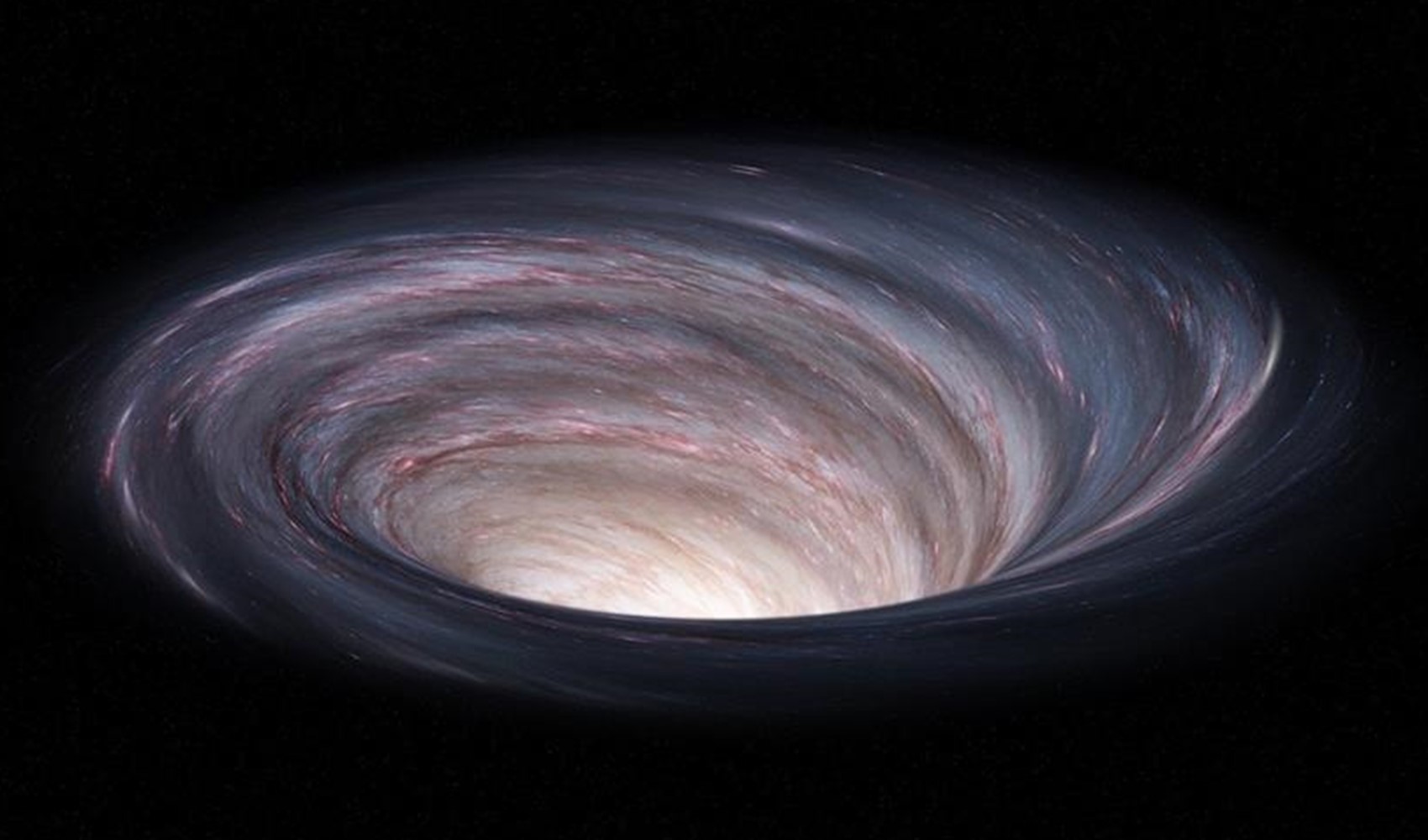
Astronomers have created a new map of the universe containing 1.3 million supermassive black holes.
According to a report by Cosmos Magazine, astronomers utilized quasars—hot, turbulent masses of gas and dust that are among the brightest objects in the universe and are powered by supermassive black holes ranging from 100 thousand to 10 billion times the mass of the Sun.
Using data obtained from the European Space Agency's (ESA) Gaia Space Telescope, astronomers created the map of 1.3 million supermassive black holes by leveraging the quasars that Gaia captured in the background while it was mapping stars in the Milky Way Galaxy.
Professor David Hogg from New York University, one of the scientists who created the map, stated that their catalog is different from all previously created catalogs because it shows a 3D map of the largest volume of the universe.
Hogg remarked, "This is not the catalog with the most quasars or the best quality quasar measurements, but it is a catalog that maps the largest volume of the universe."
Noting that the quasar catalog serves as a good example of how productive astronomical projects can be, Hogg shared the assessment, "Gaia was designed to identify stars in our own galaxy, but it also found millions of quasars. This gave us a map of the universe."
The research paper, which is expected to help astronomers better understand the evolution of the universe, was published in the Astrophysical Journal.
News Source: AA