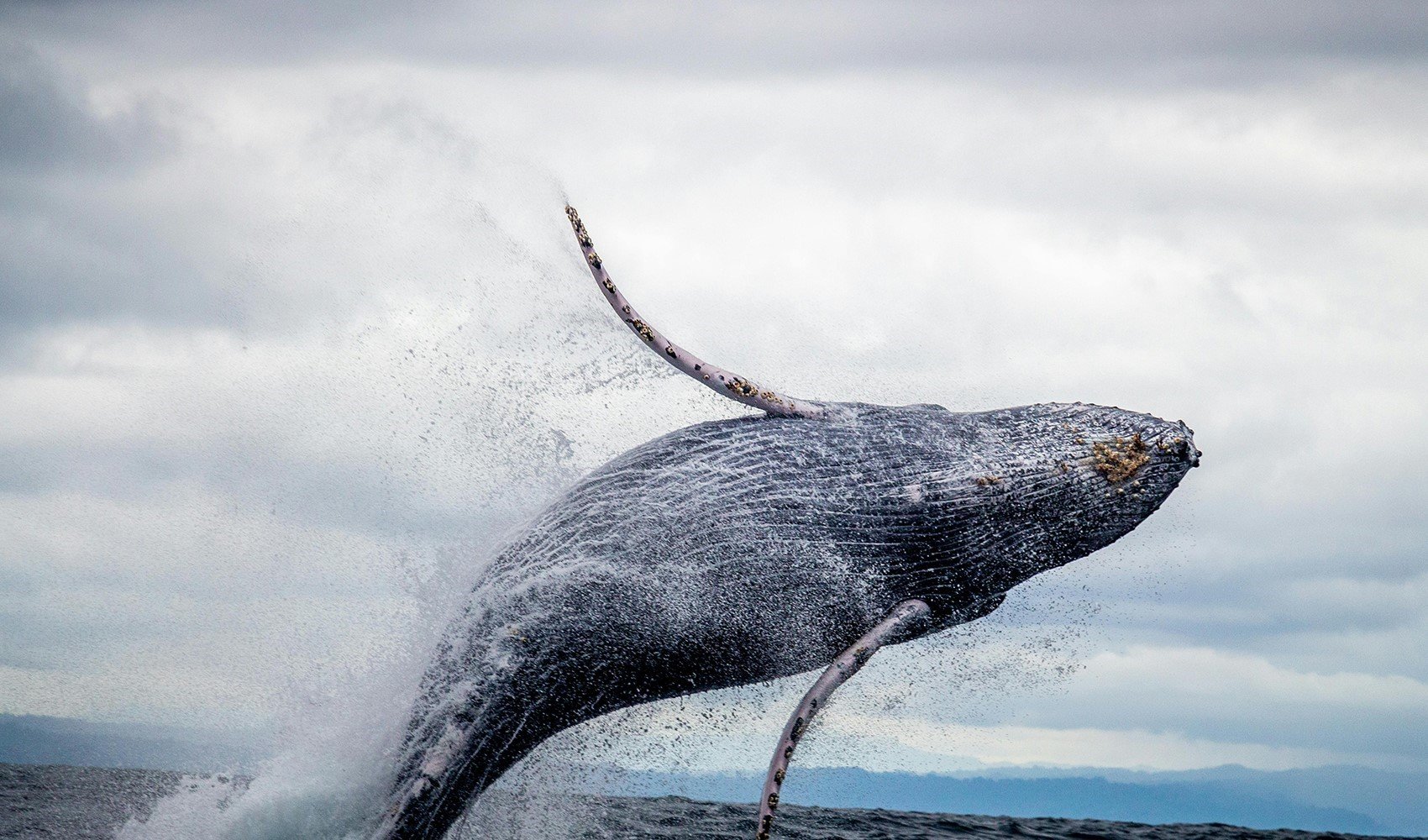
Scientists, in their research on whale species whose females go through menopause, found that these whales live longer than others and therefore can care for their families for a longer time.
Scientists sought to understand the reasons for menopause in the evolutionary process, which is seen only in humans and a small number of marine mammals.
From an evolutionary perspective, stopping reproduction while still halfway through one's lifespan was determined to be an extraordinary choice.
It was observed that in nature, many species try to pass their genes to subsequent generations by reproducing until they die.
Sam Ellis from the University of Exeter stated that in some whale species, menopause provides a longer lifespan and that mothers and grandmothers who stop reproducing continue to care for their families as follows: “This is similar in humans. Our reproductive years are almost the same as our closest primate relatives, but our lifespan is much longer than theirs.”
It was announced that this research, published in the journal Nature, is the latest link in scientists' efforts to shed light on this mystery.
A team from the University of Exeter examined the lifespans of 32 whale species.
It was determined that narwhals, belugas, short-finned pilot whales, killer whales, and false killer whales, whose females go through menopause, live on average 40 years longer than other toothed whales. In this way, they increase the survival chances of their offspring and their offspring's offspring by dedicating more time to them.
Additionally, it was found that they expend less energy by stopping reproduction at a certain age.
Another finding by the scientists was that species with tight family bonds and complex social structures go through menopause.
Professor of Population and Health Rebecca Sear from the London School of Hygiene & Tropical Medicine, while commenting on the research results, noted: “This research on whales shows that similar selection processes may be at work in humans, whereby intergenerational reproductive competition can be replaced by helpful grandmothers.”
News Source: BBC