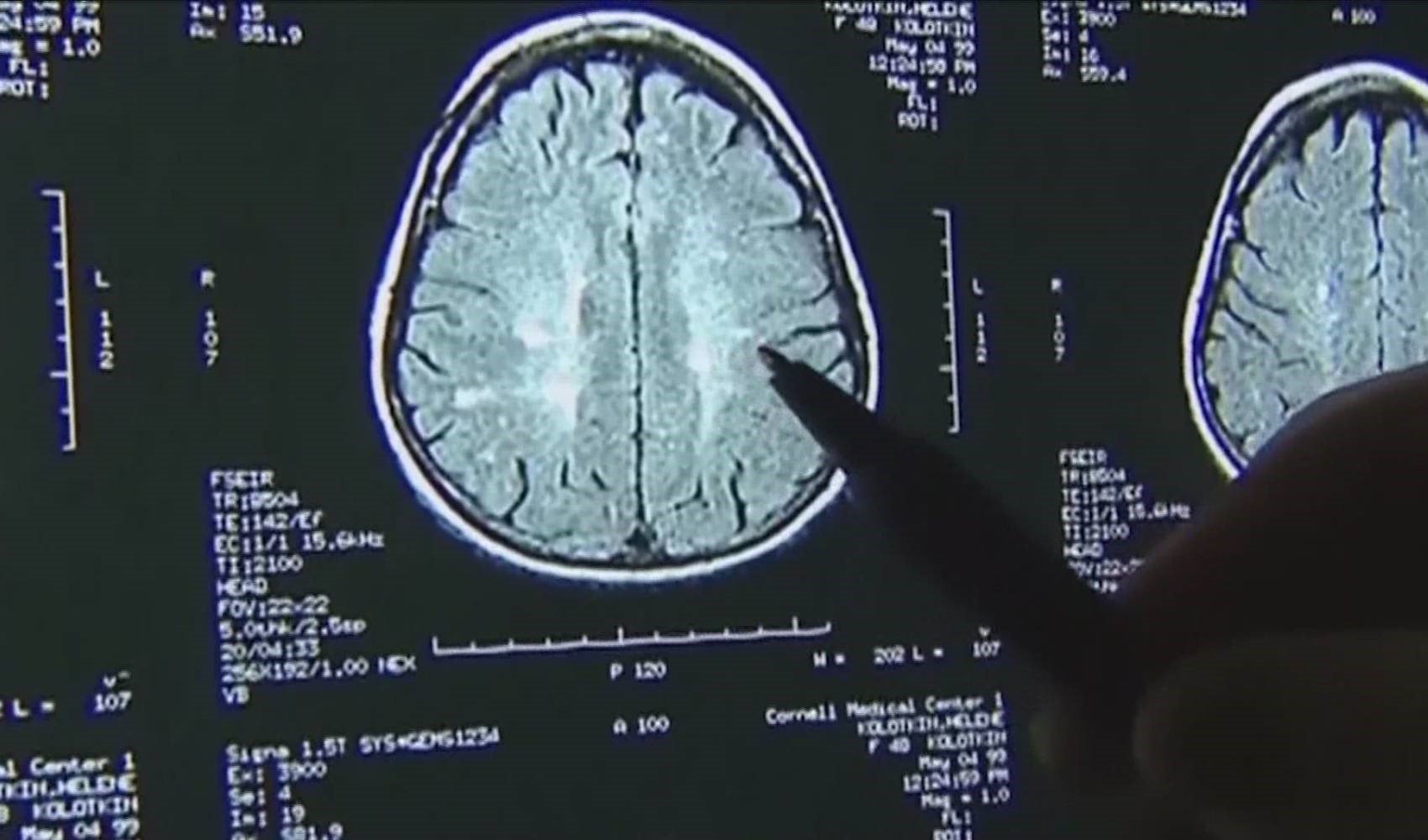
A recent study conducted by the University of Washington has revealed that the COVID-19 pandemic may have prematurely aged the brains of young people, especially young girls.
According to a report by Euronews, many people experienced disruptions in their daily lives and routines during the COVID-19 pandemic due to stay-at-home orders and limited social interactions, and this was seen to particularly affect the well-being of young people.
A study conducted by researchers at the University of Washington showed that the COVID-19 pandemic may have accelerated brain maturation by causing unusual changes in the brain development of adolescents.
MORE PRONOUNCED IN FEMALES THAN MALES
Neva Corrigan, the lead author of the study and a research scientist at the University of Washington's Institute for Learning and Brain Sciences, told Euronews Health, "We were really surprised to see in our post-COVID-19 data that cortical thickness was much lower than expected from pre-COVID-19 models, and we saw that this lower thickness was more pronounced in females than in males and in many more regions of the brain."
Researchers initially aimed to track normal brain changes in youth as part of a study in 2018 that included 160 participants aged nine to 17. However, follow-up tests were delayed until 2021 due to the pandemic, and researchers shifted their focus to how the pandemic might have affected brain development.
The researchers measured brain maturation by looking at how much the cerebral cortex, the outer layer of the brain, thinned over time. The findings were published in the journal Proceedings of the National Academy of Sciences.
BRAIN THINNING FASTER THAN EXPECTED
Comparing new scans of 80 percent of the participants with pre-pandemic data, researchers found that the brains of adolescents were thinning faster than expected, especially in girls. While this thinning occurs naturally with age even in young people, brain development in girls accelerated by an average of 4.2 years, while this period was 1.4 years in boys.
Corrigan said, "The cerebral cortex thins as a normal aging process, and this happens during adolescence. However, the thickness of the cerebral cortex on the post-COVID-19 timeline was much lower than what is normal for their age at those time points."
According to Corrigan, accelerated cortical thinning has been linked in past studies to severe trauma, stress, and neglect in childhood. This led researchers to the hypothesis that these brain changes were caused by the stress of the lockdowns.
NOT POSSIBLE TO THICKEN AGAIN AFTER THINNING
According to the study's senior author, Patricia Kuhl, it is unlikely that the cerebral cortex will thicken again once it has thinned, but the thinning may slow down as young people return to a normal social life.
Corrigan stated, "This is further evidence that lockdowns had unintended consequences by policymakers. We know their academic performance suffered, and children are still suffering from the consequences.
We know there is an increase in the incidence of neuropsychiatric disorders, anxiety, and depression in people who have lived through the pandemic, and I think this points to the real importance of mental health support for young adults in our societies."
News Source: 12punto