Amnesty International: An organization that operates independently of any government, political ideology, economic interest, or religion, known for its detailed research reports and campaigns based on careful investigation of human rights violations. It is funded by donations from its members and supporters worldwide.
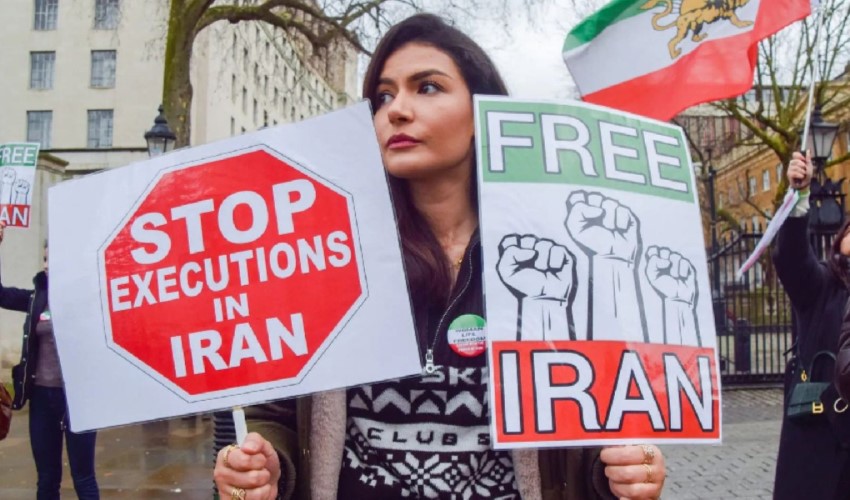
According to Amnesty International's latest report, Iranian security forces subjected women, men, and children detained during nationwide protests in 2022 to rape and torture.
One woman was detained by the Revolutionary Guards after participating in a demonstration in Tehran and removing her headscarf in public against the Islamic Republic regime, and was repeatedly raped during her two-month detention. Amnesty International reports in this way what happened not only to the woman referred to as "Maryam" in the report, but also to many others during the women's protests that followed the death of Jina Mahsa Amini.
"THERE IS NO GOD HERE"
Maryam describes being subjected to rape from the moment she was detained. She recounts being raped by the Revolutionary Guards during her interrogation and being threatened that they would bring her sister and rape her in front of her eyes. When she begged the Islamic Republic police to let her go in the name of God, she reports that a police officer told her, "There is no God here. We are your god. We will bury you and no one will know."
This report contains 45 such documented cases. 26 men, 12 women, and 7 children describe rapes, gang rapes, and other forms of sexualized violence carried out by members of intelligence services or security forces. There is no consistent evidence that any of them received medical care. Maryam reports that one woman who was released attempted suicide.
"ONE OF THE MOST BRUTAL WEAPONS"
Since Amnesty International staff cannot officially enter Iran, they issued a call to Iran to report on detention conditions in the country. Amnesty International spokesperson Ellen Wesemüller says, "84 victims, doctors, therapists, and lawyers participated with their reports" in response to this call. She notes that more than 20,000 people were detained during the wave of protests in Iran last year and that the actual figure could be much higher:
Julia Duchrow, Secretary General of Amnesty International Germany, says, "Sexualized violence is used by Iranian authorities to humiliate protesters, intimidate them, suppress criticism, and remain in power at any cost, and it is one of the most brutal weapons used."
MOST PERPETRATORS ARE FROM STATE INSTITUTIONS
According to Amnesty's findings, the perpetrators include members of the Revolutionary Guards, the paramilitary Basij Militia, the Ministry of Intelligence, and various security force units, public security police, investigative units, and other special units. The victims include women and girls who removed their headscarves, as well as men and children who took to the streets to protest the regime. The youngest victim is 14 years old.
NO PERPETRATORS HAVE BEEN CHARGED SO FAR
"Documenting sexual abuse in Iran is very difficult for several reasons," says Wesemüller: Those who have been humiliated and raped in this way by state actors experience severe shame due to their religious culture; they also have fears for both themselves and those around them, as the regime often threatens the victims' families as well. Women who are victims of rape, in particular, are afraid to go to the hospital for fear of being detained again. They seek medical help from their circle of acquaintances or friends if possible.
As if the deep physical and psychological trauma on the victims were not enough, the fact that the crimes committed cannot be reported and cannot be subject to criminal prosecution makes the situation even more difficult. Duchrow explains that perpetrators within the security forces and intelligence services do not feel the need to defend themselves against torture. Because "To date, it has not been possible to file a criminal complaint against any of them."
ACTS OF VIOLENCE MOSTLY OCCUR AFTER DETENTION
According to post-incident records, the rapes mostly occurred immediately after detention. They were committed in makeshift detention centers or police vehicles, places where the perpetrators could escape the eyes of justice and the public.
According to ARD, there are reports of intense violent torture and threats carried out by security forces. According to the reports, detainees were held for several hours or days in places temporarily converted into detention centers, such as buses, schools, or residences. It is reported that cases of rape and ill-treatment occurred in these places where they could escape the public eye.
Wesemüller from Amnesty International states that the cases revealed by the report are not isolated incidents, but rather a systematic pattern applied in Iran. Pointing out that rape and sexualized violence by security forces have a long history in the country, Wesemüller recalls that such attacks also occurred during the demonstrations between 1983 and 1988, and that after the major protests in 2009, reports of protesters arrested, raped, and tortured by security forces were constantly on the agenda.
VICTIMS ARE LEFT ALONE WITH THEIR TRAUMA FOR LIFE
Robert Nagel, a conflict researcher at the Georgetown Institute for Women, Peace and Security, believes that rape is part of the repertoire of violence within the Iranian security forces. "While pointing out that this is part of strategies of oppression, intimidation, and fear, the picture painted in the report shows that attacks carried out to suppress and intimidate activists are clearly or indirectly tolerated by official institutions," he says.
Although Nagel states that he has not seen reports or evidence that soldiers ordered rapes so far, the general consistency in the reports of Amnesty International and Human Rights Watch shows that soldiers, police, agents, or members of the Revolutionary Guards do not see rape and sexualized torture as prohibited. Since these acts are not actively prevented, it is understood that they are implicitly accepted by the regime.
Compiled from the December 7, 2023 report by ARD correspondent Ilanit Spinner.
News Source: 12punto