On the Adventure of a System in the Context of Theory and Action
Some Observations and Analyses Regarding: An Evaluation
Through the Example of Sultan Galiyev*
Dr. Mehmet SARITAŞ
INTRODUCTION
This study contains some observations and analyses regarding the socialist system in its main outlines; the subject is limited to the context of theory and action. When theories are put into action, it is important that the outcomes maintain their connection to the theory; however, it is observed that actions can acquire a structure separate from the theory. This can make the theory-action relationship problematic. Situations are encountered where reality can lead theory and its related action to results other than those predicted. Marx's theory was put into practice by Lenin, but the factor of action replaced the stages of development in the theory. This has made the system as a whole, along with its theory and action, a subject of debate. Here, the necessity of producing an alternative that takes reality as data emerged, and Sultan Galiyev presented this alternative production. With the brutal elimination of Galiyev, the system lost the thinker, ideologue, and leader who would have brought it to success. The general situation of the socialist system and its practices, in its main outlines as exemplified in Turkey, has created a cycle of alienation.
1. THEORY
There are many theories of a socialist nature. Here, Marx's theory is addressed among them. Karl Marx belongs to the materialist school of thought. The roots of materialism can be traced back to 800 B.C. Marx asserted that he placed Hegel's dialectical methodon a materialist foundation, or in his own words, "on its feet."
Adopting either the infrastructure or the superstructure as the determinant has formed the basis for ideological divisions; methodologically, Marx argued that the infrastructure relations in production processes determine all social and cultural life; this approach constitutes the Marxist method of thought; the most famous of the theorists who adopted the superstructure as the determinant is Max Weber (Max Weber); this approach, in turn, constitutes the Weberian method of thought. Methodologically, these two approaches are opposites of each other.
Marx's method of thought has been characterized and criticized as single-factor and reductionist.
Marx claimed to explain the flow of human history and based this on the production process. In this process, he stated that those who own the means of production constitute the capitalist class, while those who only provide their labor constitute the working class. The surplus value produced here is seized by those who own the means of production, and as a result of the exploitation that occurs, the working class reaches a state where it has nothing to lose but its chains. This contradiction between labor and capital will be overcome through revolution, and the working class will come to power. According to Marx, this dialectical process, which will result in a social order without exploitation, is the natural flow of humanity and is universal.
Examples that did not fit this generalization in the labor-capital relationship emerged, and Marx was forced to create a separate category for them. For instance, Marx identified the Ottoman Turks as a separate category within the Asiatic Mode of Production.
2. ACTION
The subject of action holds importance in the Marxist system; Marx criticized systems of thought that do not transform into action or do not adopt action as an objective.
The issue of applying the element of action to Marx's own system has led to various debates. The October Revolution, or the Soviet Revolution, did not emerge as a result of the natural stages predicted by Marx; this revolution was realized through the factor of action. Natural stages are outside the realm of will; action is realized through will. The debate arises from the substitution of the action element for the stages of development; Lenin's understanding and practice of revolution are seen as the most important example of this.
Lenin developed a unique understanding and form of action within the scope of Marxist theory. Lenin's unique approaches and forms of action leadership have been termed Leninism. In revolutionary structures, Marxism-Leninism began to be adopted together. However, the relationship between Marx's development scheme and Lenin's understanding of action continues to be a subject of debate. Those who oppose Leninism have expressed their criticisms within the framework of Marxism without Lenin or Communism without Lenin.
The natural stages predicted by Marx are an inference. Like all development plans, predictions are based on inferences; these can maintain their validity only in situations where the data remains the same. No matter how competent they may be scientifically and statistically, if the data does not remain the same, the inference becomes invalid.
What sometimes happens to all development plans also happened to Marx's predictions; changing data altered the predicted outcomes. In such situations in planning, new predictions based on new data are constructed; this can be called restructuring. This situation is the same for social systems; if there is no restructuring, predictions are cast out of life by reality.
3. PRODUCTION OF ALTERNATIVES
Developments on the plane of reality have made the production of alternatives necessary in the context of theory and action. Within the scope of developments on the plane of reality, there is an order of exploitation in the West today; they transfer the surplus value of the exploited to themselves; exploitation has acquired the character of an international mechanism, and this situation has generally replaced domestic class conflicts. The Western worker is a partner in exploitation and receives a share of it. Exploitation has ceased to be a simple issue reduced to and limited by the working class as a social group; it has gained a multifaceted character and function that can encompass various societies as a whole and manifest itself in various layers of different social structures and groups. Today, in Western industrial societies, the worker is not in a position where they have nothing to lose but their chains; nor is there any data to form a basis for extending such a line into the future.
The theory-action relationship has reached a crossroads, and Lenin made his choice in favor of the primacy of action. Sultan Galiyev clearly stated that the system put forward was unsustainable and bound to collapse. Here, the internalization of truth and the necessity of producing alternatives in the context of theory and action came to the fore.
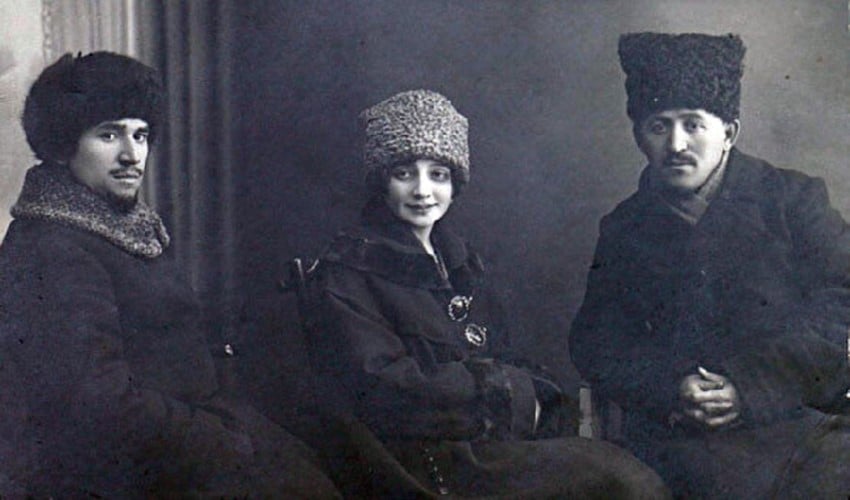
In this context, Sultan Galiyev's contributions to the Marxist system are significant; a Marxist analysis that does not take his contributions into account would be incomplete. Sultan Galiyev was the first to reveal that the Western worker is a partner in exploitation and receives a share of that exploitation. He argued that the Turks in all of Asia, primarily the Tatar Turks to whom he belonged, were subject to exploitation as a nation and existed in a proletarian state as a nation. These findings provided Marxist theory with the methodological opportunity to analyze exploitation at the national level as well, and they grounded and updated the struggle against exploitation on realistic foundations. This situation also revealed how great a source of power patriotism is in the struggle waged against exploitation. Galiyev brought possibilities tested by reality in life to Marxist theory; he made contributions aimed at preventing it from becoming alienated from reality and being pushed out of life.
Sultan Galiyev exemplified the first practical applications of his contributions to Marxist theory in his own life. He demonstrated his competence in action as much as in theory. He was one of the two civilians who commanded the Red Army during the October Revolution. Lenin appointed this comrade-in-arms as the rector of the first Soviet University. Here, he tried to establish an educational order that did not repeat rote learning but produced solutions to needs. Nazım Hikmet and Şevket Süreyya Aydemir were his students at this university.
Regarding Sultan Galiyev's contributions, "these are already present in Marx and Lenin" and similar assessments are sometimes made. This is similar to the proposition that "what is in Marx is already in previous materialists." These are one-dimensional approaches. One-dimensionality cannot explain systematicity and wholeness. Sultan Galiyev's theoretical contributions are systematic and holistically original.
In this context, Karl Marx viewing the Irish liberation movement, rather than the British labor movement, as the driving force for revolution cannot be explained within Marx's own system and method. Lenin's refusal to recognize the right of nations to self-determination for those within Austria, while accepting it for those within Russia in the case of minorities, is a matter outside the Marxist system and method.
The power of the proletariat is a principle for the Marxist movement. Here, the two examples belonging to Marx and Lenin are outside this principle; the examples are non-generalizable and do not possess the quality of a principle.
It is Sultan Galiyev who remained committed to the principle of the power of the proletariat until the end. He stated that the entirety of the nation in which he lived was in a proletarian state, and he shifted the analysis of contradiction from the class level to the national level; he defined the international as the unity of oppressed nations.
Some followers of Marx and Lenin, instead of examining these examples as a system and method, generally consider the existence of these examples in their practices to be sufficient, a situation that pushes these followers into the position of dogmatic successors.
The fact that some of the findings presented here are subject to criticism in terms of system and method does not diminish the importance of Marx and Lenin; because they are not limited to some of the errors pointed out here; many of the contributions they made retain their permanent quality. Here, the facts within a field whose boundaries have been defined from the beginning are being examined.
The greatest disaster to befall the Soviet Revolution, which was based on Marxist theory, was Stalin. With Stalin, the Soviet revolution entered a process of alienation from itself. The entire cadre of the revolution was purged by Stalin. Many peoples were sent into mass exile. The name Stalin became synonymous with death, and he was known as the most brutal human butcher recorded in history. In many matters, he became the West's collaborator in the East. For instance, he demanded territory from Turkey, and this situation was used as a justification for Turkey's entry into NATO. After this period, Turkey was forced into a process of compromising its independence-oriented policies.
Sultan Galiyev was arrested by Stalin, subjected to some of the world's most severe torture, and killed. His statements were taken under heavy torture, and attempts were made to attack his reputation; it is unknown how much of these statements were his own and how much were fabricated; it is impossible to know to what extent he adopted the parts that appear to be his, or to what extent he was made to appear as having adopted them.
Galiyev produced competent intellectual and artistic works in many genres of literature; these exist as knowledge and data. Everywhere in the world, statements taken under torture are not considered valid; they are not used as knowledge or data. However, there are exceptions in many cases, and it seems possible to encounter exceptions in this matter as well; some of these exceptions have continued the effort to obtain material against Galiyev from these statements; these are the ones who stood on the side of those who tortured and killed Galiyev, those who share a unity of purpose with the torturers; they are generally crypto-individuals and are definitely anti-Turk.
They appear to be against racism, but in reality, they are minority racists; they appear peaceful and humanitarian, but in reality, they are the tools of imperialism that make peace and humanitarianism impossible. Therefore, this situation of those who take a negative approach to Sultan Galiyev is not unique; they also have negative approaches to Turkishness in other matters, and there is a correlation between them.
The fundamental principle and basis of the system established in the Soviets with the October Revolution, like all socialist systems, was production according to need. Over time, production began to exceed needs. A practice was adopted where the surplus production was sold to countries within the system, for example, Bulgaria, to generate profit. Here, it is seen that the system turned into its own opposite; because profit is specific to the capitalist system. This situation shows that the system in the Soviets was wounded at its core. This wound could not be healed, and the Soviet order began to collapse, with the collapse resulting in liquidation in 1989. Here, the abandonment of the socialist cultural understanding and the replacement of it with Russian culture, leading to the loss of support from various ethnic communities, also made a significant contribution to the collapse of the Soviet order.
This example has revealed the invalidity of approaches that negatively judge, with extreme scales, certain orders established after the struggle for independence for not being statist/socialist in nature, as a result of testing them against reality. When a system turns into its opposite or carries the possibility of turning into its opposite as a force within itself, its name is of no importance. What is important is to ensure continuity in independence; the factors that ensure this must be reproduced in every situation and under every condition.
Independence is not a phenomenon that is used forever once it is achieved; it must be recaptured and realized anew at every step with power, labor, and will. This process is multi-factorial; what is important is to continue the struggle while preserving the direction, purpose, and principles. Transition and founding periods have their own unique problems and their own unique solutions; these serve as a bridge to the next stage; for instance, Lenin speaks of the risk of losing all gains if one does not take a step back in certain situations regarding the transition and founding phase after the October Revolution; of course, the step back here is aimed at gathering strength to take steps forward; here, in principle, it must be ensured that what is done is carried out within a systematic and methodological scope.
4. THE CYCLE OF ALIENATION
What can be said about the Turkish example of socialist practices based on Marxist theory? It seems possible to summarize the answer to this question under the heading of 'the cycle of alienation' as its main outline.
It is observed that publications made through the translation of works on Marxist theory have made significant contributions to Turkish intellectual life; however, the left in Turkey has not been able to achieve a level of development that would contribute to global leftist thought. The left in Turkey has not been able to produce a socialist thinker of international stature. The wave created by the '68 generation worldwide had its reflections in Turkey, but a line unique to Turkey could not be formed from this.
Actions were initiated without gaining sufficient organization, experience, participation, and mass appeal, and those who carried out these actions were liquidated in a short time. The role of provocations and NATO's Gladio structure in these liquidations has still not been sufficiently clarified today.
The oligarchic structure formed by certain families was influential in the control and neutralization of leftist ideologies.
In Turkey, the left could not establish a link between Marxist theory and the country's problems, nor could it sufficiently demonstrate how the theory would provide solutions to these problems; discourses disconnected from reality found more space on the agenda, and the participation of the broad masses could not be secured.
Some segments of the left in Turkey, which achieved a relative rise in level through transfers from the left in Europe, limited themselves to a narrow circle; what they did appeared to be the personal satisfaction of supporters of an elitist intellectual circle. These groups later took part in the scope of globalization and adopted the characteristics of globalization.
Developments were observed in the communication between some leftist circles and some conservative circles in Turkey; among them, opposition to the existing official order and system was seen as a sufficient common denominator.
Those in Turkey who took 'communism without Lenin' as their subject did not examine this topic sufficiently with an objective approach, could not make a serious critique of Lenin, and could not carry out an analysis regarding the validity of Marx's schema. Those who were in an effort to speak negatively about Lenin in an aggressive manner acted reluctantly and timidly when it came to making negative assessments about Stalin. They kept Sultan Galiyev off the agenda and attacked him whenever they found the opportunity.
Many people in Turkey who identify as part of the Marxist group have understood and practiced the requirement of being in this group as adopting the contents of Marx's books as dogmatic data; this situation represents an alienation from Marxist theory and the Marxist method in the name of Marxism.
An evolution where the existence of colonialism at the class level is limited and its existence at the national level increases, all of humanity has had the opportunity to observe following Galiyev's analyses. After this evolution, it is certain that analysis limited to the class level serves to cover up or hide exploitation carried out at the national and large scale. The concept of statelessness held by some leftist circles in Turkey has prevented the issue from being seen as a whole; most of them have not taken part in a common front against the colonialists. New concrete situations have required making new choices; there is a situation of either being on the side of the Galiyevs to fight against the new form of colonialism, or being on the side of the colonialists. Today, an organized struggle against colonialism at the national level is on the rise all over the world; the front represented by Galiyev is growing stronger every day. Under these conditions, some leftist circles have taken the side of the colonialists and have been uncomfortable with Galiyev's patriotism.
In Turkey, it has been observed that those in the lower-income bracket and the poor are positioned on the right, while those in the upper-income bracket and the wealthy are on the left, and based on this observation, it has been argued that those on the right should be on the left, and those on the left should be on the right. However, these have remained at the level of slogans and have not been made the subject of sufficient explanation and analysis. Here, the issue that the reality of the outcome does not confirm Marxist theory is also present. Situations that do not confirm Marxist theory have also been addressed in international Marxist literature; the concept of false consciousness has been used to explain such situations. It is observed that situations that do not confirm Marxist theory are explained as outcomes arising based on the false consciousness of a social group. This form of explanation itself is a problem from the perspective of Marxist theory; because the false consciousness that determines the explanation is, according to Marxist theory, a product of the superstructure; it is certain that such a form of explanation, which assigns a determining role to a product of the superstructure, falls outside the Marxist method.
Examples of social groups not standing where Marxist theory predicts are not limited to leftism being a hobby-like pursuit for the children of the wealthy. As a superstructural construct, all kinds of minority-focused, separatist, and divisive examples engineered by global colonial centers have been included within the scope of the left; these have led to the alienation of the leftist structure they are part of in the country from the Marxist method.
Similarities are observed between some of the discourse content of certain leftist groups and the Greater Middle East Project (BOP) discourse content. These can be summarized as approaches of 'Turkey-ness' instead of Turkishness, approaches such as claiming that the War of Independence was fought together with minorities against the enemy rather than against the enemy alongside minorities; that the nation is a multi-ethnic structure rather than a unique whole; that the state created the nation rather than the nation forming the state through its political organization; affirming the increase of differences through organized mass migrations of millions instead of preserving the similarities within the nation; joining a federation to be established in the Middle East instead of strengthening the national state; and presenting the act of siding with structures established by colonial centers as an anti-imperialist stance instead of struggling against them. Here, the concept of anti-imperialist struggle is presented as an umbrella term to encompass all of these. However, an anti-imperialist struggle conducted by taking a place on the fronts of colonial centers has never existed in the memory of history.
The observations presented here regarding certain circles in Turkey that consider themselves 'leftist' have constituted the key elements that prevented them from gaining a leftist structure and developing as a leftist entity within the scope of Marxist theory.
CONCLUSION
The October Revolution or the Soviet Revolution and the socialist practice realized through this revolution should be evaluated as a great experience in human history. This experience is in the nature of a great human laboratory; studies to be conducted in this laboratory can reveal the lessons to be learned. The first lesson could be in observing the increase in the level of aggression of a single-focused world order. In a world where capitalist and socialist orders coexisted, colonial structures were forced to limit their aggression and felt the need to treat their surroundings more positively in order to draw them to their side. With the withdrawal of the socialist order, in a world where the capitalist order remained alone, aggressions increased, and societies began to drift toward an increasingly unstable and restless environment every day. The experiences of capitalism and socialism have led to the search for a 'third way' in the world; this search continues to gain strength.
In the context of theory-action within the socialist system, the initial choices and their continuation in the same direction became the source of problems, and the collapse, as foreseen by Sultan Galiyev, became inevitable. Within the socialist system, Sultan Galiyev's option, which takes the 'nation' as a given, continues to be a subject of interest.
Between the Galiyevist system and the Kemalist system, the concepts of nation, independence, freedom, anti-imperialism, and the cooperation of non-colonial nations are common.
The struggle to realize the goal of the Galiyevist system remained unfinished; the Kemalist system concluded its struggle to realize its goal with victory and revolution.
The Kemalist system established the Republic of Turkey by updating the state philosophy of Bilge Qaghan. The Kemalist system is unique and original, distinct from all other systems on Earth. The Kemalist system is specific to Turkey and is national; with the Turkish War of Independence it carried out, it is an anti-imperialist example that showed all the nations of the world that imperialism can be defeated, and it is universal. National rights and human rights are within the same system; the former contains nationality, the latter contains universality, and the two are combined in the same cluster; the fundamental principle is that one cannot be universal without being national, and universality through nationality is the adopted method.
The principles of nation, independence, freedom, anti-imperialism, and the cooperation of non-colonial nations in both Galiyevist and Kemalist systems continue to serve as beacons of hope and guidance in the world.
_________________________________________________________________________
*This is the text of a lecture given at the Turkish Science Foundation on 04.04.1998; it was updated on 01.02.2019 and 14.04.2022.
News Source: 12punto