Academic Fahri Kaan Arslan wrote about the reign of Abdulhamid II in the first installment of his 'Press History' series. Arslan's article is as follows:
A few days ago, I caught the main news bulletin on one of our national channels. A large portion of the bulletin was devoted to funny videos taken from social media and strange news stories. Although there was some space for police and courthouse news, there was almost no news that could be considered political. This so-called journalism that avoids controversy reminded me of the press during the reign of Abdulhamid II. Because in this era of autocracy, where talking about politics was forbidden, newspapers and magazines that discussed everything except politics emerged. They would include the phrase “Discussing Everything Except Politics” on their front pages. Let us not be unfair; this social atmosphere forced the publications of the period to turn to different fields. In this context, at least literary and scientific publications increased, and public interest shifted to these areas.
Since we have brought up this era, let us continue. This period will be a good starting point for the press history series that I have been planning to prepare for 12punto for some time.
When Abdulhamid II ascended the throne at the age of 34 as a result of some extraordinary developments, he took over the administration of a state that was facing various problems both internally and externally and was almost on the verge of collapse. Moreover, this state was lagging behind in many respects, especially in the economic field, in inverse proportion to its geopolitical importance. The defeat in the Ottoman-Russian War, which took place in the very first years of his reign, created a serious trauma both in the person of the Sultan and in the statesmen of the period. The remedy found for the survival of the Empire, which was now understood to be on the verge of collapse, was a kind of long-term recovery process in which reforms would be completed and yield results.
Abdulhamid II was able to create a regime in which state authority was concentrated around his personal power so that the treatment he deemed appropriate could be applied. Of course, this one-man regime faced opposition from different circles. During this period, in addition to the separatist elements within the Empire, the Young Turk Movement, which emerged from new Ottoman social dynamics, was particularly influential in the last 20 years of the Abdulhamid regime. The Sultan's response to this was an autocratic regime where all kinds of social opposition were kept under control with a vast network of spies and informants; censorship was applied to the local press, and various bans were imposed on foreign publications entering the country. This is the most fundamental feature that defines the character of the press regime of this period.
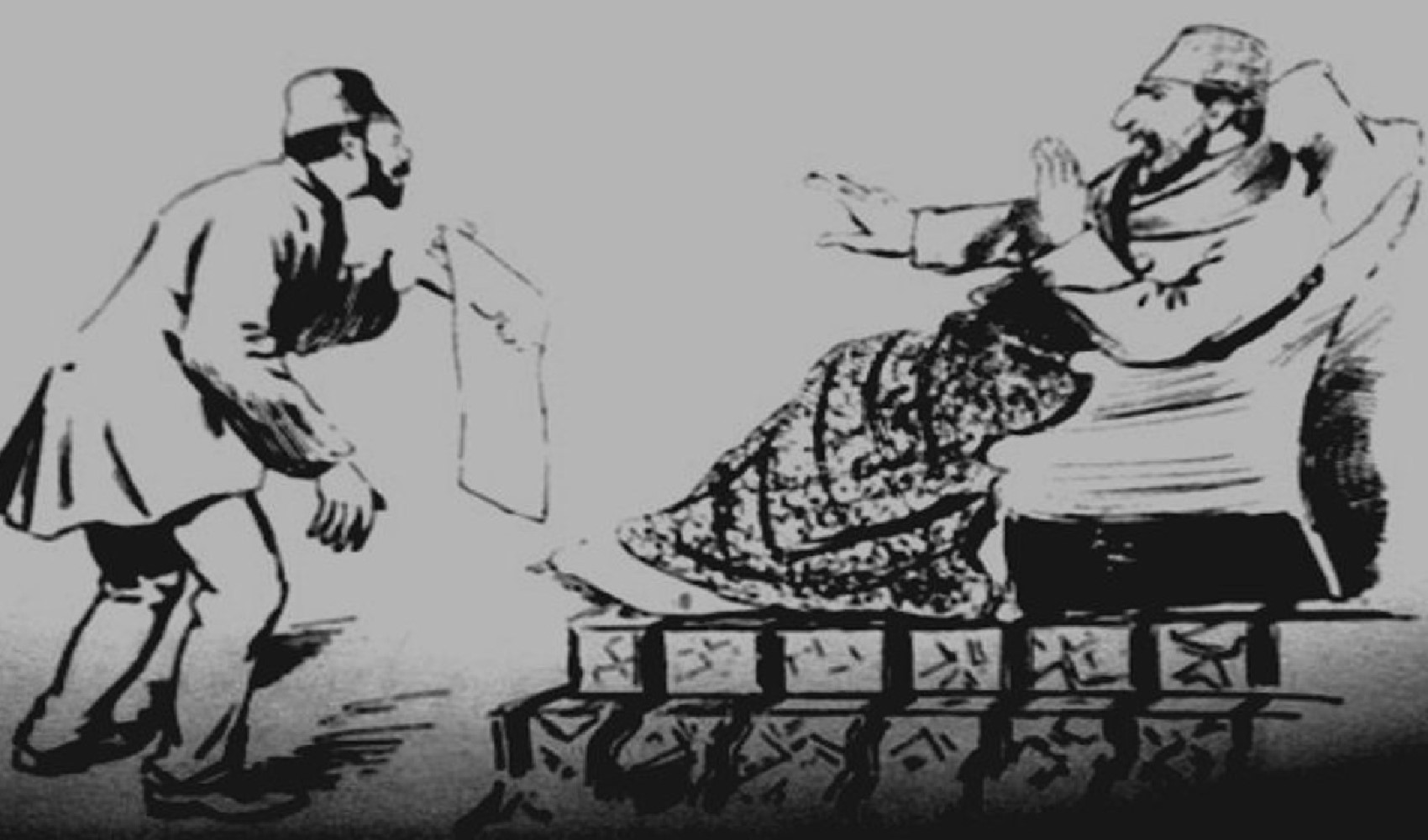
When it comes to Abdulhamid's press regime, the censorship system, which is one of the pillars upon which the Sultan's autocratic regime was built, undoubtedly comes to mind. Abdulhamid's reign is mostly treated as a period of dark censorship and bans. Indeed, after the transition period in the first years of his reign, a period of oppression began that was felt in almost every area of social life. The press, which is an important tool in influencing public opinion, was at the forefront of the areas where this pressure was felt most intensely. On the other hand, it would be incomplete to think that the government-press relations of the period were shaped only within the framework of pressure and censorship. On one side of the regime, there was a control mechanism that reached into the daily lives of society through a network of spies and informants, where unwanted publications were censored; on the other side, there was a kind of personality cult where the Sultan was symbolized as a protective father figure. It is clear that in such a regime, shaped by a personality cult and desiring to penetrate every area of society, there would be a need for a press that would guide public opinion.
Historians generally agree that the Sultan had a suspicious personality and did not mix much with the public due to security concerns. Therefore, the press had more work to do in making the Sultan visible in society. The press was also used against foreign public opinion during this period. The 33-year period was a time when threats to the Empire came from almost everywhere, and the regime's image in the eyes of the foreign public was important. It is known that the Palace followed the foreign press carefully, intervened in the news published there through embassies, and at the same time used the Istanbul press. However, during this period, the press was also assigned a role of educating the public, provided it remained within the ideological axis of the regime... In short, Abdulhamid knew the importance of public opinion very well. Although unwanted press was forced to go abroad by being subjected to censorship and pressure, the regime also supported the press that operated within the boundaries it drew through various methods. In this context, it should be kept in mind that there was a two-sided relationship between the Abdulhamid regime and the press, from which the Istanbul press in particular also benefited from time to time.
On the other hand, it should be remembered that this 30-year period of censorship and bans was a process that had differences within itself depending on many different factors. During this period, the dose of pressure and censorship on the press increased gradually depending on both the internal dynamics of the regime and national and international political developments. While the press within the country shifted to a completely non-political publication line, the opposition had to carry out its press activities from abroad. The weight of the regime's pressure and censorship practices was also felt in different proportions across the vast geography of the Empire. While censorship was more intense in some provinces, it was relatively lighter in some regions. The censorship mechanism operated much more strictly in Istanbul, the capital and the center of the press. In contrast, for example, the press was more comfortable in Thessaloniki, the most important port city of the Empire in the Balkans, compared to the capital.
Abdulhamid II's autocratic regime institutionalized censorship over the press through a large staff of civil servants and bureaucratic institutions. However, the history of censorship on publishing activities in the Ottoman Empire dates back further. Abdulhamid inherited this “rich accumulation” from his predecessors; he was able to establish his control over the press by using previous laws, decrees, and practices.
In the Abdulhamid regime, the Press Directorate held an important place as the enforcer of censorship. Established on February 2, 1862, under the Ministry of Public Education, the Press Directorate served in different forms over time. During the Abdulhamid period, although the Press Directorate appeared to be under the Ministry of the Interior on paper, the press directors received their instructions directly from the Palace. The censorship board, which Abdulhamid formed from people loyal to him, also carried out its work there. During this period, Istanbul newspapers could only be printed after their proofs were approved by censorship officers affiliated with the Press Directorate.
Abdulhamid's power was arbitrary and absolute. This also affected the lower-level officials. Moreover, the fear of spies and informants, which permeated every segment of society, including officials and even high-level statesmen, often led to excessive and arbitrary censorship practices. There are many examples where censorship officers engaged in unimaginable practices for fear that even a small misunderstanding that might occur in such a repressive regime could be reported to the palace. The conditions created by the regime, so to speak, made the censorship officers “more royalist than the king.” The lines where Ahmet İhsan, one of the important journalists of the period, conveys the words of Hıfzı Bey, the Press Director and one of Abdulhamid's censors, before he died, are striking: “I was defeated by ambition, I acted as the executioner of those who stifled knowledge. If the time comes and the opportunity arises, write about my remorse. I am going to the judgment seat saying, ‘I deserved this.’”
In this period, one did not need to be a relentless opponent of the regime to be a victim of censorship. News of a disaster or an assassination attempt against a foreign monarch that was predicted to cause anxiety among the public, the use of a forbidden word, or even frequently seen typesetting errors were reasons for newspapers to be closed for a long time or indefinitely. Not only the censors but also the reports (jurnals) given to the palace about the newspapers were a danger to the newspapers. Even the slightest misunderstanding could lead to censorship and penalties. For example, the “Mecmua-i Fünun” magazine, published by the former Minister of Education Münif Pasha, was permanently closed due to the phrase “Firefly” (Yıldız Böceği) that appeared in one of its issues. This penalty was caused by a report claiming that the phrase in question referred to the Sultan living in the Yıldız Palace.
Even Takvim-i Vekayi, the official newspaper of the state, could not escape the wrath of the palace due to a report filed against it. Although the newspaper, which remained closed between 1878 and 1901, was reopened in 1892, it was closed again shortly after due to a simple typesetting error. Sometimes a non-political polemic or a literary debate in newspapers became the target of censorship officers or informants who read into intentions. So much so that censorship practices sometimes reached a point that even newspapers and journalists close to the palace rebelled. Journalists of the period frequently include examples of bans and censorship that reached absurd dimensions in their memoirs.
News Source: 12punto